Foreign Material Detection for Beef Trim

The FM Your Metal Detector, X-Ray, and Inspectors Can't See
Density-based detection holds down your CCPs, but most of what ends up in a customer complaint isn't dense: soft plastic, film, a piece of glove, cardboard or plastic off a combo liner. And the worst offender - clear plastic - has historically gotten past X-ray, metal detection, and human visual inspection alike. SiftAI® FM adds a next-generation AI vision inspection point over your existing trim line to catch visible foreign material of any density, at line speed, on every piece, with an image record behind every detection.
- Industry-first clear plastic detection - an AI model built for the contaminant that is nearly invisible to every other layer of your FM program
- Detects low-density FM that density-based systems pass: soft and hard plastic, films, paper/cardboard, rubber, wood, and glove/PPE fragments
- Flags indigenous material: fat and sinew clumps, ear tags and ID chips, and more
- Complementary to your existing metal detection and X-ray CCPs - an added control point, not a replacement
- Inspects continuously at production line speed; no sampling, no fatigue, no turnover on the inspection position
- Redesigned lighting engineered for products with natural color and texture variation - higher-quality image data, less reflectivity noise, fewer false readings
- Every detection logged with an image = defensible records for customer audits and FM complaint investigations
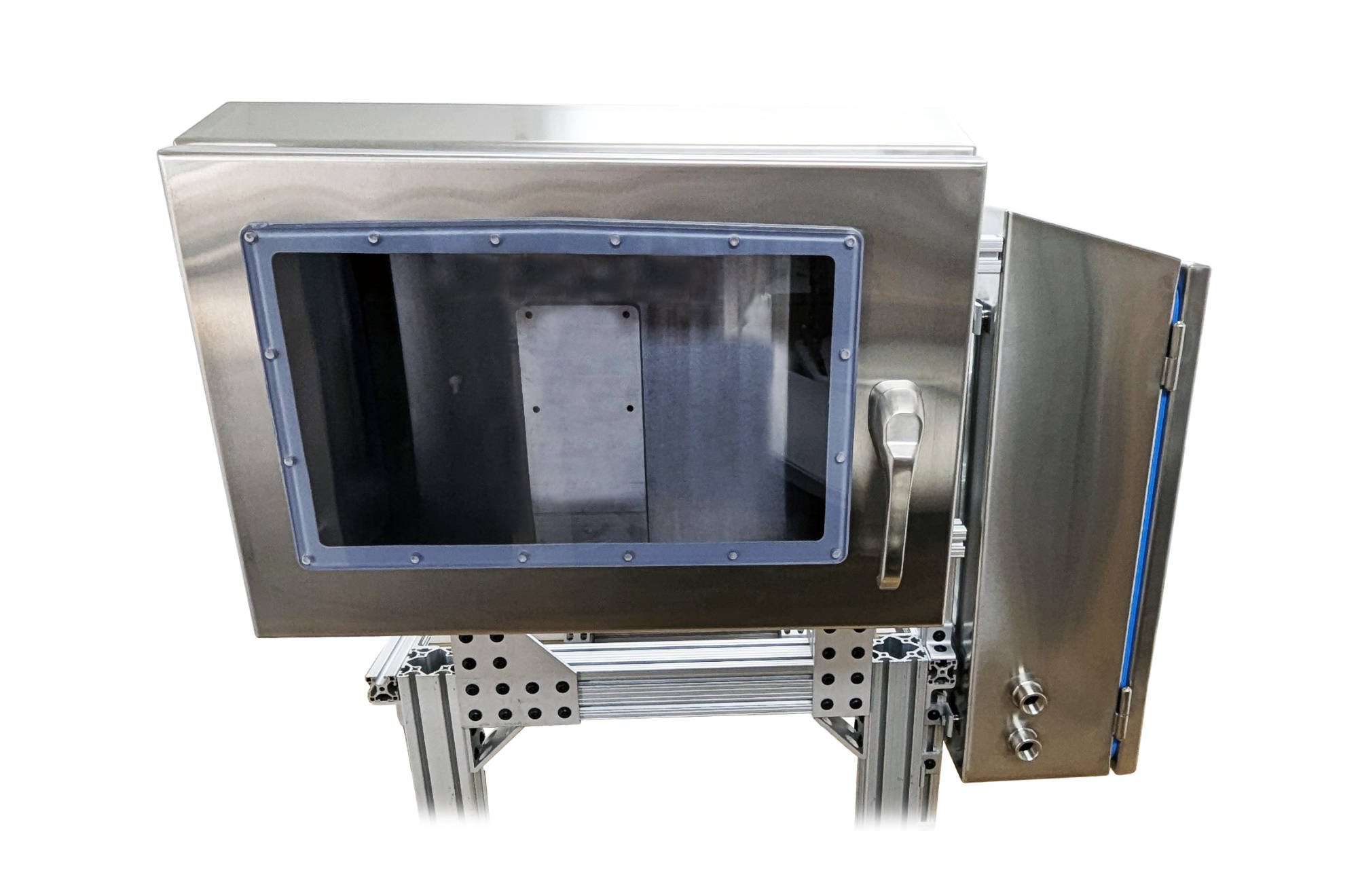
- IP69K Extreme Hygiene stainless enclosure for full washdown - no changes to your sanitation procedures
- AI models built using your product and maintained by KPM on a platform refined across years of deployment in meat and poultry processing environments
Get More Information
Why Clear Plastic is the Persistent Problem in Protein
Clear plastic is everywhere in a beef plant - liner film, bags, wrap, totes - and it is a serious food safety risk precisely because it is nearly invisible. It passes X-ray and metal detection because it isn't dense or conductive. It gets past trained inspectors because it disappears against wet product under plant lighting. Which means it has traditionally been discovered by your customer, not by you.
A First-of-its-Kind AI Model Closes the Gap
The new SiftAI® FM platform includes an industry-first AI detection capability for clear plastic - built on years of real-world deployment data from meat and poultry operations and the platform's redesigned lighting system, which presents product to the AI engine with the clarity and consistency this detection demands.

And it's One Model Among Many, Running at Once
Clear plastic is the headline, but the same system is simultaneously watching for gloves, films, cardboard, rubber, wood, and indigenous material - SiftAI® FM includes TensorUP® high-performance computing to run several AI models at the same time, so covering a new FM type doesn't mean giving up another.
What It Changes on Your Line
For QA & Food Safety - a documented control, not a best effort
Continuous inspection with an image-backed log turns your last visual check into evidence. When a customer calls about FM, you pull the record for that production window instead of reconstructing what an inspector might have seen. Detection trending by defect type shows where FM is entering - shift, source, supplier - so the program improves upstream, not just at the belt. And clear plastic moves from "known residual risk" to a monitored category.
For Operations - keep the line moving and the combos clean
Inspection at production line speed means food safety stops being a throughput tradeoff. Fewer FM events reaching customers means fewer rejected loads, less retained product, and less good trim condemned alongside a contaminated combo. The redesigned lighting and continuously refined models are engineered specifically to keep false rejects - the tax on any inspection point - trending down over the system's life.
For Engineering - installs over the line you already run
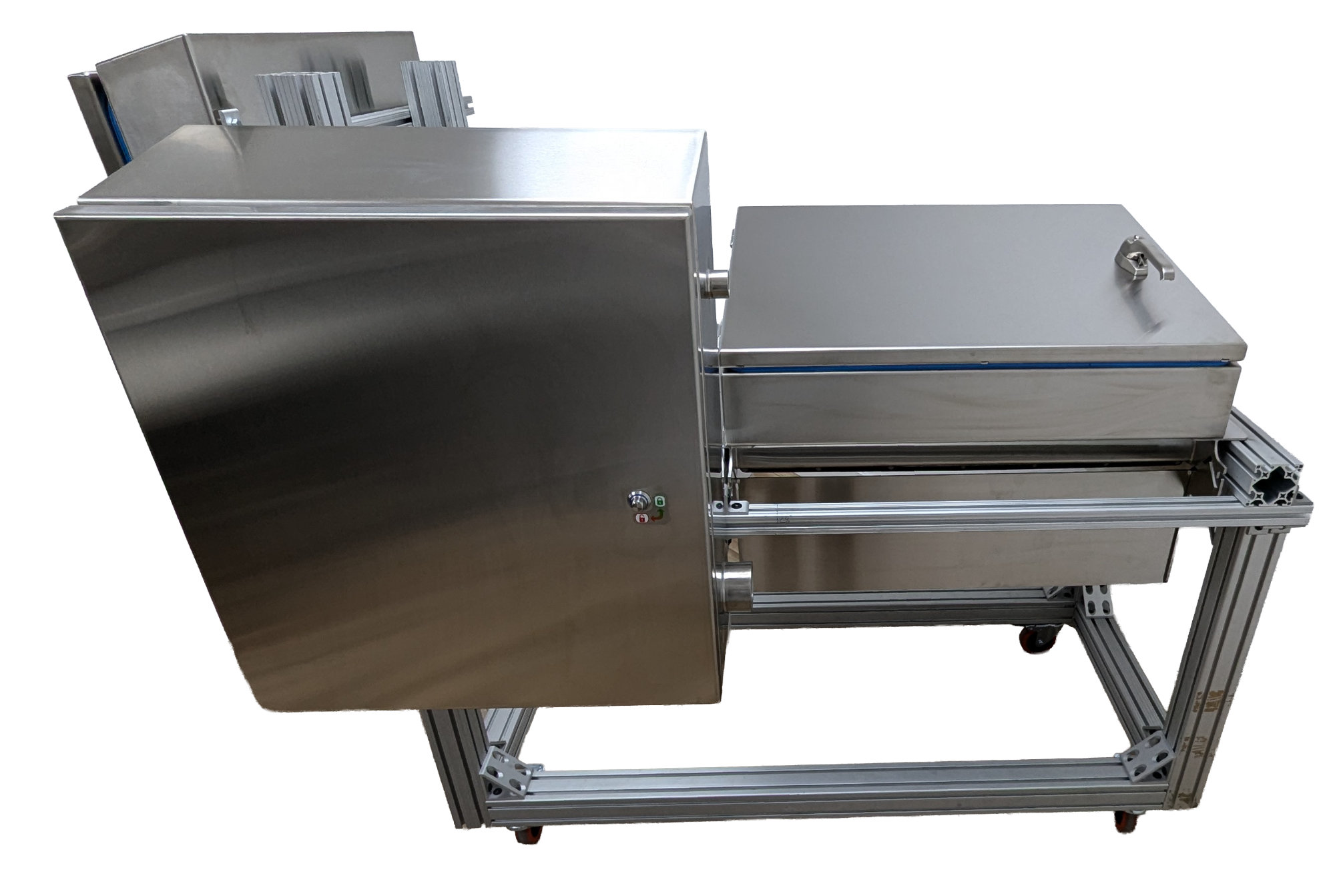
A compact footprint that mounts above existing conveyance, sized to your belt width, with waterfall configurations (top and bottom inspection in minimal line space) and shaker table configurations (top-down inspection of free-flowing product). Standard power, Ethernet connectivity, rejection tied into existing or KPM-supplied mechanisms - an integration project measured in line layout, not line redesign.
For Sanitation & Maintenance - nothing about pre-op changes
The SiftAI HD generation carries an IP69K Extreme Hygiene-rated design: food-grade stainless steel and hard-coated polycarbonate, engineered to prevent harborage points, supporting full washdown without any changes to existing sanitation protocols - validated against common chemistries including EnviroKlor Plus, Acidiquat 4, Redi-Solve B, One Step Alkali, and Decon-7. Maintenance access clearance is specified up front so it's serviceable where it's installed.

.avif)
Density-Based Detection has a Blind Spot, and it's Most of Your Complaint Log
Metal detectors and X-ray discriminate by density and conductivity. A cotton glove, liner film, blue plastic off a lugger, a wood splinter from a pallet can pass a density-based CCP without a flag. If it's low-density and visible, the only thing standing between it and the combo has been a person.
Manual Inspection is a Sampling Plan, Not a Control
Human trim inspection degrades with fatigue, turnover, and shift-to-shift variation. When a customer FM complaint lands, "we have inspectors on the line" is a procedure, not evidence. An automated vision inspection point turns that last visual check into a continuous, documented control with an image behind every event.
Trim Goes Everywhere. So Does the Liability
Trim feeds grinding operations - yours or your customer's. FM that leaves your dock becomes a downstream discovery: a complaint, a rejected load, retained product, a grinder tear-down. Catching it before the combo closes is the cheapest place in the chain to catch it.
The Hardware: A Compact Vision Head Over Your Existing Line
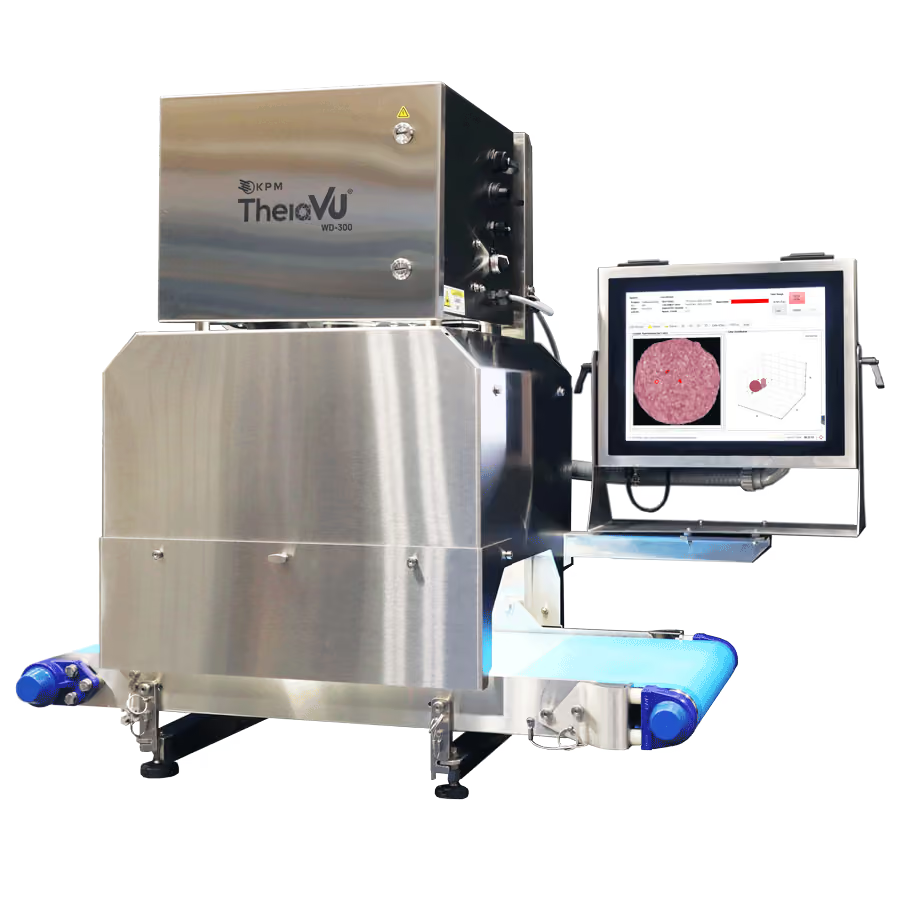
SiftAI® FM is a self-contained machine vision system comprised of ahigh-performance camera, onboard computer, TensorUP® AI computing, and industrial controls mounted over the belt with LED lighting and an at-line HMI. It installs above the existing conveyance; typical mounting puts the camera enclosure roughly 508 mm (20 in) over the belt, with configurations for belt widths from 305 mm (12 in) up to 1219 mm (48 in). And, it runs on 120V or 240V with an Ethernet connection.
The Lighting: Designed to See Trim the Way the AI Needs to
Beef trim is reflective, wet, and variable in color and texture - the conditions that generate false readings in conventional vision systems. SiftAI FM's upgraded lighting system illuminates product with greater clarity and consistency across the field of view, producing higher-quality image data and reducing the reflectivity "noise" that erodes trust in an inspection point. Better light in means fewer false detections out.
The AI: Models Trained on Your Product, Maintained by KPM, Proven Over Years of Deployment
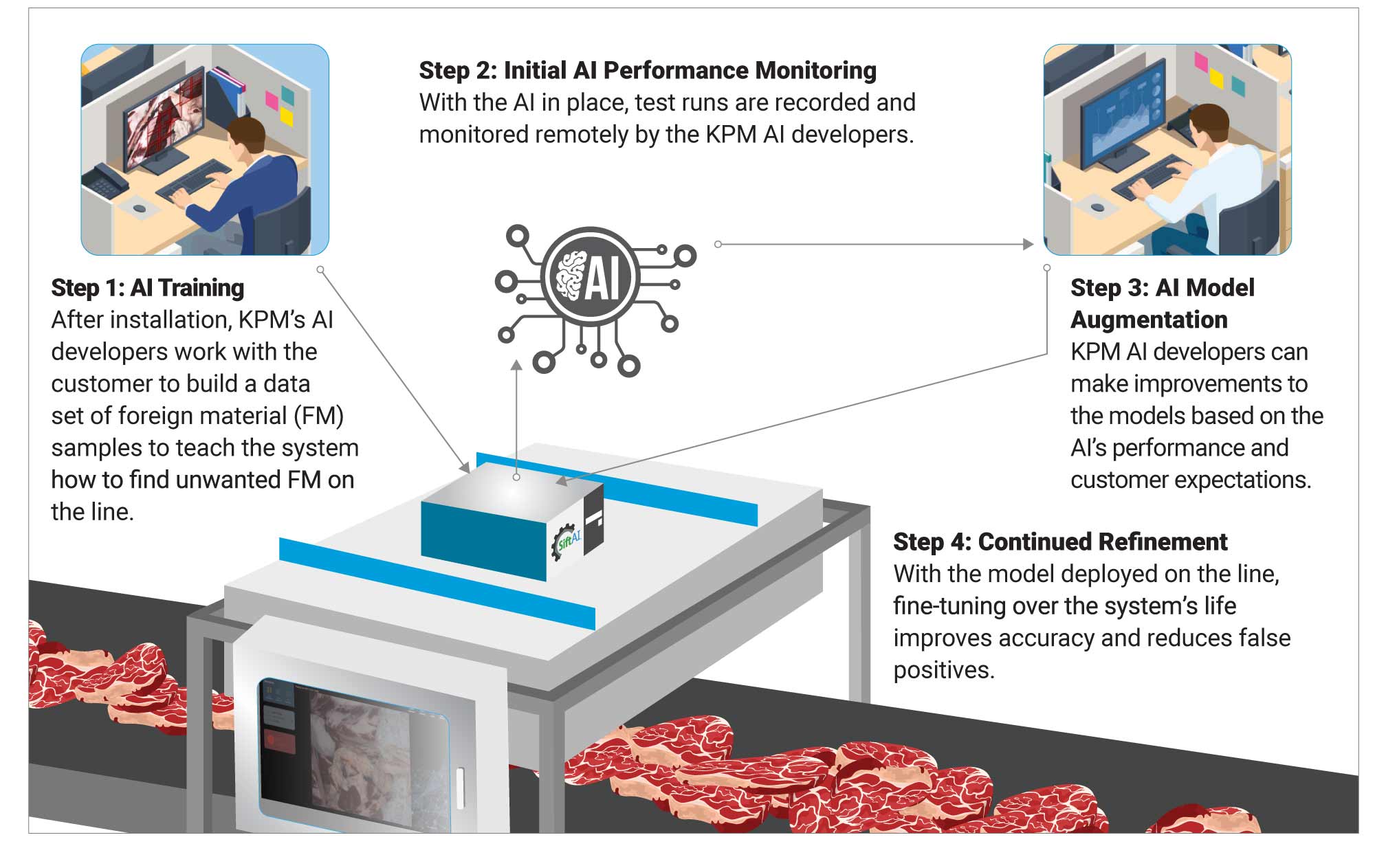
The SiftAI® platform has been deployed across meat and poultry processing operations since its introduction in 2022, and its detection models carry years of that real-world refinement. KPM handles model creation and updates using its patented methods, and the lifecycle is managed, not static:
- AI training - after installation, KPM's AI developers work with your team to build a dataset of the FM types in your risk profile.
- Initial performance monitoring - test runs are recorded and monitored remotely by KPM's AI developers.
- Model augmentation - improvements are made based on system performance and your team's expectations.
- Continued refinement - fine-tuning over the system's life improves accuracy and reduces false positives, so the line crew doesn't learn to ignore alarms.
Rejection Handling Configured to Your Process
On detection, the system can drive a KPM-designed rejection mechanism, route the defect to secondary processing, alarm the line, or route the event to the at-line HMI for operator disposition. Operators view a live production stream and label detections at-line; QA reviews the historical log, filterable by defect type, with images, for verification, trending, and audit response.
Kept Current by KPM, Supported Remotely
SiftAI® FM runs on an annual support plan covering software, security, and AI model updates, maintained remotely by KPM's team of AI training experts. Every deployment gets smarter over time - your model doesn't age out, and your maintenance team isn't on the hook for AI upkeep.

SiftAI® FM detects visible foreign material regardless of density - including the categories that generate the most customer complaints in ground beef supply chains, and the one that historically nothing caught.
The same platform inspects beef, pork, and poultry; fish and seafood; root crops; IQF ingredients; dairy; and more - trained per product.
- Clear Plastic - NEW
- Colored & hard plastic
- Soft plastics & films
- Paper / cardboard
- Gloves, uniform & PPE fragments
- Fat & sinew clumps
- Ear tags & ID chips
- Glass
- Rubber
- Wood