Get More Information
Fast Answers for QC, Production, and Plant Management
One Analyzer, Every Team on Your Floor
From incoming raw material to final release, the SpectraStar™ XT NIR spectrophotometer gives every team the same fast, operator-independent numbers, whether they're at the QC bench or out on the line.
For QC & the Lab: Clear the reference-method backlog. Swap slow oven-moisture and solvent-fat methods for a one-minute scan, and reach tougher constituents like fiber, ash, and fatty acids with the extended range. Build calibrations for your own products with UCal™ 4, and keep full traceability through a SQL database and LIMS export.
For Production & Operations: Decide in the moment, not after the lab. A sealed, fanless analyzer with a 17" touchscreen runs at-line with minimal training, so you can check batches in process, cut giveaway and rework, and release product faster with results anyone can reproduce.
For Plant Management: One platform, every site, one standard. TRUE ALIGNMENT Spectroscopy and KPMLink® keep every analyzer reading to the same standard across shifts and locations, with no mandatory recurring license to keep it running, which helps lower your total cost of ownership.

What SpectraStar™ Measures
The Constituents That Drive Your QC Decisions
When it comes to near infrared spectroscopy equipment, the SpectraStar™ XT stands out as a work horse. It's more than just an NIR moisture analyzer - sure it measures moisture, but it also analyzes fat, and protein as standard, and with the extended wavelength range of the XT-R model, you can also measure fiber, ash, sugars, starch, and fatty acids in more complex products. It ships with ready-to-use calibrations across the major food categories, so most processors are measuring on day one without building their own models.
Ready-to-Use Food Calibrations Include:
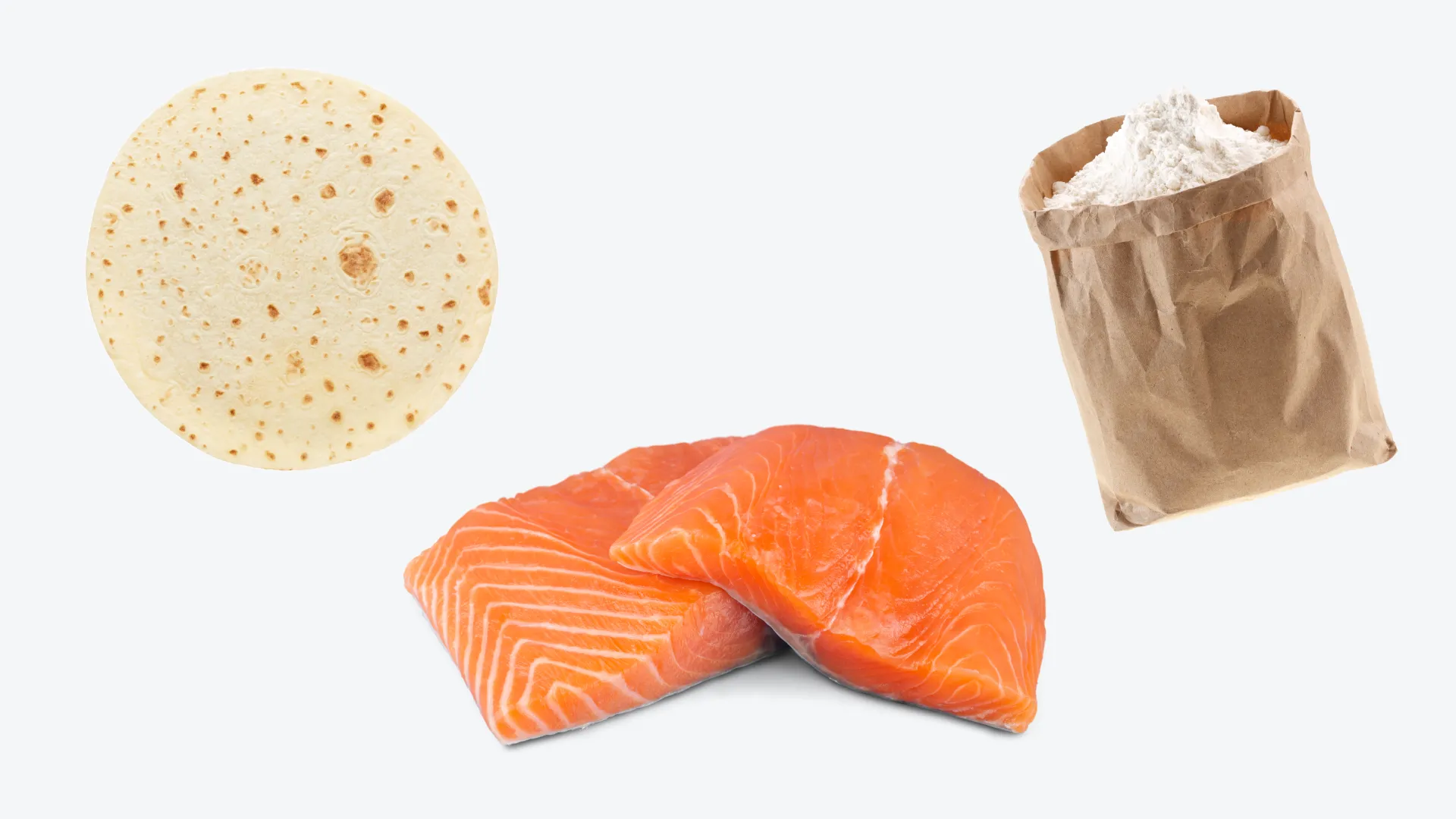
- Flour and grains: hard wheat, soft wheat, and clear flour; ground wheat; corn, corn flour, and corn meal; white and brown rice; whole oats
- Snacks and baked goods: cookies, potato chips, tortilla chips, pita chips
- Breakfast cereals: flakes, nut-based, colored, oat-based, etc.
- Meats & seafood: various meats & byproducts, meals, rind, blend, sausage, salami, etc.
- Other: food additives, oilseeds and seed oils, olive oil, nuts, potato flakes, processed foods
Additional food calibrations are available and custom calibrations can be built with UCal™ 4. Talk to our experts about your unique needs.
Proven NIR, Built for the Lab and the Line
The same analyzer runs on the QC bench and out on the production floor - one platform, one set of results.
- Fast: samples analyzed in under a minute; results on a 17" touchscreen in a couple of touches.
- Simple & safe: little or no sample prep, no hazardous chemicals to buy, store, or dispose of.
- Sealed & fanless: a sealed, powder-coated aluminum case with no venting or fan - at home in a clean lab and rugged enough for at-line use.
- Stays aligned: patented TRUE ALIGNMENT® Spectroscopy (TAS) corrects drift and re-standardizes the instrument to factory values, so results hold over time and transfer cleanly across units and locations
- Connected: UScan™ software with SPC trend charting, direct report printouts, customizable LIMS export, and cloud access via KPMLink®
Why Choose SpectraStar™?
- NIR over wet chemistry: minutes instead of hours, no solvents, operator-independent results you can act on at the line.
- Open calibration approach: ready-to-use Unity calibrations plus UCal™ 4 to build or port your own models freely.
- No mandatory recurring license to keep your analyzer running. Combined with a user-changeable 10,000-hour lamp and low-cost user parts, this can lower total cost of ownership.
- Extended range, dual detector: 680–2600 nm across 1920 data points, reaching below and above the conventional ~800–2500 nm NIR window to support difficult constituents like fibers, sugars, and fatty acids.
- Sealed, fanless design: no venting or fan, for dust and rugged use at-line.
- ISO 12099 aligned: meets NIR guidelines for feedstuffs, cereals, and milled cereal products.

Specifications

Related Information
Users can select from several pre-programmed calibrations and calibration bundles, ranging from raw ingredients to complex, processed compositions. Calibrations are regularly updated and can be customized for a wide variety of sample types and constituents.
No, if you have a primary reference method, you can calibrate your unit quickly and easily.
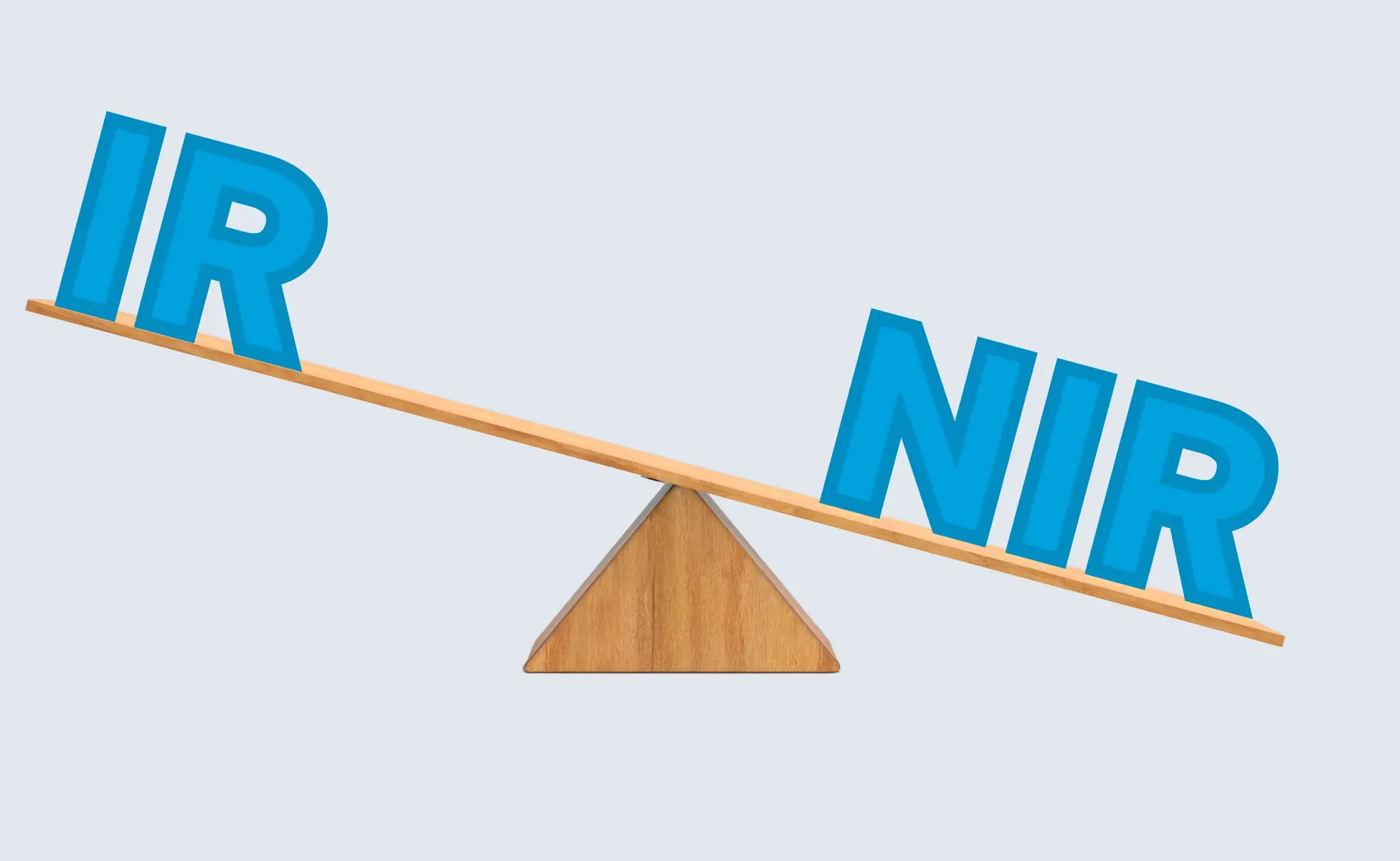
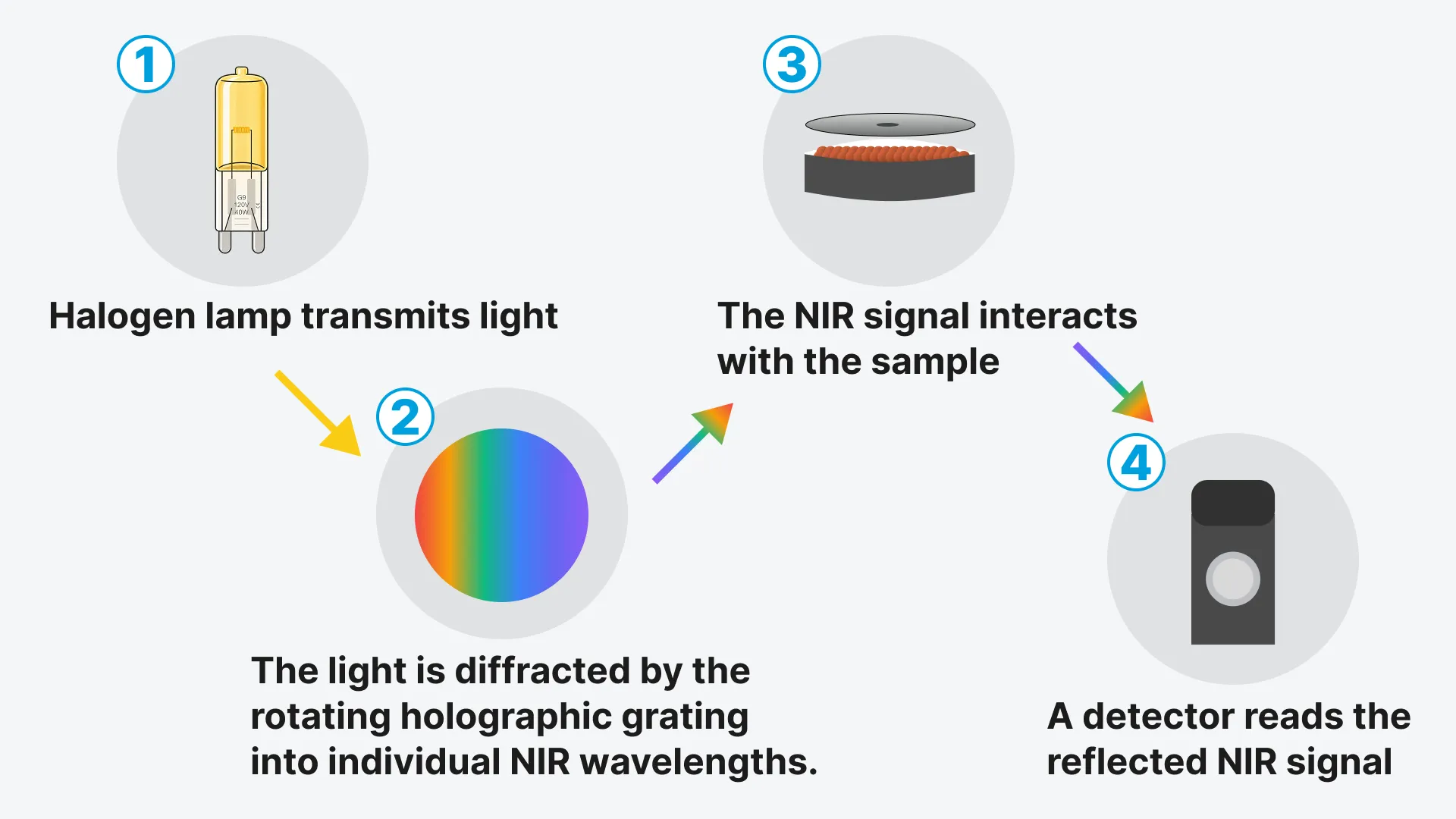
NIR stands for Near Infrared, which is a non-destructive analytical technique that uses light to determine the composition of food products. NIR analyzers use this technology to analyze food products for various properties such as moisture, protein, and fat content.
NIR analyzers are nondestructive sensors that monitor moisture and fat inline or at-line during production. They offer several benefits to food manufacturers, including improved process control, consistent product quality, cost savings, and better compliance with regulations.

.avif)