Powrót do mąki: Kleistość jako cecha funkcjonalna produktów piekarskich
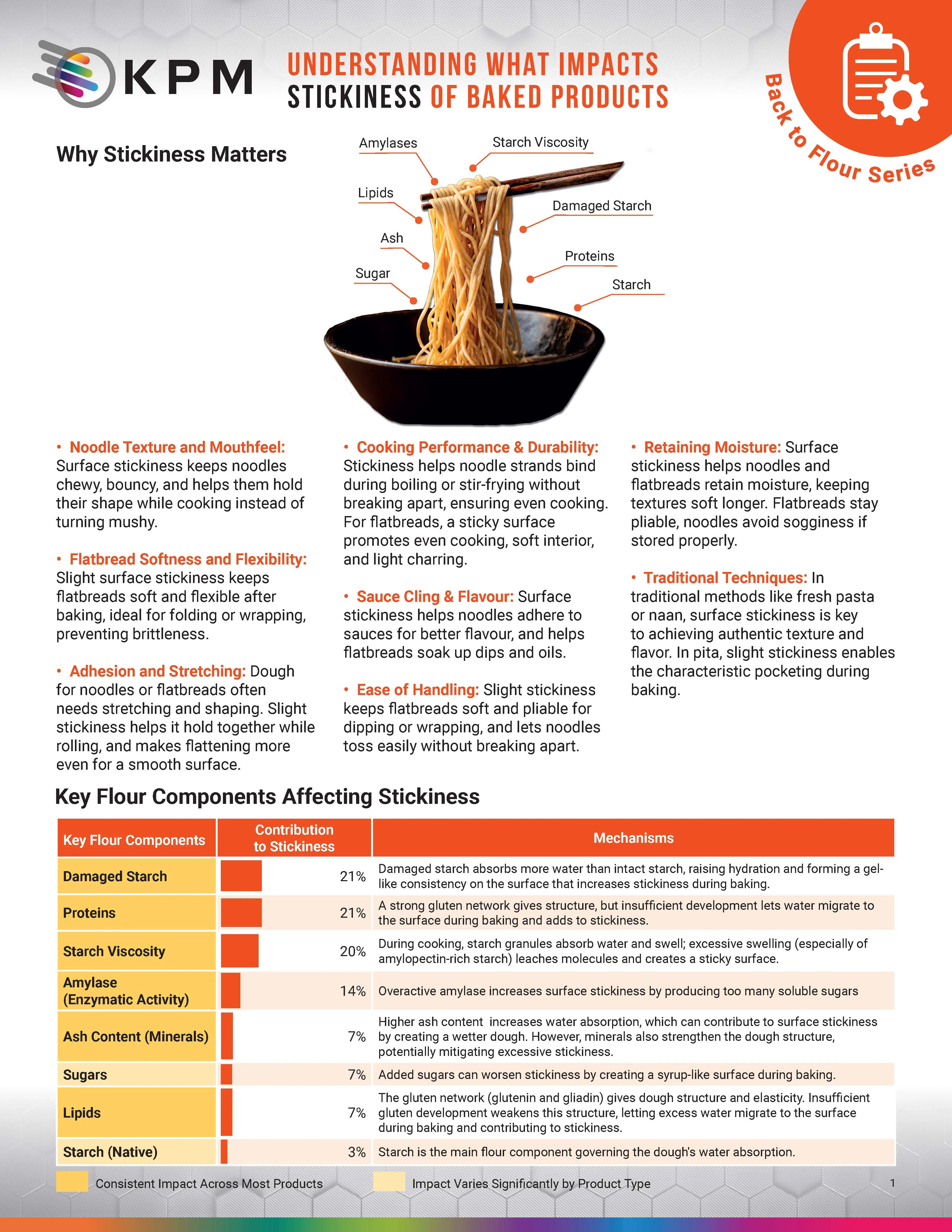
W przypadku produktów takich jak makarony czy pieczywo płaskie, mierzalna kleistość powierzchni nie jest wadą, lecz cechą funkcjonalną. W makaronach sprawia, że nitki są sprężyste i elastyczne, pomaga im zachować kształt zamiast rozmiękać, wiąże je podczas gotowania lub smażenia, dzięki czemu gotują się równomiernie bez rozpadania się, a także pozwala sosom lepiej przylegać, co poprawia smak. W pieczywie płaskim lekka lepkość zachowuje miękkość i elastyczność po upieczeniu, ułatwiając składanie lub zawijanie bez kruszenia, jednocześnie sprzyjając równomiernemu wypiekowi, miękkiemu wnętrzu i delikatnemu przypieczeniu. Ta sama właściwość ułatwia formowanie i rozciąganie, pomaga obu produktom zatrzymać wilgoć i dłużej zachować miękkość, a także stanowi podstawę tradycyjnych technik, od tekstury świeżego makaronu czy naan po charakterystyczne kieszonki w picie podczas pieczenia.
Jeśli chodzi o mąkę, dominują trzy składniki o niemal równym znaczeniu. Uszkodzona skrobia zwiększa hydratację i tworzy żelową powierzchnię, białka decydują o tym, ile wody migruje na zewnątrz w zależności od rozwoju glutenu, a lepkość skrobi napędza pęcznienie i wymywanie, które tworzą kleistą powierzchnię. Aktywność amylazy potęguje ten efekt poprzez produkcję rozpuszczalnych cukrów, podczas gdy zawartość popiołu, cukrów i lipidów odgrywa mniejszą rolę, a skrobia natywna pozostaje podstawowym czynnikiem determinującym absorpcję wody. Jak pokazuje druga tabela, wkład tych składników różni się w przypadku makaronów i pieczywa płaskiego.
Niniejszy dokument jest częścią serii Powrót do mąki, programu edukacyjnego, który łączy naukę o mące z charakterystyką produktów piekarniczych. Dowiedz się więcej tutaj.