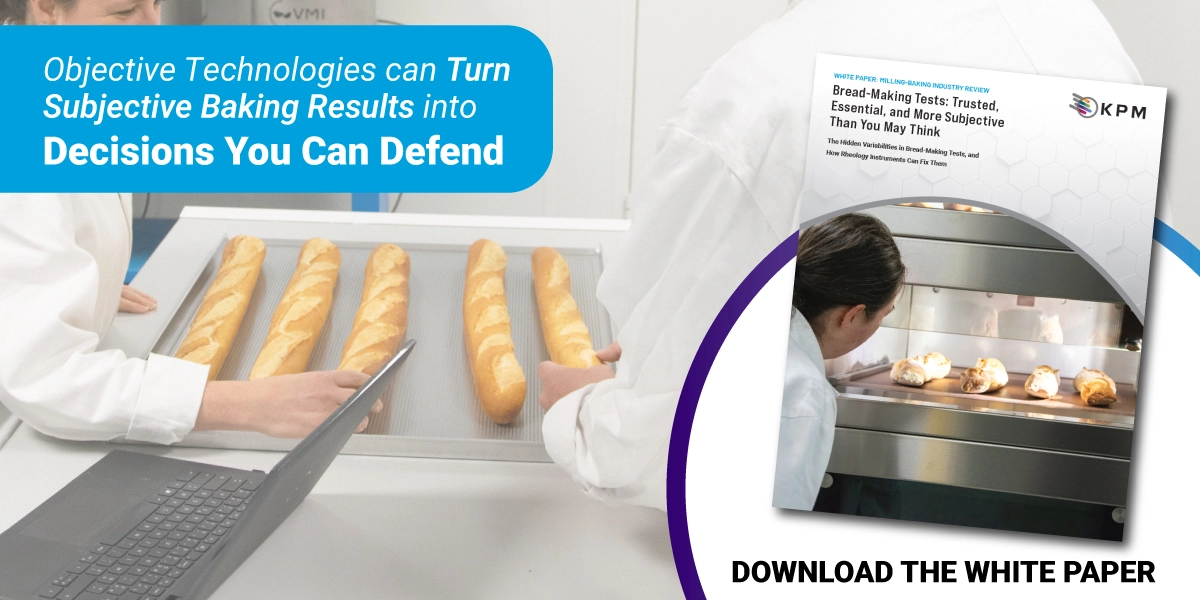
Pruebas de panificación: fiables, esenciales y más subjetivas de lo que cree
Su prueba de panificación le dice qué sucede, pero no por qué.
Durante generaciones, la prueba de panificación ha sido la referencia definitiva sobre la calidad de la harina. Se puede tocar, oler, romper y probar; sin simulaciones ni cálculos. Pero esa misma fortaleza oculta una debilidad: el panadero solo ve el resultado, no la razón detrás de él. Cuando una pieza no cumple las expectativas, la explicación depende del juicio y la experiencia.
Este informe técnico documenta un estudio controlado en el que dos laboratorios acreditados hornearon la misma harina comercial bajo la misma norma francesa (NF V03-716) y obtuvieron resultados que apenas se parecían entre sí.
El documento muestra cómo combinar la prueba de panificación con datos reológicos objetivos proporciona a panaderos, molineros y compradores un punto de referencia fiable para los momentos en que los resultados interpretados subjetivamente no coinciden.
Contenido
- Un estudio de caso comparativo de dos laboratorios acreditados analizando la misma harina, y por qué un conjunto de resultados resultó fiable mientras que el otro no
- Cómo las expectativas del operador —y no solo el horno, el lote de ingredientes o la humedad— impulsan gran parte de la variabilidad en la interpretación de las pruebas de panificación
- Dónde tres mediciones reológicas (fuerza y extensibilidad de la masa, comportamiento completo de mezclado y calentamiento, y daño al almidón) aportan objetividad, repetibilidad y comparabilidad que la prueba de panificación no puede ofrecer por sí sola
- Un marco de decisión práctico: qué hacer cuando la reología y los resultados de panificación coinciden, y qué le indica realmente su discrepancia
📩 Descargue este informe técnico rellenando el formulario de esta página.