.webp)
Control Your Process, Don't Just Check It
Grab samples tell you what one handful of product looked like, minutes ago. Between checks, the line keeps producing, and drift in moisture or fat becomes off-spec product before a result comes back.
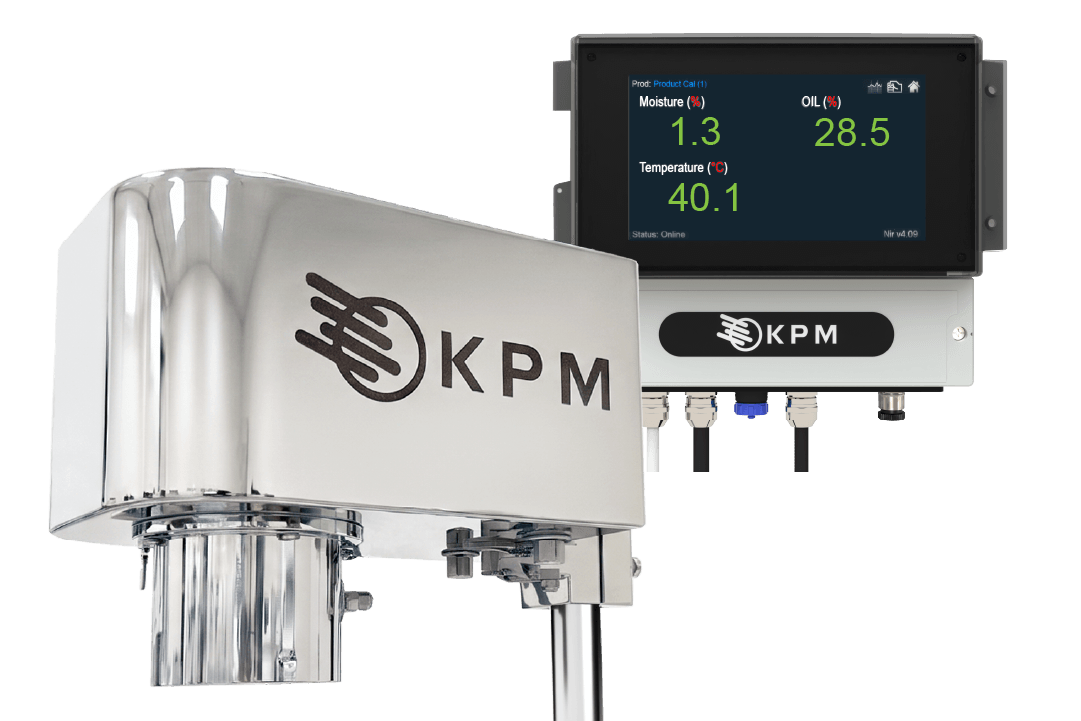
The MCT700 Series NIR spectroscopy sensor closes that gap, bringing continuous moisture analysis to food production right on the line. These food-grade, non-contact near infrared sensors measure moisture, oil/fat, temperature, and color as product moves under the sensor, and provide up to 100 readings per second, so operators can hold the spec in real time. It complements the reference analysis your QC lab already does, holding the on-line the targets your lab defines.
- Up to 100 readings per second, non-contact
- Moisture accuracy +/- 0.1%, oil/fat +/- 0.2%
- Food-grade stainless steel, IP67 and IP69K options
- Feeds live data to your PLC or SCADA
Get More Information
Who It's For
One MCT NIR instrument serves QC, production, and engineering, working alongside your lab.
- For QC & Quality Managers: Extend your lab's reach onto the line. Continuous data between reference samples means drift is caught as it happens, complementing the bench analysis that defines your spec.
- For Production & Operations: Hit targets while the batch is live. Real-time readings let operators tune oven, fryer, and dryer settings to hold spec, cut rework, and reduce giveaway.
- For Process & Controls Engineers: Wire measurement into control. Isolated 4-20mA and 0-10V outputs plus industrial protocols push live data straight to your PLC or SCADA.
- For Plant & Multi-Site Management: One standard across every line and site. Simple to standardize, with the Cal Check Standard transferring calibrations between sensors for consistent results, plant to plant.

Closed Loop Control
Measuring continuously is only half the value. Because the MCT Series reads up to 100 times per second and outputs live data, those measurements can feed straight into your process, something a lab or bench instrument fundamentally can't do while product is still being made.
- See drift as it happens. Real-time moisture, oil/fat, and temperature trends on a 7-inch touchscreen and in SensorVu software, logged for review.
- Adjust the process live. Operators can respond immediately, tuning oven, fryer, or dryer settings to bring product back to target before a batch goes off-spec.
- Feed your control system. Isolated 4-20mA and 0-10V outputs and industrial protocols let the sensor push data straight to your PLC or SCADA for automated control.
Easy Integration
Feeding your control system only works if the sensor speaks its language and fits the line you already run. The MCT Series is built to drop into existing plant systems and mount over the equipment you already have.
Connects to your control system:
- Industrial protocols: Ethernet TCP/IP, Ethernet IP, EtherCAT, ProfiNet, ProfiBus, Modbus TCP, Modbus RTU, DeviceNet, OPC-DDE Server, and USB.
- Isolated 4-20mA and 0-10V analog outputs feed data straight to your PLC or SCADA.
- SensorVu software connects multiple MCT sensors in a location for centralized monitoring, calibration, and diagnostics, and the Cal Check Standard transfers calibrations between sensors to standardize results across lines and sites.
Mounts to your process:
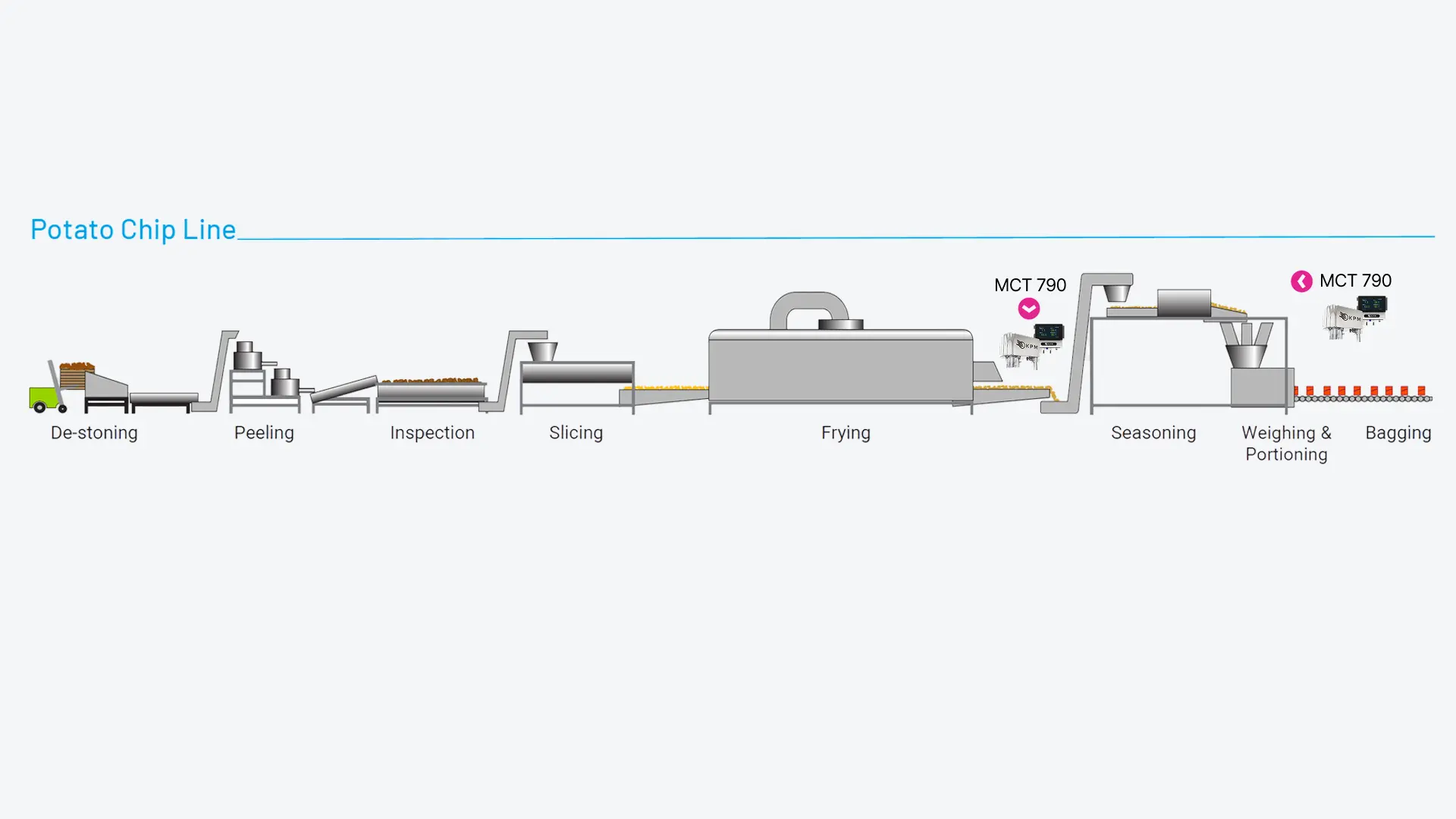
- Belt conveyors: mounted 200-450 mm (8-18 in) above the product.
- Augers & screw conveyors: installed offset to the shaft, with software that cancels the influence of the passing flights.
- Bins & chutes: sapphire sight windows enable look-in analysis of flowing product.
- Full-width scanning: the optional food-grade Guardian-HD traversing frame analyzes across the entire belt width.
- Segmented product: high-speed gating measures only when product is present, so non-continuous flow (cookies, snack cakes, granola bars, individually packed noodles, freeze-dried portions) is measured accurately at full line speed.
.webp)
Food-Grade Durability
A sensor over a food line has to survive the environment and pass the audit. The MCT Series is built to stay on the line.
- Food-grade enclosures: rugged stainless steel with IP67 (MCT700) and IP69K (MCT750, MCT790) options for washdown environments.
- Durable optics: Kel-F (MCT700) or sapphire (MCT750, MCT790) sensor windows.
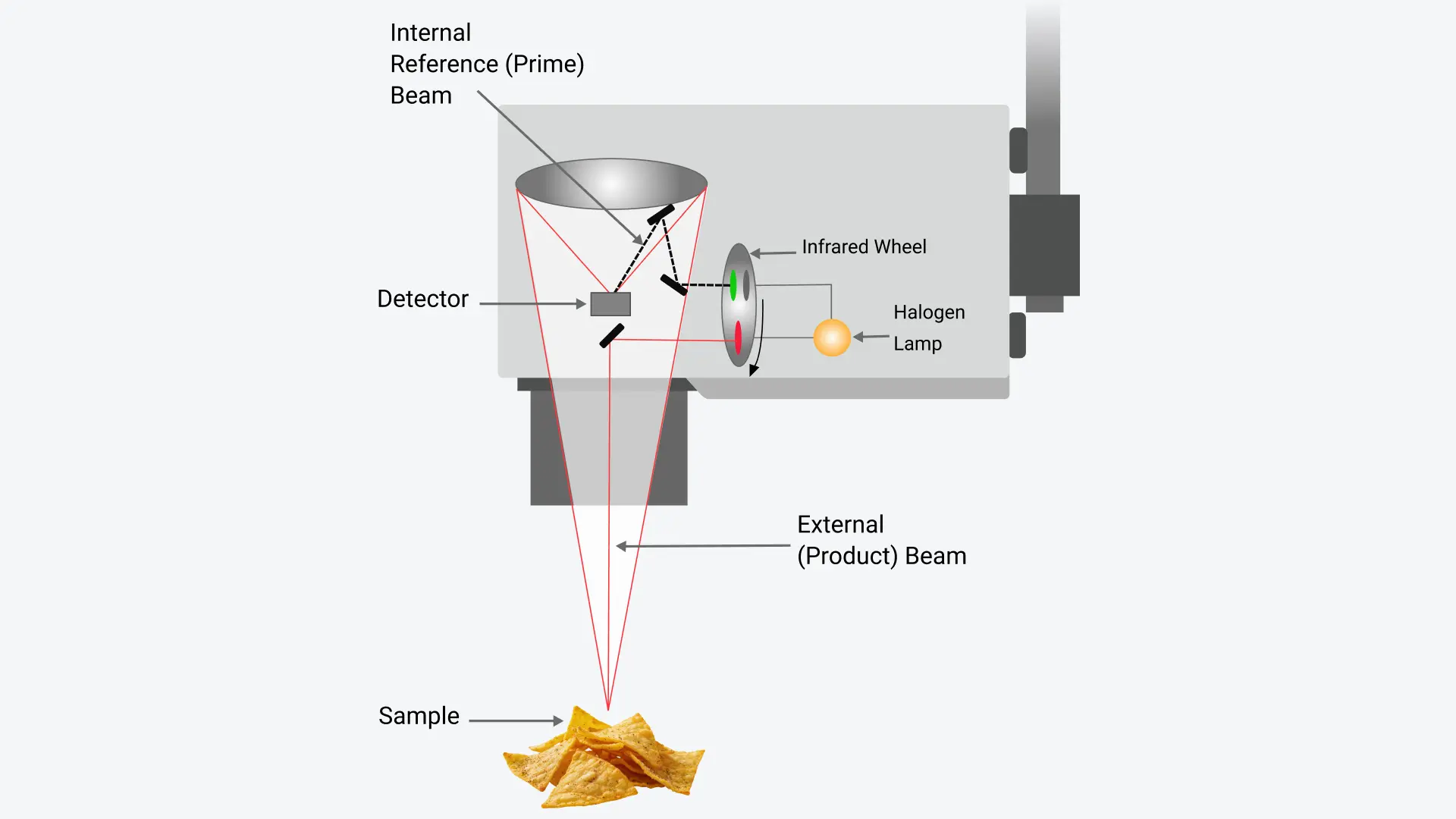
- Stable measurement: a proprietary temperature-controlled detector holds readings steady as conditions change; optional water or air cooling supports high-temperature applications up to 80 °C (160 °F).
- Low maintenance, high uptime: fully modular with field-replaceable components, plus on-board diagnostics for lamp life, motor life, vibration, and window contamination.
- Two-year limited warranty.
What It Measures
Proven across food and snack production, the MCT Series monitors moisture, oil/fat, temperature, and color* during production for a wide range of products, including:
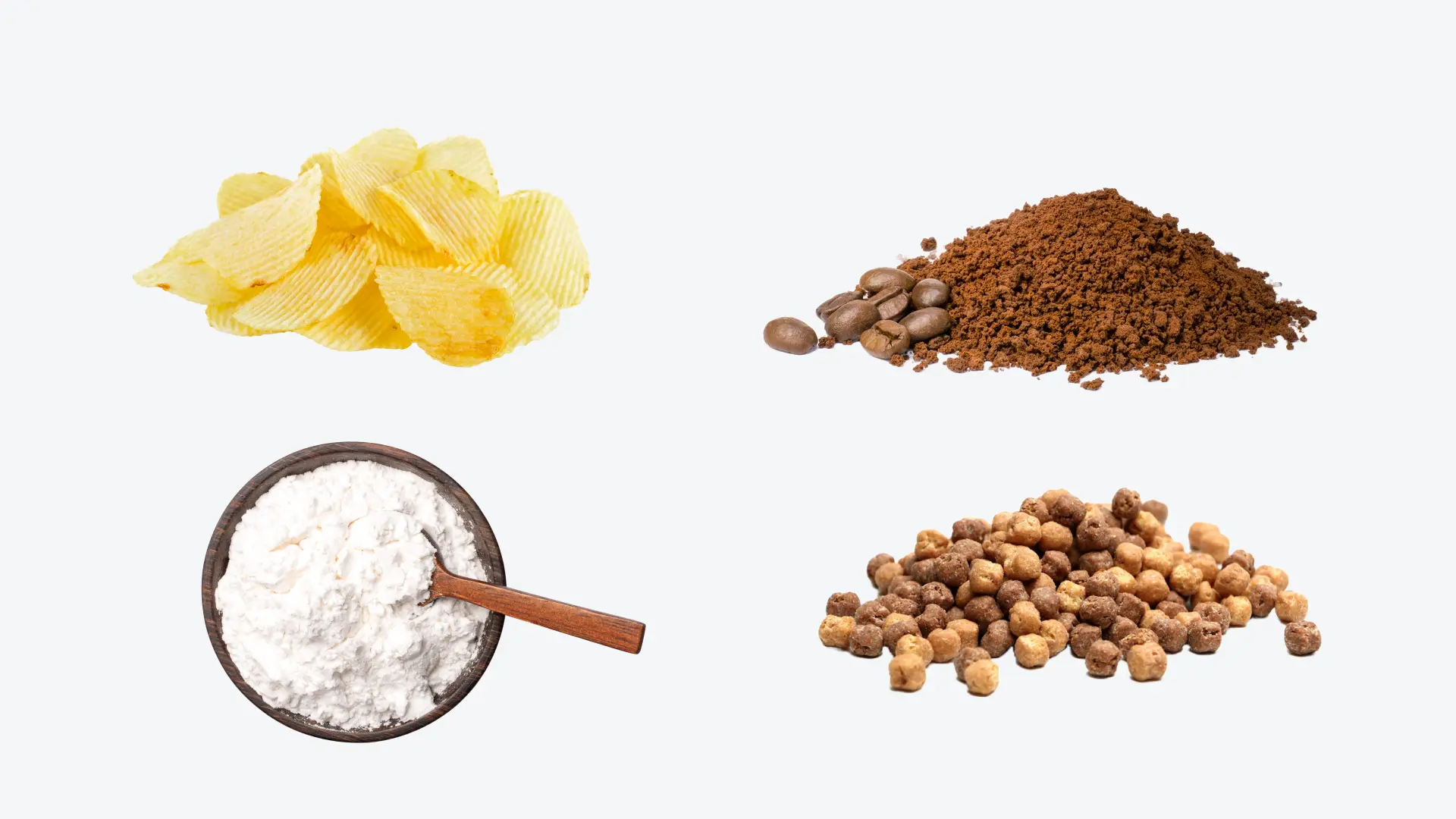
- Potato chips, corn chips, and tortillas
- Cookies, crackers, and pretzels
- Extruded and puffed snacks, popcorn, pork rinds
- Breakfast cereals, doughs and dough sheets, bread crumbs
- Ground meat, rendering products, sausage skins
- Flours, starches, potato flakes, milk powders
- Coffee, tea, cocoa powders, sugar, and salt
*The MCT790 model adds integrated color measurement on the same platform, for applications where product color matters alongside composition.
Specifications
For complete technical specifications, download the MCT700 Series brochure.
Related Information
NIR analyzers are nondestructive sensors that monitor moisture and fat inline or at-line during production. They offer several benefits to food manufacturers, including improved process control, consistent product quality, cost savings, and better compliance with regulations.
NIR stands for Near Infrared, which is a non-destructive analytical technique that uses light to determine the composition of food products. NIR analyzers use this technology to analyze food products for various properties such as moisture, protein, and fat content.