Back to Flour: Comprendre ce qui influence la grigne des produits de boulangerie
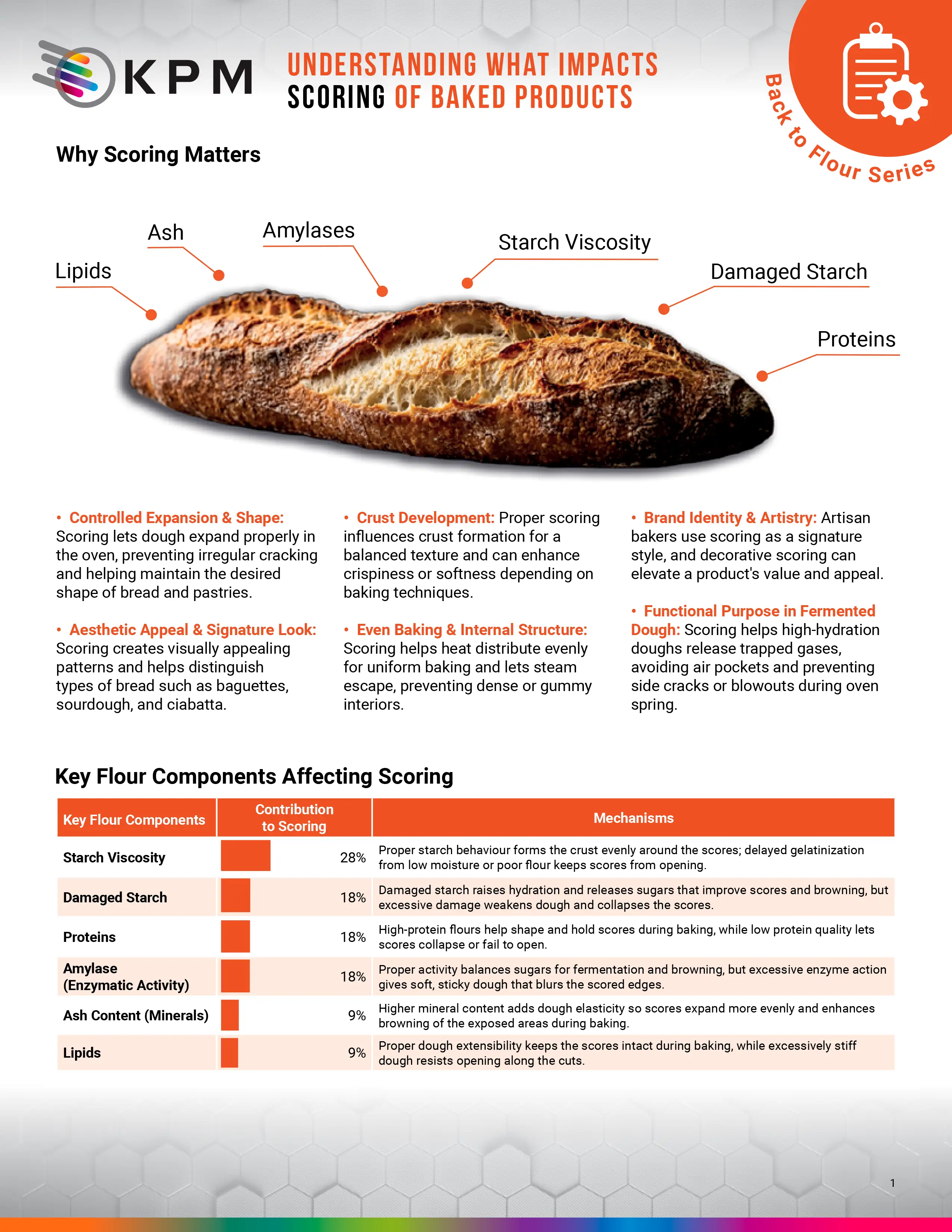
Scoring is where technique meets artistry. Those deliberate cuts let dough expand properly in the oven, preventing irregular cracking and helping bread and pastries hold their intended shape. But scoring does far more than control expansion. It shapes crust development, influencing texture and enhancing crispness or softness depending on the method, and it helps heat distribute evenly while letting steam escape, which keeps interiors from turning dense or gummy. In high-hydration fermented doughs, it plays a functional role too, releasing trapped gases to avoid air pockets, side cracks, or blowouts during oven spring. And beyond function, scoring is a visual signature: it distinguishes baguettes, sourdough, and ciabatta, and lets artisan bakers turn a decorative pattern into a mark of identity and value.
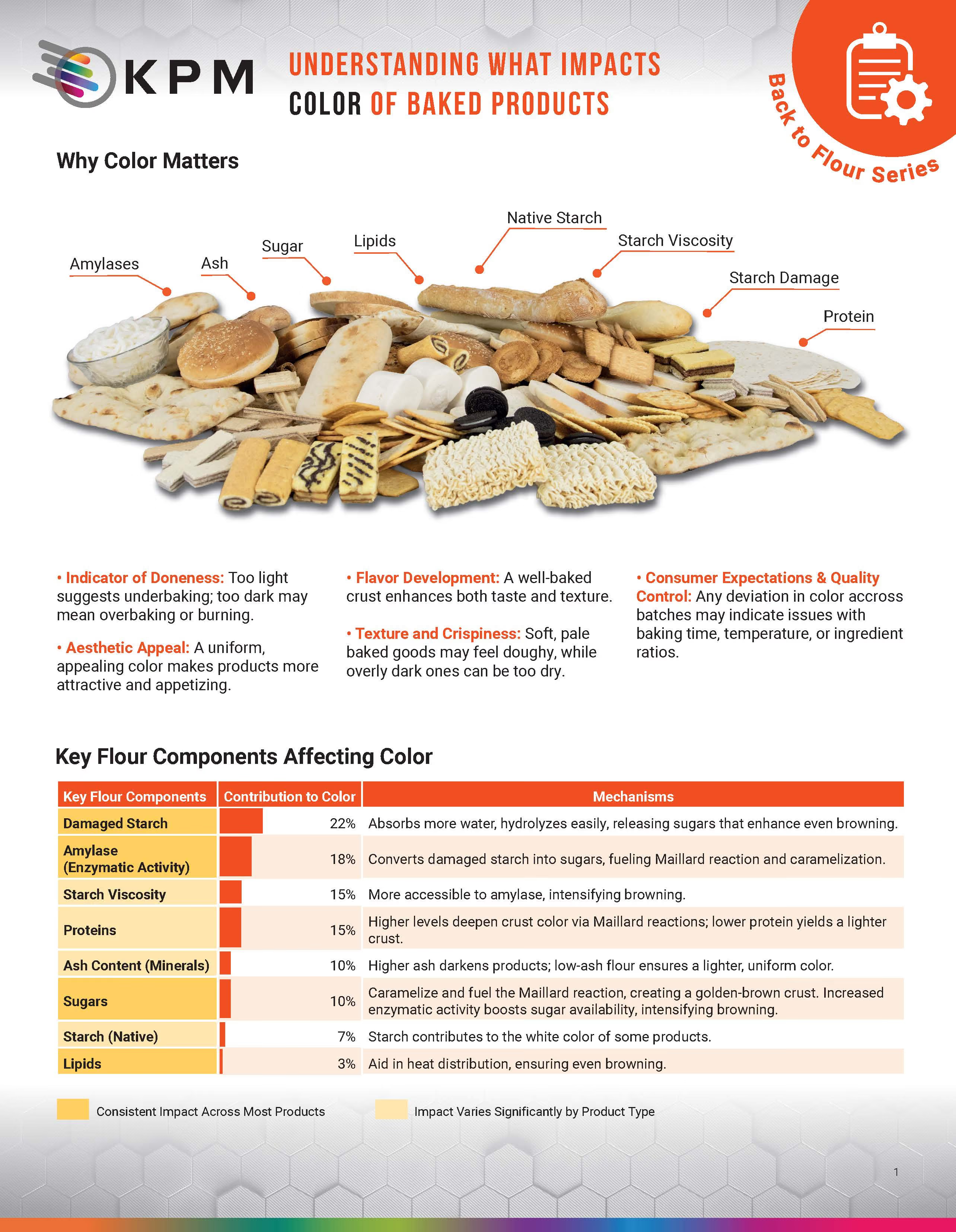
How cleanly those cuts open depends heavily on flour composition. Starch viscosity carries the greatest weight, since proper starch behaviour forms the crust evenly around the scores while delayed gelatinisation keeps them from opening. Damaged starch, proteins, and amylase activity each follow with equal influence, governing hydration, dough strength, and the enzyme balance that either sharpens or blurs the scored edges. Ash content and lipids contribute more modestly, adding elasticity and the extensibility that keeps scores intact during baking. As the second table shows, these effects can vary from one product to another.
This document is part of the Back to Flour Series, an educational program that connects flour science to bakery product characteristics. Learn more here.