Back to Flour: The Anatomy of a Perfect Cracker
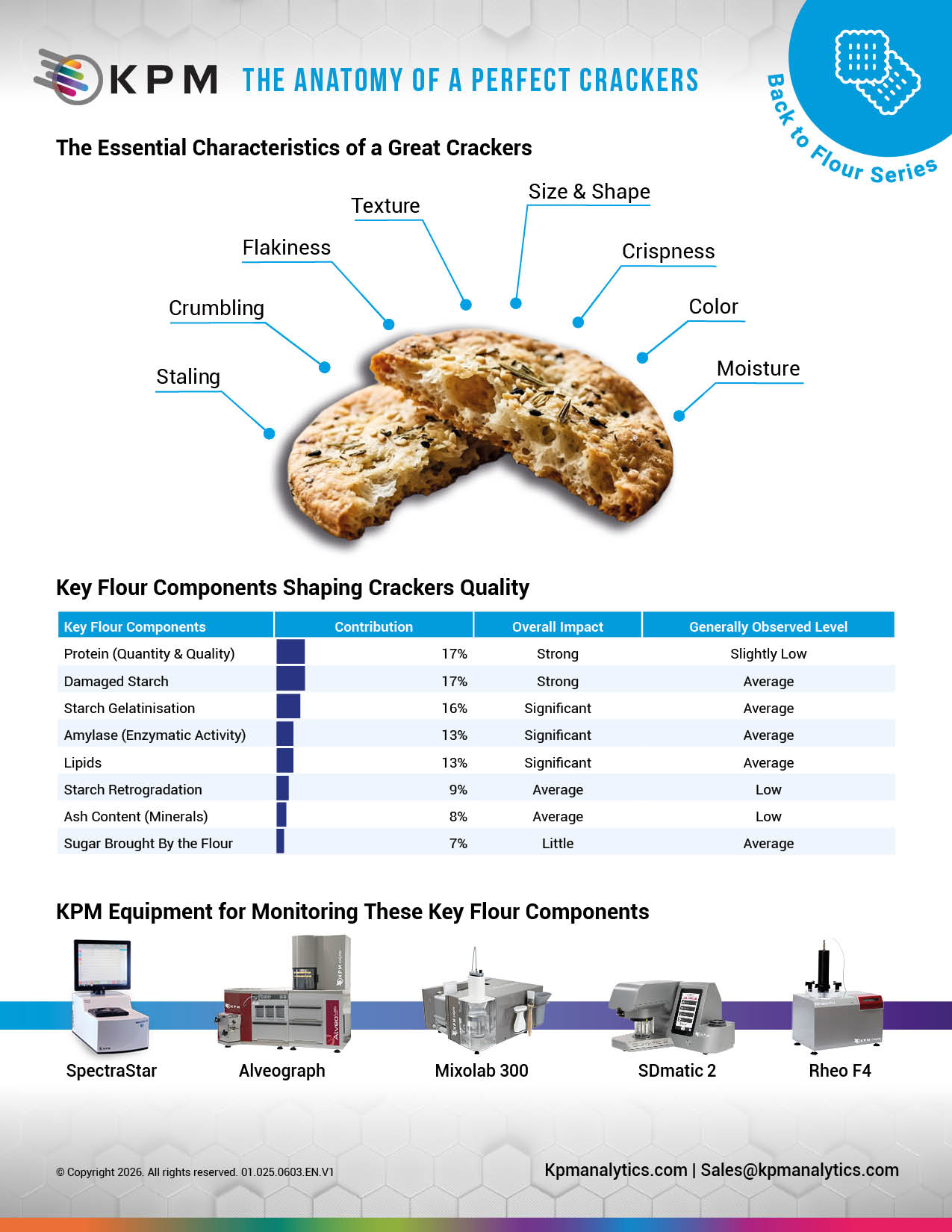
What makes a cracker satisfying? It comes down to a handful of qualities working together. Crispness and a clean bite define the eating experience, while size and shape, colour, and surface texture shape first impressions. Behind these sit the less visible attributes, flakiness, crumbling, moisture, and staling, that determine whether a cracker holds up over time or loses its appeal. Balance across all of them is what separates an ordinary cracker from a great one.
Flour composition drives much of that balance. Two components stand out with the strongest impact: protein, in both quantity and quality, and damaged starch. Close behind, starch gelatinization, amylase activity, and lipids each exert a significant influence, whereas starch retrogradation and ash content contribute more modestly. The sugar naturally brought by the flour rounds things out with a limited role. Alongside these contributions, the document also indicates the levels of each component generally observed in cracker production.
Taken together, these insights show how carefully managed flour composition underpins consistent cracker quality.
This document is part of the Back to Flour Series, an educational program that connects flour science to bakery product characteristics. Learn more here.