Improved Product Quality at Every Stage
Product quality depends on consistent materials, stable processes, and timely decisions. When variation appears in ingredients, process conditions, or finished output, it can quickly affect performance, appearance, reliability, and customer satisfaction.
KPM helps food manufacturers, industrial producers, and testing labs improve product quality by giving them better visibility into what is changing across production and analysis workflows. With solutions for inspection, in-line measurement, benchtop testing, and wet chemistry analysis, teams can identify variation earlier, make more informed decisions, and keep products consistent and closer to spec.
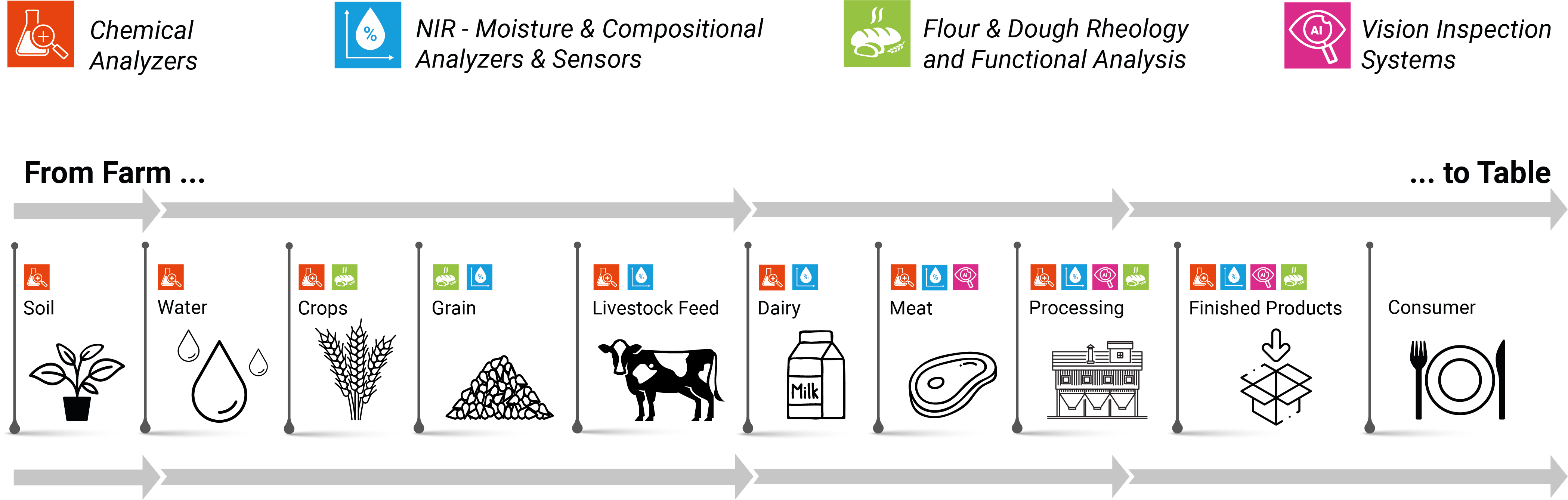





Even well-controlled operations face natural variation. Raw material differences, process changes, equipment conditions, and human subjectivity can all affect quality. In food applications, that might mean inconsistent texture, moisture, color, or appearance. In industrial applications, it can mean variation in material properties or process performance. In lab environments, it can mean slower or less reliable release and verification decisions.
KPM solutions support quality control across multiple stages of production and testing. AI-enabled vision inspection helps identify visible and non-visible defects and product inconsistencies before packaging. In-line NIR sensors help monitor critical attributes in real time for both food and industrial applications. Benchtop NIR analyzers support fast testing in lab and production settings, while wet chemistry analyzers help deliver accurate, repeatable results for verification and quality control.
Stronger product quality can help:
- Reduce defects, rework, and off-spec output.
- Improve consistency from batch to batch.
- Increase customer confidence and satisfaction.
- Make faster, more informed process decisions.
- Protect profitability by lowering the cost of poor quality.
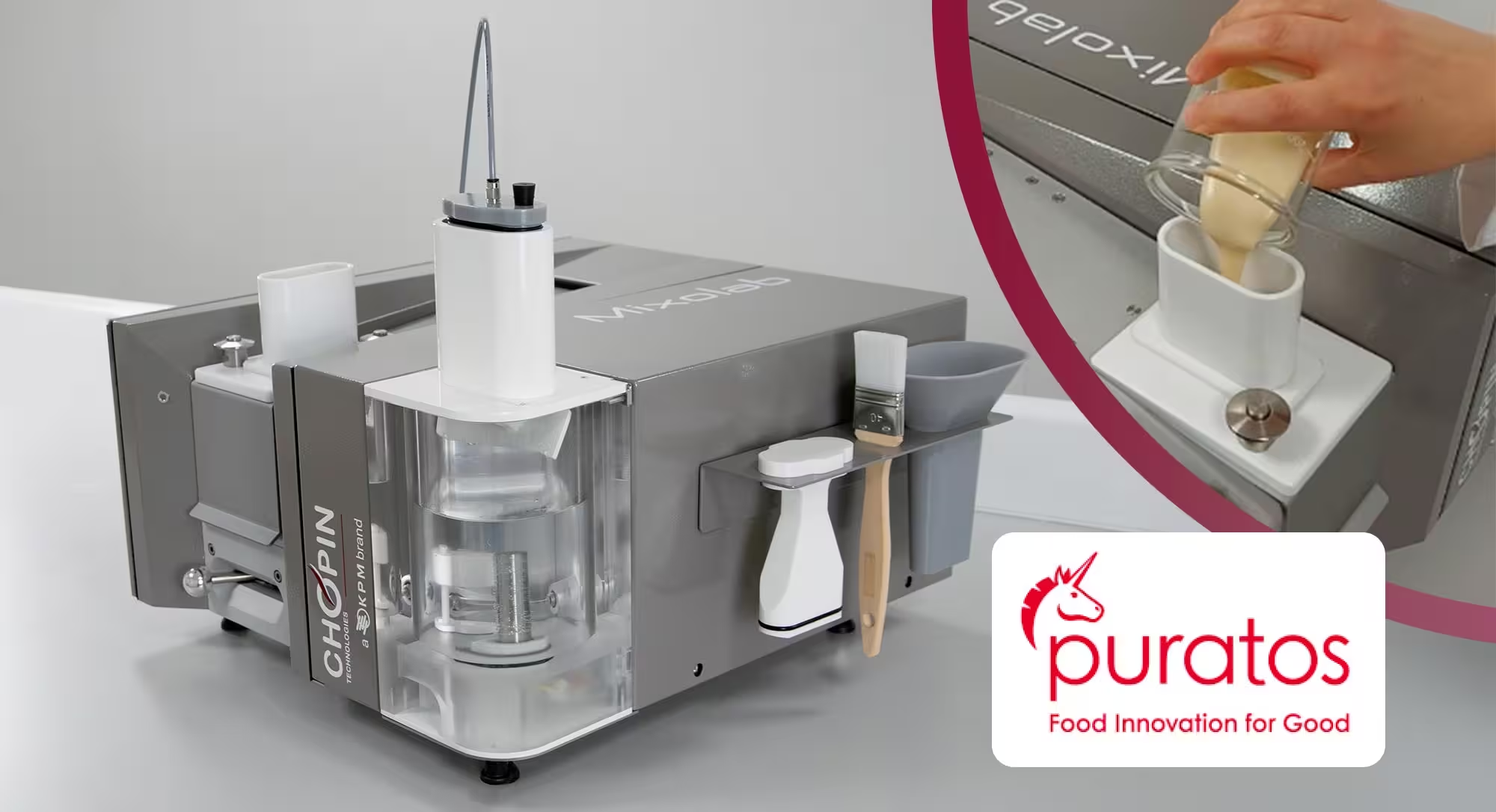
On the line, inspection systems help detect visible issues early. In process environments, in-line NIR sensors provide continuous measurement of key attributes. In laboratories, benchtop NIR and wet chemistry systems support fast testing, verification, and troubleshooting. For food applications, rheology tools help evaluate ingredient and dough performance before the product reaches the line.
This creates a more connected quality control workflow, where teams can move from observation to action more quickly.
KPM brings together a broad set of technologies that help customers measure quality from different angles. That matters because no single test can capture every quality risk. A strong quality program depends on understanding product condition, process behavior, and material performance together.
With KPM, customers gain a partner that understands both production and the lab. That makes it easier to improve product consistency, reduce waste, and support better decisions across the operation.

Strengthen Food Safety with Better Process Insight
Food safety depends on more than final inspection. It starts with understanding product variation, process stability, and the signals that suggest something may be going wrong. The earlier a problem is detected, the easier it is to reduce risk and protect product integrity.
KPM helps food manufacturers strengthen food safety by improving visibility into critical quality factors. Our solutions enable faster detection, more robust verification, and more confident decisions throughout production and testing workflows.


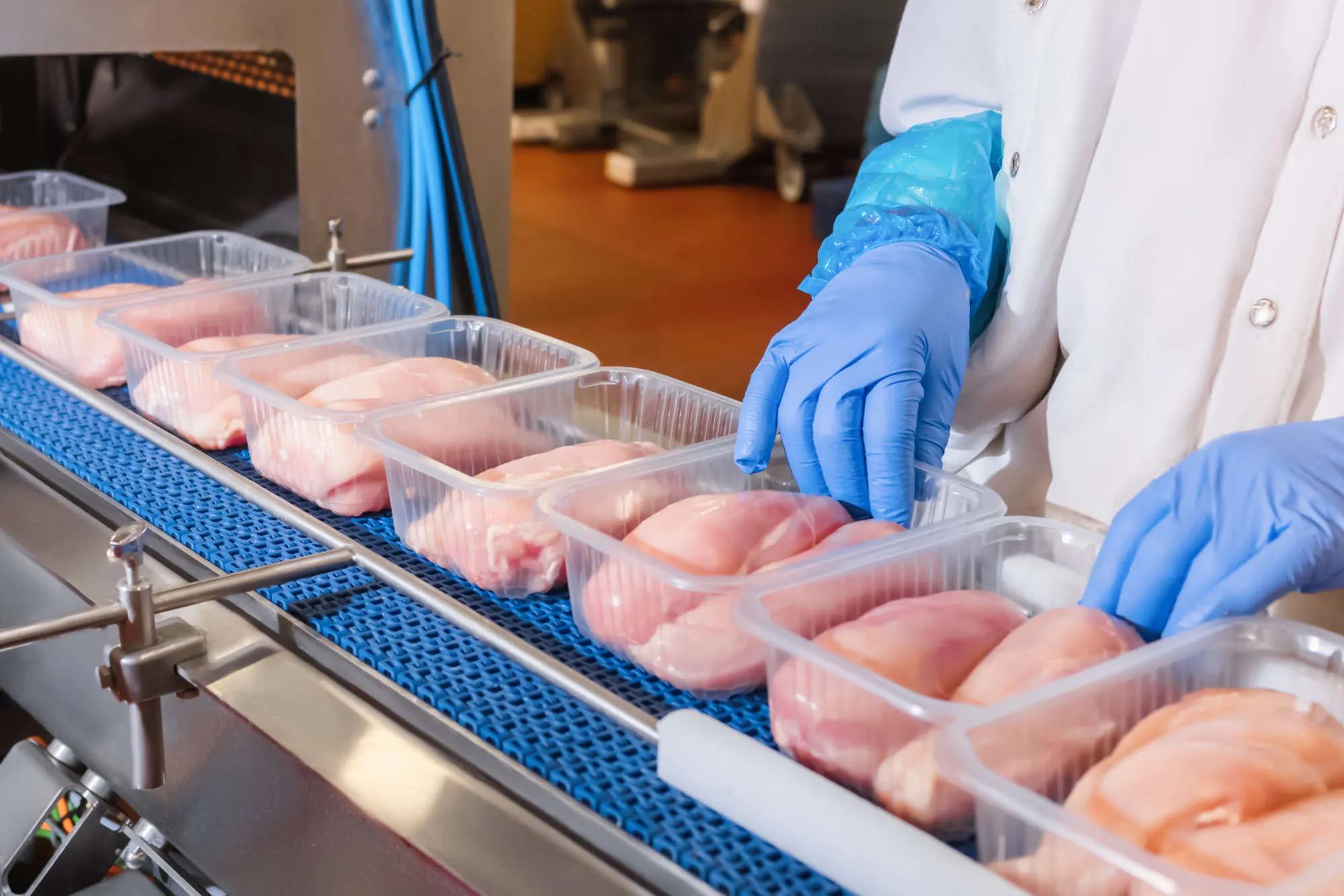
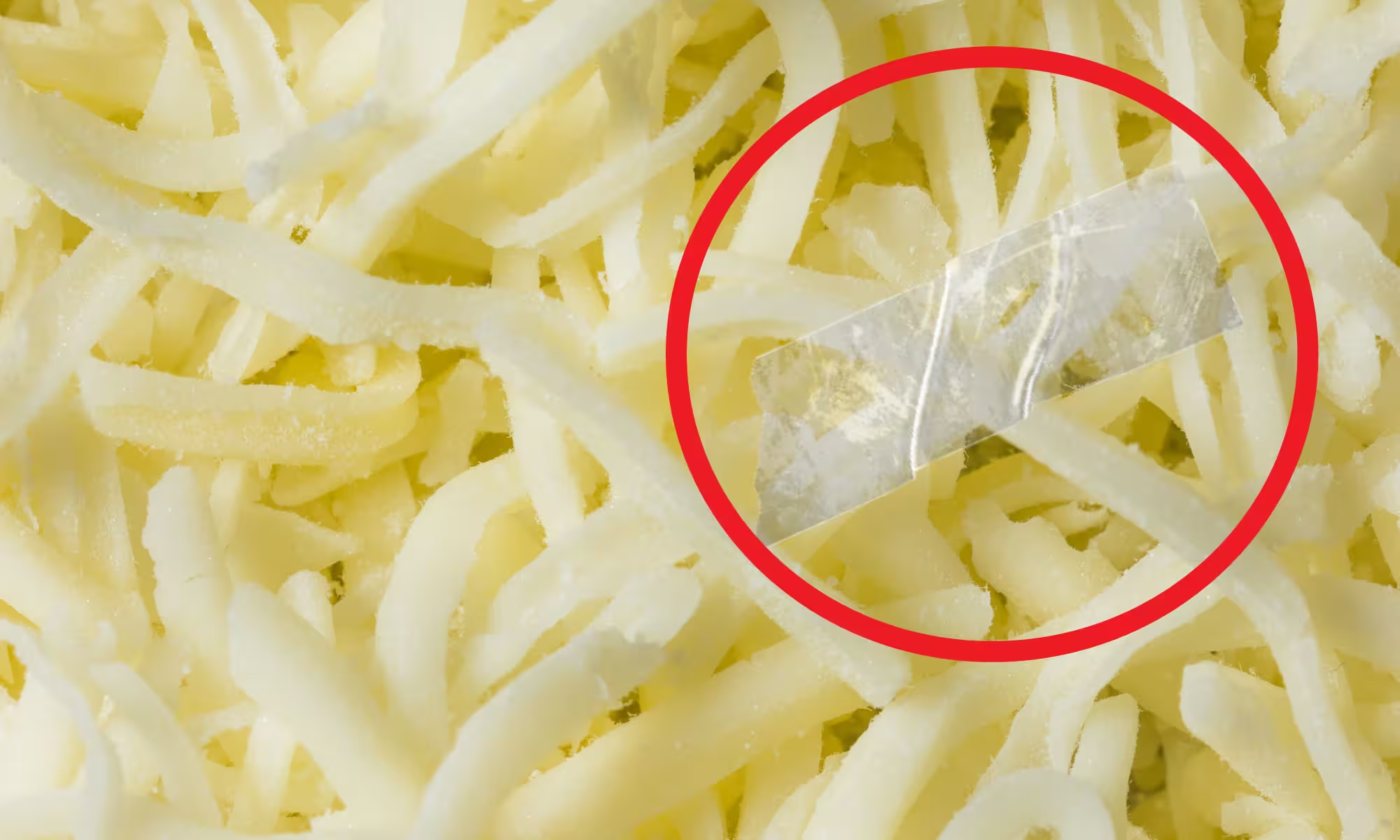
Food safety risks can emerge at many points in the process. They may begin with inconsistent raw materials, process drift, contamination concerns, or unnoticed product abnormalities. In some cases, the issue is visible. In others, it shows up only through measurement or testing.
Because these risks can develop quickly, teams need reliable tools that help them see problems earlier and respond before the product is affected.
KPM solutions help customers improve food safety by combining inspection, process measurement, and lab analysis. AI-enabled vision systems can help identify visual anomalies and product defects before packaging. In-line NIR sensors help monitor product attributes in real time, giving teams a clearer picture of process stability. Benchtop NIR and wet chemistry analyzers support R&D and lab verification with accurate, repeatable testing.
Together, these tools help create a stronger control system that supports food safety at multiple points in production.
Stronger product quality can help:
- Reduce defects, rework, and off-spec output.
- Improve consistency from batch to batch.
- Increase customer confidence and satisfaction.
- Make faster, more informed process decisions.
- Protect profitability by lowering the cost of poor quality.Stronger food safety control can help:
- Reduce the risk of unsafe products reaching customers.
- Avoid costly holds, investigations, and corrective actions.
- Improve confidence in release and verification decisions.
- Protect brand reputation and customer trust.
- Support ROI by preventing disruption and recall-related losses.
The goal is not only to identify problems, but to give teams the information they need to act quickly and effectively.
Stronger food safety programs can also improve ROI by reducing the cost of waste, rework, product holds, and unnecessary testing. When issues are identified earlier, manufacturers can make faster decisions, limit disruption, and avoid the broader financial impact of quality failures.
Just as important, better process visibility can help reduce the risk of a recall. By supporting earlier detection and more confident release decisions, KPM helps customers protect both product integrity and brand reputation.
Food safety is strongest when production and laboratory data work together. On the production line, inspection and in-line measurement help monitor product condition as it is being made. In the lab, benchtop and wet chemistry analyses help confirm quality, investigate problems, and support compliance-related testing.
KPM helps bridge those environments so customers can build a more complete picture of risk and control.
KPM is built around helping customers understand quality in a practical, production-focused way. That matters in food safety because teams need tools they can trust, use regularly, and connect to real decisions.
Our approach supports manufacturers, processors, and labs that want to improve process visibility, reduce risk, and strengthen their food safety programs without slowing production.
Reduced Waste Through Smarter Quality Control
Waste is one of the most expensive problems in manufacturing. It can come from off-spec product, rework, unnecessary rejects, process instability, or inefficient use of raw materials. In many cases, waste increases because issues are detected too late to be corrected efficiently.
KPM helps manufacturers reduce waste by improving the visibility and speed of quality control. When teams can measure product condition earlier and more accurately, they can make better decisions, reduce correction cycles, and keep more product within spec.




Waste often begins with small process changes that go unnoticed. Raw material variation, inconsistent ingredient performance, equipment drift, and delayed adjustments can all contribute to scrap and rework. If teams only discover the issue at the end of the line, they may already have lost time, material, and energy.
Reducing waste means catching those changes sooner and understanding how they affect the process.
KPM solutions help customers reduce waste by giving them better insight into product quality and process stability.
AI-enabled vision inspection can identify defects before the product progresses further. Flour and dough rheology tools help evaluate ingredient behavior before production starts. In-line NIR sensors provide real-time measurement that supports faster corrections.
Benchtop NIR analyzers help food manufacturers perform fast quality checks at the line or in the lab, allowing teams to identify problems sooner and reduce scrap, rework, and waste. Wet chemistry analyzers help large testing labs reduce reagent consumption and lab waste while maintaining accurate, repeatable results for verification and quality control.
When manufacturers and labs can see problems earlier, they can make smaller corrections, avoid larger losses, and use resources more efficiently.
Stronger product quality can help:
- Reduce defects, rework, and off-spec output.
- Improve consistency from batch to batch.
- Increase customer confidence and satisfaction.
- Make faster, more informed process decisions.
- Protect profitability by lowering the cost of poor quality.Reducing waste can help:
- Lower operating costs by using less raw material and fewer consumables.
- Improve profitability by reducing scrap, rework, and unnecessary disposal.
- Increase throughput by spending less time correcting problems.
- Strengthen sustainability goals by using resources more efficiently.
- Improve confidence in production and lab decisions.
- Protect ROI by improving quality control efficiency and effectivenes
These gains can add up quickly, especially in high-volume operations where even small improvements in control create meaningful savings.
The best waste reduction programs connect production and testing. On the production line, inspection and in-line measurement help prevent problems from spreading. In the lab, analytical tools help confirm whether changes are due to ingredient variation, process drift, or finished-product quality.
KPM supports both environments, enabling customers to move from detection to root-cause understanding more efficiently.
KPM Analytics gives manufacturers a broader view of quality, which helps reduce the guesswork that often leads to waste. Our solutions support more accurate decisions at the point where they matter most, helping teams protect yield, keep product moving, and make the most of their materials and labor.
That makes KPM a practical partner for customers looking to improve both quality and operational efficiency.
Improved Energy Efficiency with Better Process Control
Energy savings are often the result of better control. When production is unstable, teams may use more energy to correct problems, rework the product, or run processes longer than necessary. Better measurement and earlier detection can help reduce those losses.
KPM helps manufacturers improve energy efficiency by giving them better visibility into product quality and process conditions. That makes it easier to reduce unnecessary adjustments, limit reprocessing, and keep operations running more efficiently.





Energy is often lost when materials vary, processes drift, or quality issues are caught too late. Rework, excessive drying or heating, repeated processing steps, and unnecessary troubleshooting can all increase consumption.
In many cases, energy waste is a symptom of broader process instability.
KPM solutions help teams improve energy efficiency by making quality control more precise and timely. In-line NIR sensors support real-time process monitoring, helping reduce overprocessing and unnecessary corrections. Vision inspection helps identify issues earlier in the line. Benchtop NIR analyzers enable faster quality checks, while wet chemistry analyzers help large labs make accurate decisions with less delay.
These tools help operations run more efficiently by improving the quality of the decisions behind them.
Improved energy efficiency can help:
- Lower utility and production costs.
- Reduce energy wasted on reruns, reprocessing, and overprocessing.
- Increase throughput by stabilizing production.
- Support sustainability and efficiency goals.
- Protect profitability through better process control.
On the line, inspection systems help detect visible issues early. In process environments, in-line NIR sensors provide continuous measurement of key attributes. In laboratories, benchtop NIR and wet chemistry systems support fast testing, verification, and troubleshooting. For food applications, rheology tools help evaluate ingredient and dough performance before the product reaches the line.
This creates a more connected quality control workflow, where teams can move from observation to action more quickly.Quality variation and energy use are often linked. When materials vary or process conditions drift, teams may need to correct, repeat, or extend processing. That uses more time, more material, and more energy.
By helping teams understand what is happening earlier, KPM supports more stable production and less wasted effort.
KPM brings together a broad set of technologies that help customers measure quality from different angles. That matters because no single test can capture every quality risk. A strong quality program depends on understanding product condition, process behavior, and material performance together.
With KPM, customers gain a partner that understands both production and the lab. That makes it easier to improve product consistency, reduce waste, and support better decisions across the operation.KPM Analytics helps customers improve visibility, consistency, and confidence across production and testing. That matters for energy savings because efficient operations depend on accurate measurement and timely action.
By enabling better control, KPM helps manufacturers reduce the hidden energy costs associated with waste, rework, and process instability.