Back to Flour: The Anatomy of a Perfect Wafer
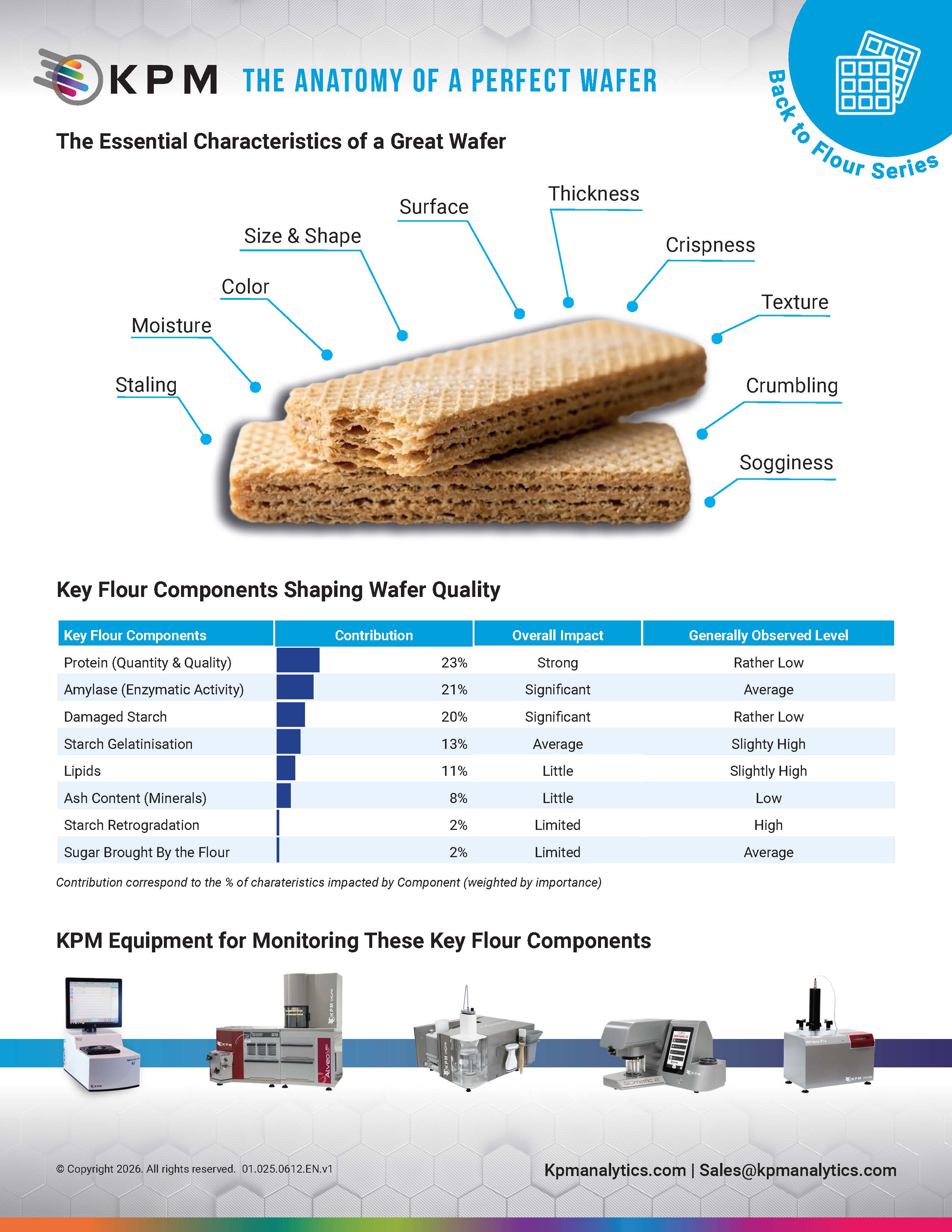
What defines a great wafer? A handful of qualities working in concert. Crispness and a clean, light bite are at the heart of the eating experience, while colour, size and shape, surface, and thickness shape first impressions. Alongside these sit the attributes that reveal quality over time, texture, crumbling, moisture, staling, and resistance to sogginess, which together determine whether a wafer stays crisp and appealing or loses its character. Balancing all of them is what turns a simple wafer into an excellent one.
Flour composition drives much of that balance. Protein, in both quantity and quality, carries the strongest impact, followed closely by amylase activity and damaged starch. Starch gelatinisation contributes at an average level, while lipids and ash content play a smaller part, and starch retrogradation and the sugar brought by the flour have only a limited role. Alongside these contributions, the document also indicates the levels of each component generally observed in wafer production.
Taken together, these insights show how carefully managed flour composition underpins consistent wafer quality.
This document is part of the Back to Flour Series, an educational program that connects flour science to bakery product characteristics. Learn more here.