Back to Flour: The Hidden Role of Natural Lipids in Flour
Natural lipids are the fats and oils found in wheat grains. They make up only a small share of wheat flour, typically 1 to 2% of total weight, yet they play a crucial role in baking, dough structure, and texture. Acting as natural emulsifiers, they enhance the gluten network and contribute to the overall quality of baked goods, which is a notable influence for such a minor component by weight.
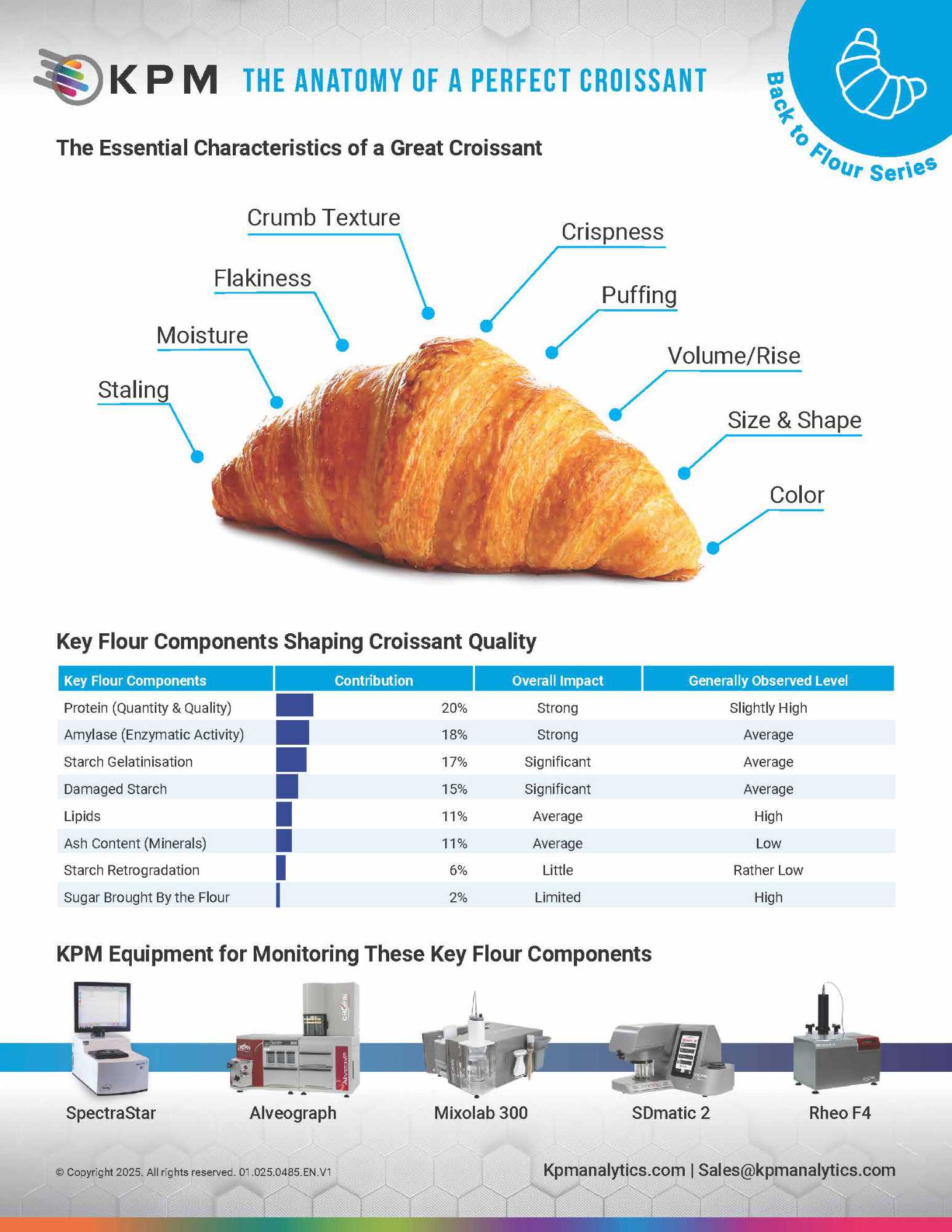
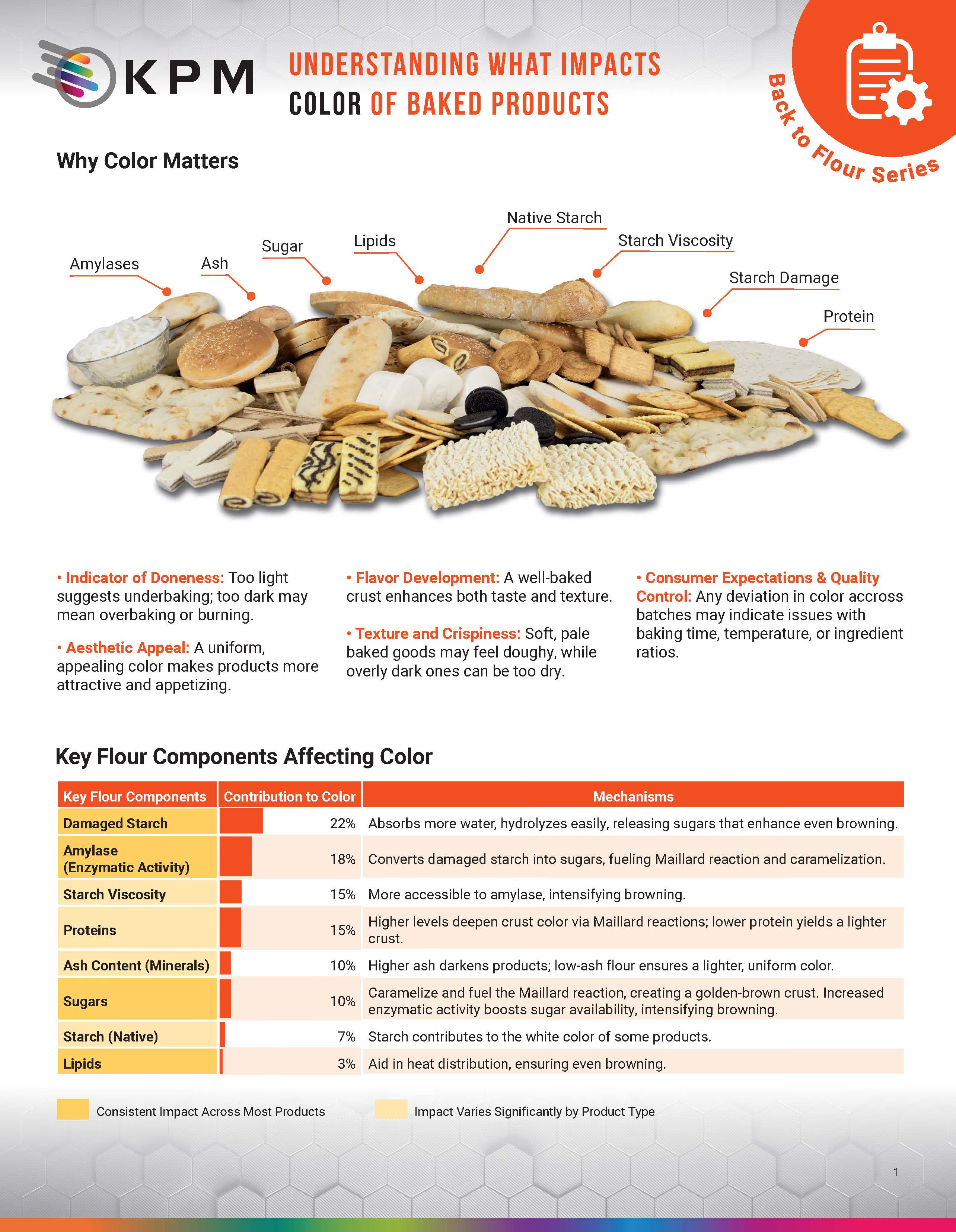
Their importance shows across several fronts. Lipids support dough development by helping form a strong, elastic gluten network that improves handling and structure. They aid gas retention and loaf volume by stabilising air bubbles for a better rise and softer texture, and they retain moisture to keep bread and cakes soft and fresh for longer. Certain wheat lipids also contribute to the characteristic flavour and aroma of baked goods, and by interacting with starches they help reduce staling for a tender crumb. Lipid content itself varies with the flour: whole wheat flour carries more fat from the bran and germ, giving denser, moister breads, while refined flour contains less, producing a lighter texture but faster staling.
Through their interaction with gluten, lipids influence many product characteristics, particularly moisture and size and shape. Measurement combines SpectraStar for lipid content, the Alveolab for gluten properties, and the Mixolab for dough properties.
This document is part of the Back to Flour Series, an educational program that connects flour science to bakery product characteristics. Learn more here.