Back to Flour: Understanding What Impacts Crumbling of Baked Products
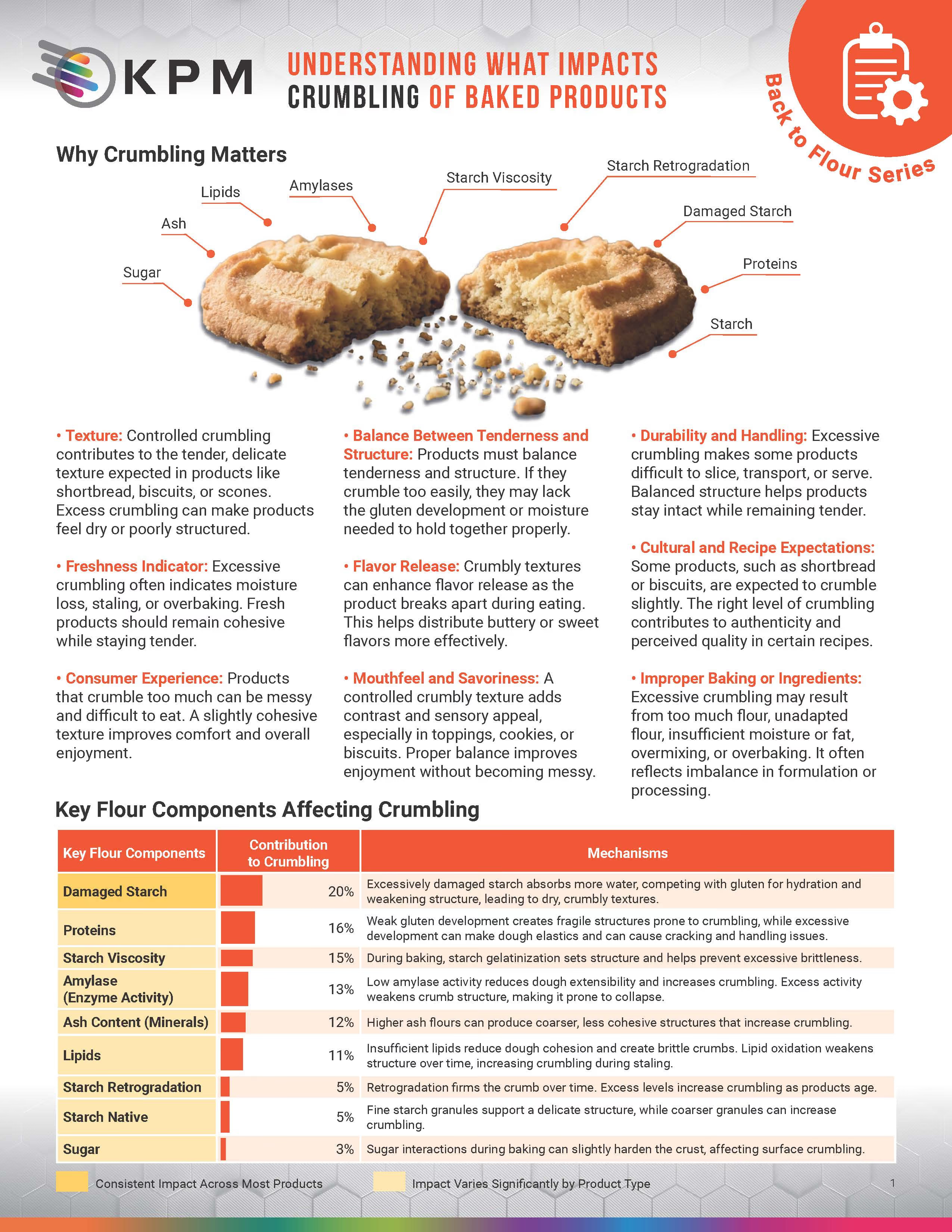
Few products reveal the link between flour and texture as clearly as those that crumble. In products like shortbread or biscuits, a measured degree of crumbling is exactly what gives that tender, delicate bite, and some recipes are even expected to crumble slightly as a mark of authenticity. The balance remains fragile, though: too much, and the product turns dry, poorly structured, and awkward to slice, transport, or serve. Because crumbling often increases with moisture loss, staling, or overbaking, it also doubles as a useful indicator of freshness and baking control, with the real challenge being to keep products cohesive while staying tender.
What drives this behaviour comes down to flour composition. Damaged starch and proteins carry the greatest weight, since they govern how water is absorbed and how the gluten network holds the structure together. Starch viscosity and amylase activity also have a significant impact, while ash content and lipids influence cohesion and brittleness. Native starch, starch retrogradation, and sugars round out the picture with a smaller role. The document also illustrates how these effects shift from one product type to another.
This document is part of the Back to Flour Series, an educational program that connects flour science to bakery product characteristics. Learn more here.