Back to Flour: Understanding What Impacts Elasticity of Noodles
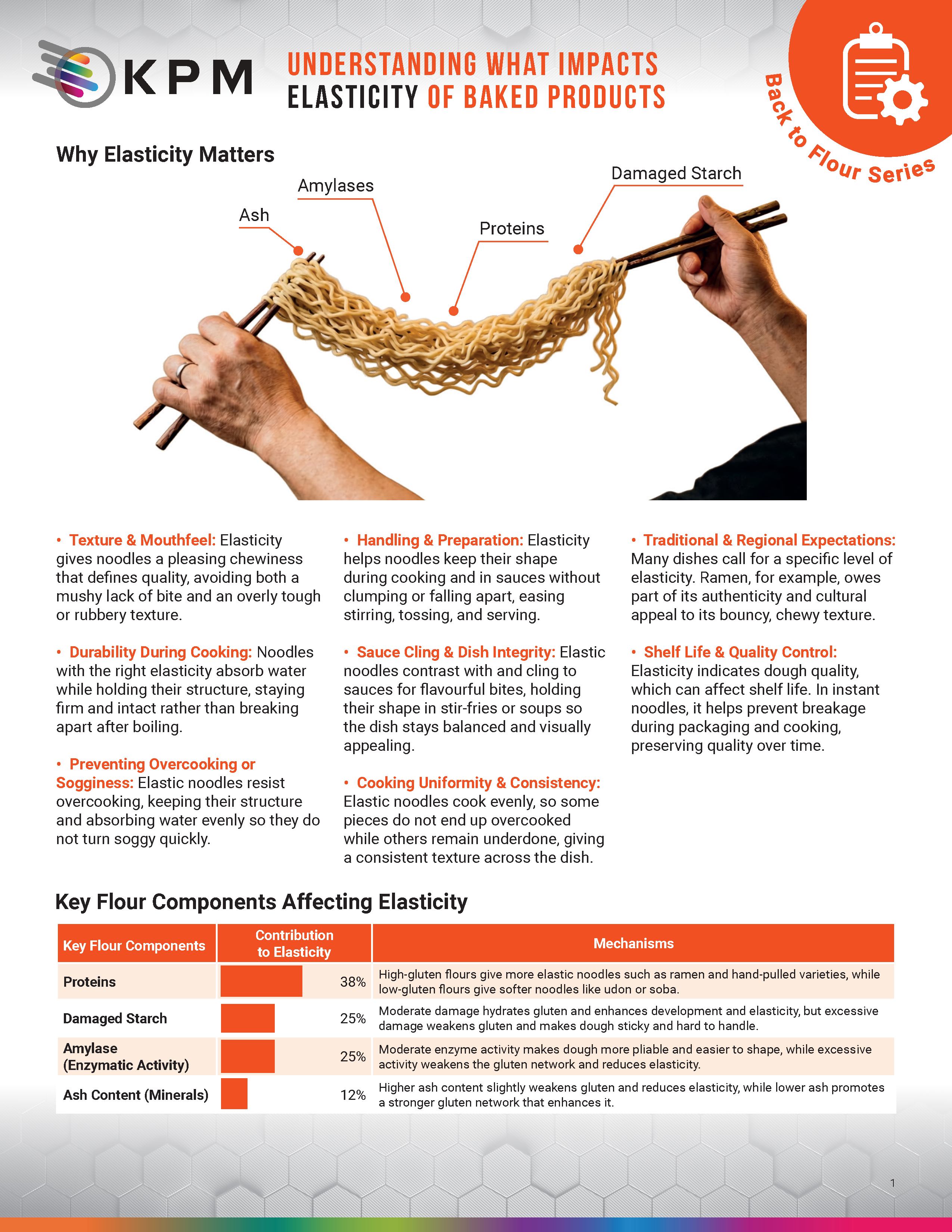
For noodles, elasticity is the quality that defines a good eating experience. It gives that pleasing chewiness between a mushy lack of bite and an overly tough, rubbery texture, and it lets noodles absorb water while holding their structure, staying firm and intact rather than breaking apart after boiling. The right elasticity also resists overcooking and sogginess, keeps noodles from clumping during stirring, tossing, or serving, and helps them cling to sauces so the dish stays balanced and flavourful. It even ensures cooking uniformity, so pieces cook evenly instead of some turning overdone while others stay underdone. Beyond the plate, elasticity carries cultural weight, since dishes like ramen owe part of their authenticity to a bouncy, chewy bite, and it signals dough quality that affects shelf life, helping instant noodles resist breakage during packaging and cooking.
On the flour side, proteins dominate by a wide margin: high-gluten flours produce the elastic noodles behind ramen and hand-pulled varieties, while low-gluten flours give softer noodles like udon or soba. Damaged starch and amylase activity follow with equal weight, each supporting elasticity in moderation but weakening the gluten network in excess, whether by making the dough sticky or harder to shape. Ash content plays the smallest role, with higher levels slightly weakening gluten and lower levels promoting the stronger network that enhances elasticity.
This document is part of the Back to Flour Series, an educational program that connects flour science to bakery product characteristics. Learn more here.