Back to Flour: Understanding What Impacts Slicing of Baked Products
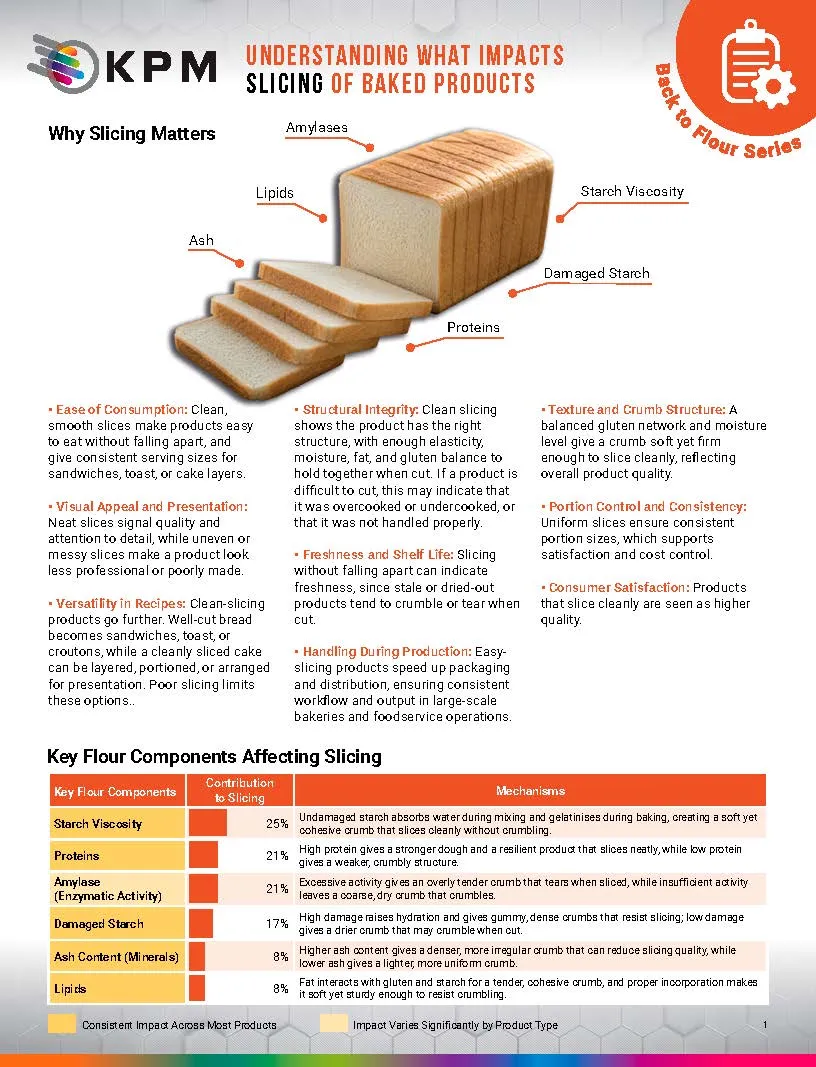
Slicing may seem like a final detail, but it reveals a great deal about a baked product. Clean, smooth slices make products easy to eat without falling apart and deliver the consistent serving sizes needed for sandwiches, toast, or cake layers. They also signal quality, since neat slices reflect attention to detail while uneven or messy cuts make a product look poorly made. In fact, how a product slices is closely tied to its structure: cutting cleanly shows the right balance of elasticity, moisture, fat, and gluten, whereas difficulty in cutting can point to overbaking, underbaking, or poor handling, and crumbling or tearing often indicates a stale or dried-out product. Clean slicing also widens a product's uses, speeds up packaging and distribution in large-scale operations, ensures uniform portions for cost control, and ultimately reads to consumers as a mark of higher quality.
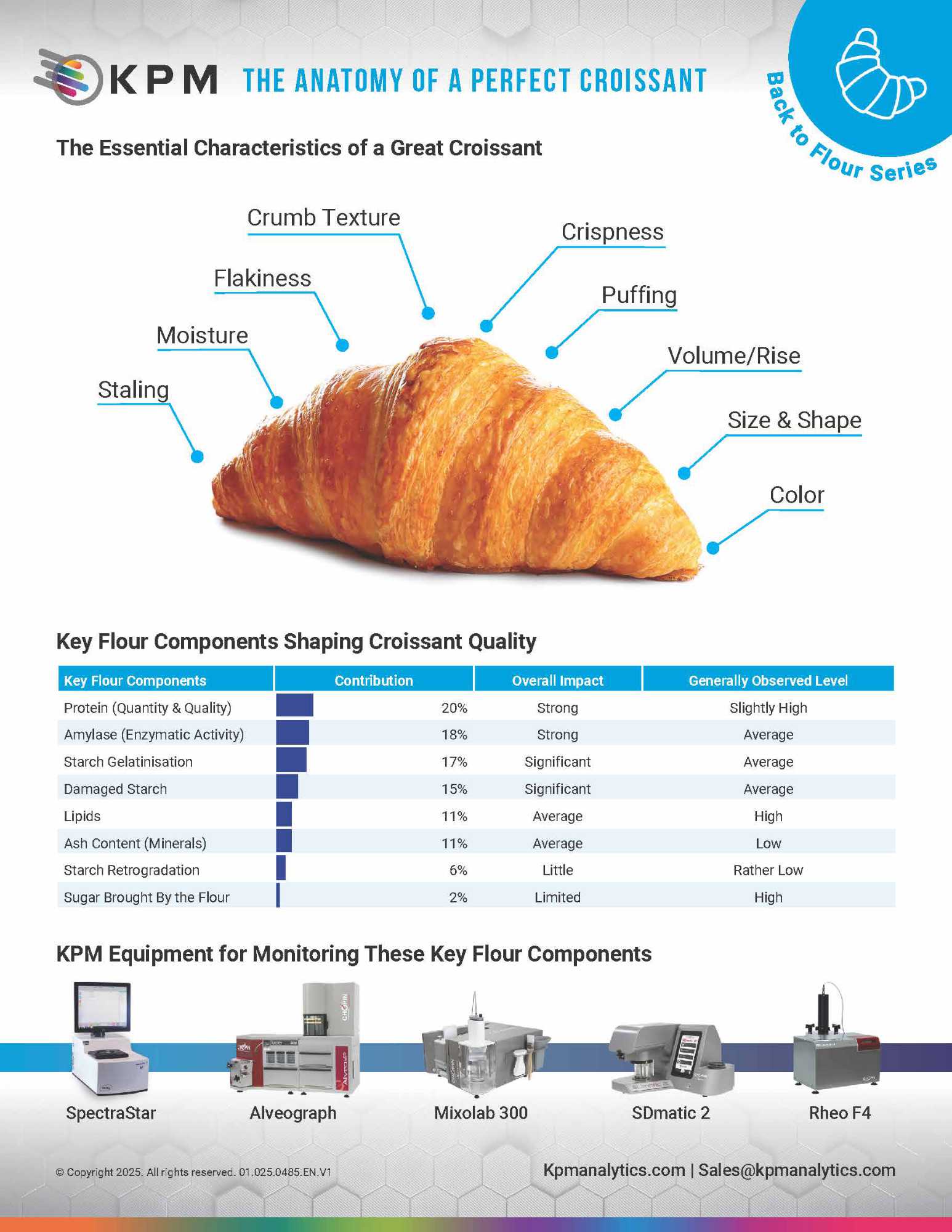
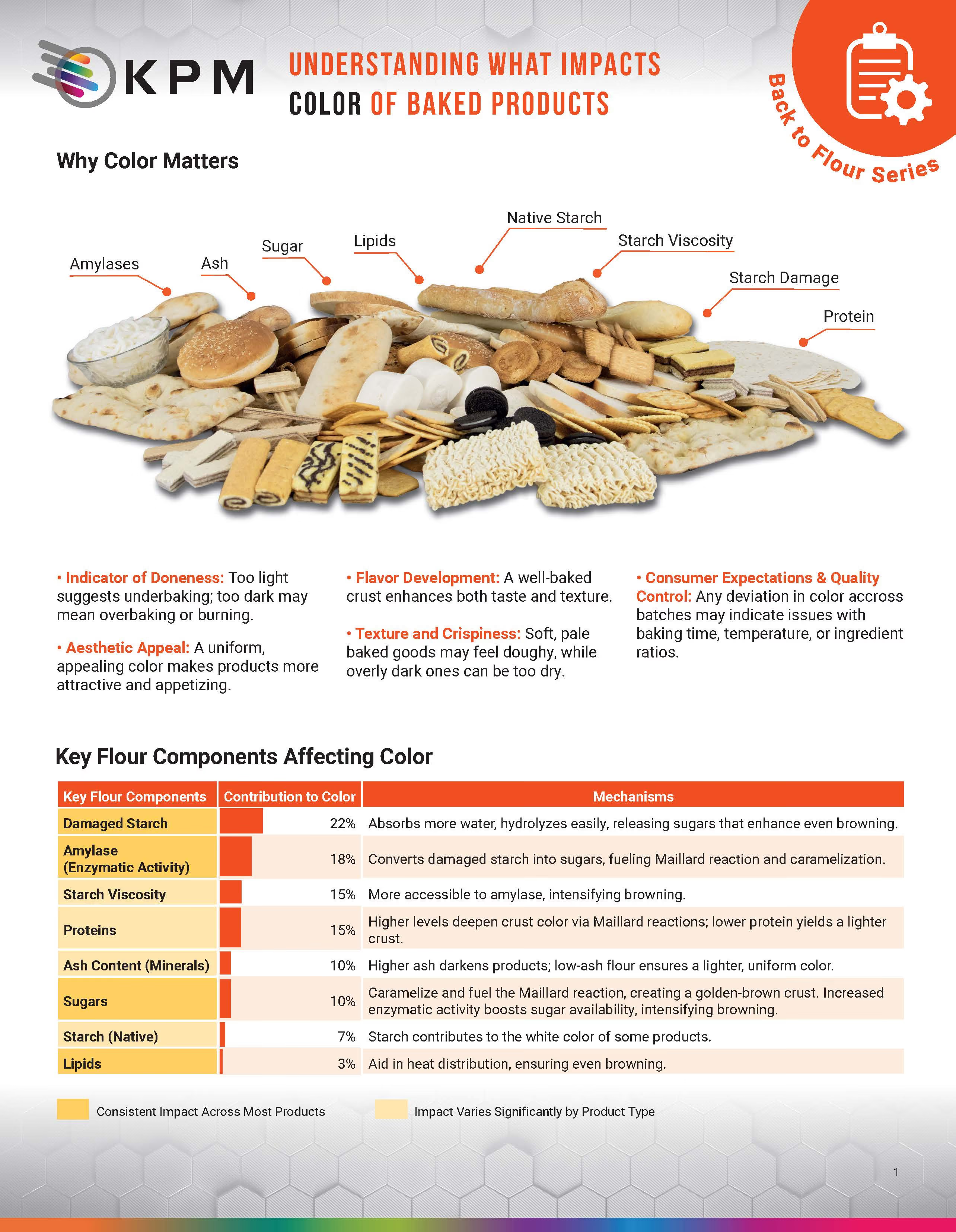
Flour composition determines how cleanly a product cuts. Starch viscosity leads the way, as undamaged starch builds a crumb that is soft yet cohesive enough to slice without crumbling. Proteins and amylase activity follow closely, the former giving the dough the strength to slice neatly, the latter setting crumb tenderness that, in excess or deficit, causes tearing or crumbling. Damaged starch influences hydration and crumb density, while ash content and lipids each play a smaller part, shaping crumb uniformity and the tender, sturdy structure that resists crumbling. As the second table shows, these contributions vary from one product to another.
This document is part of the Back to Flour Series, an educational program that connects flour science to bakery product characteristics. Learn more here.