Engineering the Perfect Biscuit with Mixolab
The Bahri Dağdaş International Agricultural Research Institute (Türkiye) pioneered a specialized wheat flour selection protocol for biscuit production using the Mixolab Universal Flour & Dough Analyzer.
The Bahri Dağdaş International Agricultural Research Institute is a leading state research institution operating in the field of agricultural research and development in Türkiye. Established in 1914 in Konya, it operates under the General Directorate of Agricultural Research and Policies (TAGEM) of the Ministry of Agriculture and Forestry of the Republic of Türkiye. Its mandate and fields of study include the breeding and cultivation techniques of cereals (wheat, barley, triticale, oats, and rye), industrial plants, medicinal and aromatic plants, and forage and meadow-pasture plants.
Additionally, the institute conducts research on developing plant cultivation techniques, increasing agricultural productivity, and protecting plant health. Detailed analyses are performed in the Quality and Technology Laboratory, where researchers also investigate the effects of environmental factors on quality parameters. Specialized infrastructure, such as the Drought Test Center, enables the development and testing of varieties resistant to extreme stress conditions.
Comprehensive quality analyses of bread and durum wheats are carried out in the Quality and Technology Laboratory. By bridging the gap between field breeding and factory-floor requirements, through strategic industry partnerships, the Bahri Dağdaş International Agricultural Research Institute has successfully developed elite wheat varieties, such as “Aliağa” and “Savatara,” specifically tailored for the biscuit industry.
The Challenge: Beyond Bread
In biscuit production, wheat flours are expected to have a weak gluten structure and the ability to form dough suitable for controlled spreading. While high protein and strong gluten are ideal for bread, biscuit manufacturing requires the opposite: weak gluten structures, low protein, low water absorption capacity, and controlled starch behavior to ensure the dough spreads perfectly and achieves the desired “snap” or crunch.
Identifying these specific genotypes from thousands of candidates is a complex scientific hurdle that the institute addresses by screening approximately 200 genotypes annually using Mixolab analysis to evaluate protein quality and starch behavior. The Mixolab serves as a strategic tool in quality control and targeted product development processes of the institute.
The Solution: Precision Analytics with Mixolab
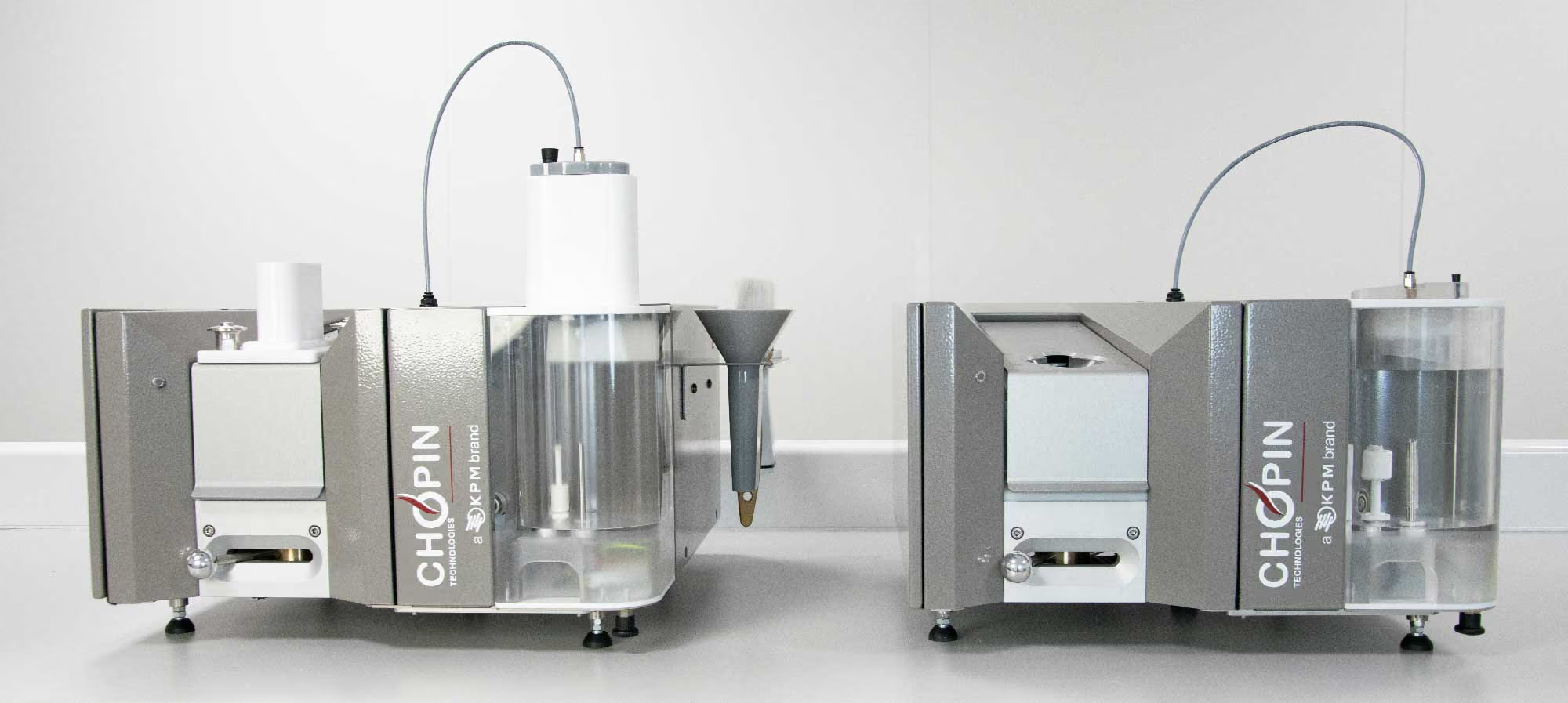
The Institute’s Quality and Technology Laboratory has pioneered a specialized selection protocol using the Mixolab system. This advanced technology allows researchers to analyze flour and dough rheology under mechanical stress and controlled temperature shifts simultaneously.
When wheat samples harvested within the framework of our breeding programs and research projects arrive at the laboratory, they utilize Mixolab analyses to evaluate not only gluten quality but also starch behavior and amylase activity. This comprehensive assessment allows them to determine whether specific genotypes possess the necessary weak gluten structure, low protein ratio, and controlled starch gelatinization required for successful biscuit production.
During the 45-minute analysis, points C1–C5 track torque changes across the mixing, heating, and cooling stages to guide the evaluation. The resulting Mixolab Biscuit Analysis Profile streamlines selection by determining water absorption, gluten properties, viscosity, amylase effect, and retrogradation.
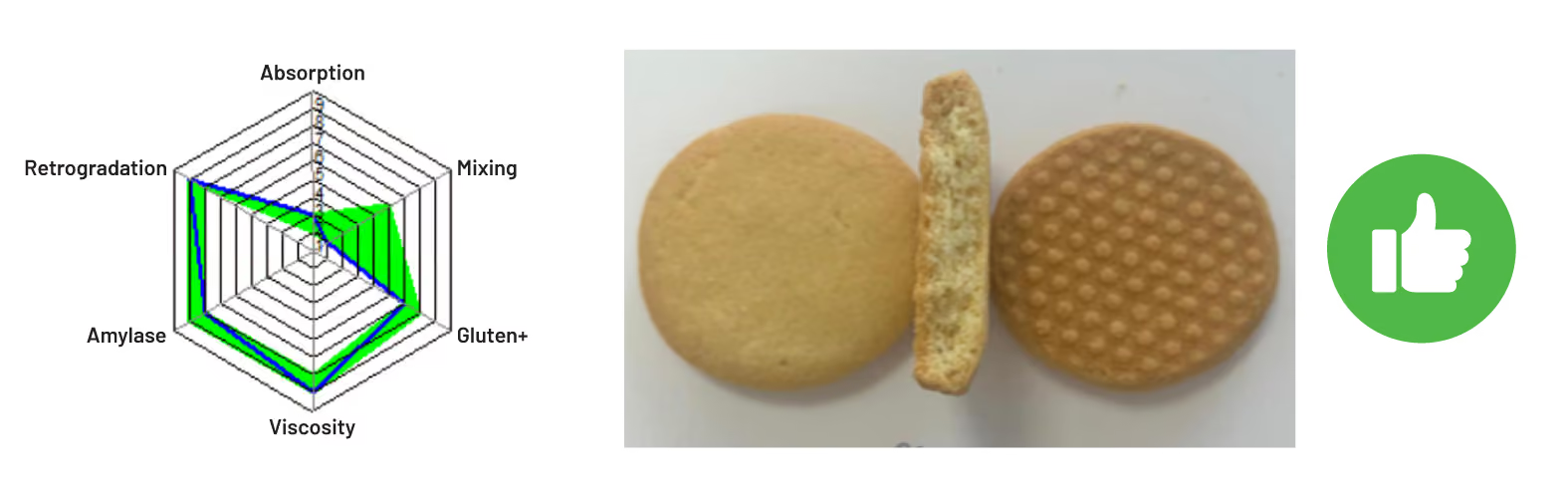
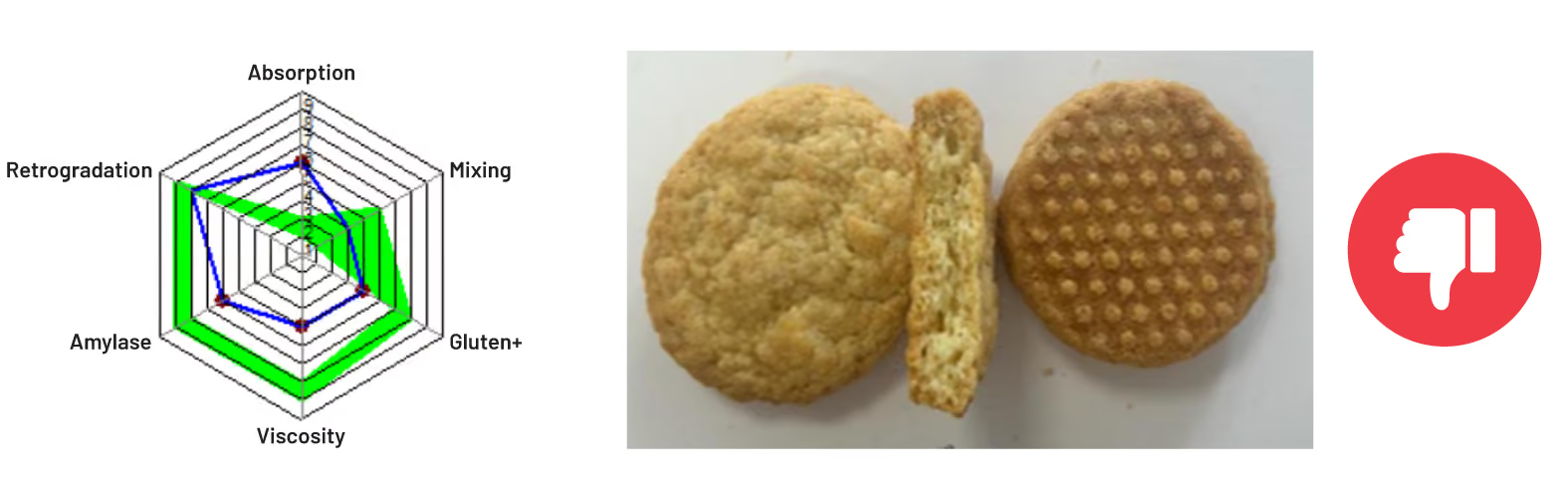
By focusing on five critical “C” points and specific slope angles, the Institute has established a high-precision “Biscuit Analysis Profile," shown below.
C1 Point
When evaluating the results of analyses performed in the Mixolab, a torque value of 1.1 Nm for C1 has been found suitable for biscuit flour. Samples with water absorption lower than 54% and falling between the 1-2 water absorption index and 1-3 mixing index values in the Mixolab profile satisfies the first part of the criteria for determining biscuit flours.
C2 Point
Protein weakening as a function of mechanical work and temperature. It shows gluten behavior formed by the effect of kneading and heat. When evaluating the results of analyses performed in Mixolab, torque values in the range of 0.35-0.45 Nm for C2 have been found suitable for biscuit flour. During this time, as the heat increases, the gluten structure weakens, and the rate of torque decreases forms the α angle. A relatively high α angle is preferred in biscuit flours, because this situation indicates a weak gluten structure and good spreading potential. In the selection of biscuit flour, a α slope value in the range of -0.040 to -0.080 Nm/min is considered suitable.
A high index in the Mixolab profile indicates a stronger gluten content. Samples falling between 1-3 gluten index values in the Mixolab profile have low stability and weak gluten structure, which are among the criteria related to protein for determining biscuit flours.
C3 Point
With the mixture heating up to 90 °C, this is the point where the starch absorbs water and swells, and the viscosity reaches its maximum, measuring starch gelatinization. High values indicate the formation of a hard and compact structure, while low values indicate the occurrence of a brittle and crumbly structure.
When evaluating the results of analyses performed in the Mixolab, torque values in the range of 1.6-2.1 Nm for C3 have been found suitable for biscuit flour. During this stage, the β angle, which shows the gelatinization rate of the starch during the heating phase of the dough, is formed. Generally, a low-to-medium level β angle is preferred. This is because gelatinization occurs more slowly, allowing the dough to spread more controllably in the oven, creating a smooth surface and crisp structure. In the selection of biscuit flour, a β slope value in the range of 0.20 to 0.40 Nm/min is considered suitable.
A high index in the Mixolab profile brings along a more viscous dough structure. Samples that fall between 4-6 viscosity index values in the Mixolab profile, which are at a medium level, are accepted as wheats suitable for the criteria related to starch gelatinization in determining biscuit flours.
C4 Point
This is the point where the gelatinized starch remains stable under the influence of heat and amylase, showing the durability of the gel structure formed by the starch at high temperatures. For biscuits, where dough spreading and crispness are important, very high stability is not desired; a controlled decrease is preferred. When evaluating the results of analyses performed in the Mixolab, torque values in the range of 1.5-1.7 for C4 have been found suitable for biscuit flour. A low C4 value shows the effect of the amylase enzyme in breaking down the starch. The torque decreases during this stage forms the γ angle.
For controlled enzyme activity, the degree of the gamma angle is important. In the selection of biscuit flour, a γ slope value in the range of -0.05 to -0.22 Nm/min is considered suitable. In the Mixolab profile, samples falling between 7-8 amylase index values are among the criteria related to the amylase enzyme for determining biscuit flours.
C5 Point
This is the point that measures the recrystallization of starch during cooling. When evaluating the results of analyses performed in the Mixolab, torque values in the range of 2.5-2.7 for C5 have been found suitable for biscuit flour.
Samples falling between 7-8 retrogradation index values in the Mixolab profile are among the criteria related to the recrystallization of starch for determining biscuit flours.
Conclusion
As a result of the studies conducted in Institute’s Quality and Technology Laboratory, an index value of 2-36-677 has been determined to be suitable for selecting biscuit flour.
Based on many years of studies and observations, they decided that the index score values of 2-36-677 are appropriate when evaluated alongside other quality parameters. However, in some cases, index scores of 3-46-777 or 3-47-8778 are also accepted.
The Impact: From Lab to Market
This data-driven approach has transformed the Institute’s breeding efficiency and industry partnerships:
- Massive Screening Scale: The lab now screens an average of 200 wheat genotypes annually specifically for biscuit-making potential. In their studies, selections are primarily made according to physical, chemical, and rheological analyses; based on these selections, genotypes that may have suitable biscuit properties are determined, and then their Mixolab studies are performed on these genotypes.
- Strategic Industry Collaboration: Through a close partnership with Ülker, Türkiye’s leading food company, the Institute validates its laboratory findings with real-world industrial baking trials, ensuring that the Mixolab’s index values align with consumer-ready products.
- National Self-Sufficiency: The registration of Aliağa and Savatara varieties provides the Turkish food industry with high-quality, domestic raw materials tailored for global biscuit standards.
- Global Leadership: As the coordinator for the International Winter Wheat Improvement Program (IWWIP), the Institute shares its high-quality genotypes with over 50 countries, solidifying Türkiye’s role as a global hub for wheat innovation in close collaboration with CIMMYT and ICARDA.
The Bahri Dağdaş International Agricultural Research Institute leads the selection and development of high-quality new varieties in line with the demands of producers, consumers, and industrialists, further solidifying its role as a leader in grain innovation.
Technical Disclaimer:
The specific numerical values, torque ranges (C1–C5), and index scores (such as 2-36-677) presented in this document are established based on the Bahri Dağdaş International Agricultural Research Institute’s long-term research and expertise. These benchmarks are not absolute and may vary depending on the specific product type, varying process conditions, and the unique requirements of different industrial baking environments.