AI Helps Close the Knowledge Gap in Baking Processes
The following interview was originally published in an issue of Baking+Biscuit International. Follow this link to view the interview on the publication's website.
What are the highlights of your R&D work in AI over the past three years?
Yuegang Zhao: For KPM Analytics, our emphasis on AI is centered on helping bakeries streamline operations, gain deeper insights on process control, ensure product quality and consistency, and amplify food safety efforts. As baking operations have become more automated and faster-paced, and as more baking experts leave the industry through retirement or other reasons, AI is helping to reduce the knowledge gaps that many bakeries face today.
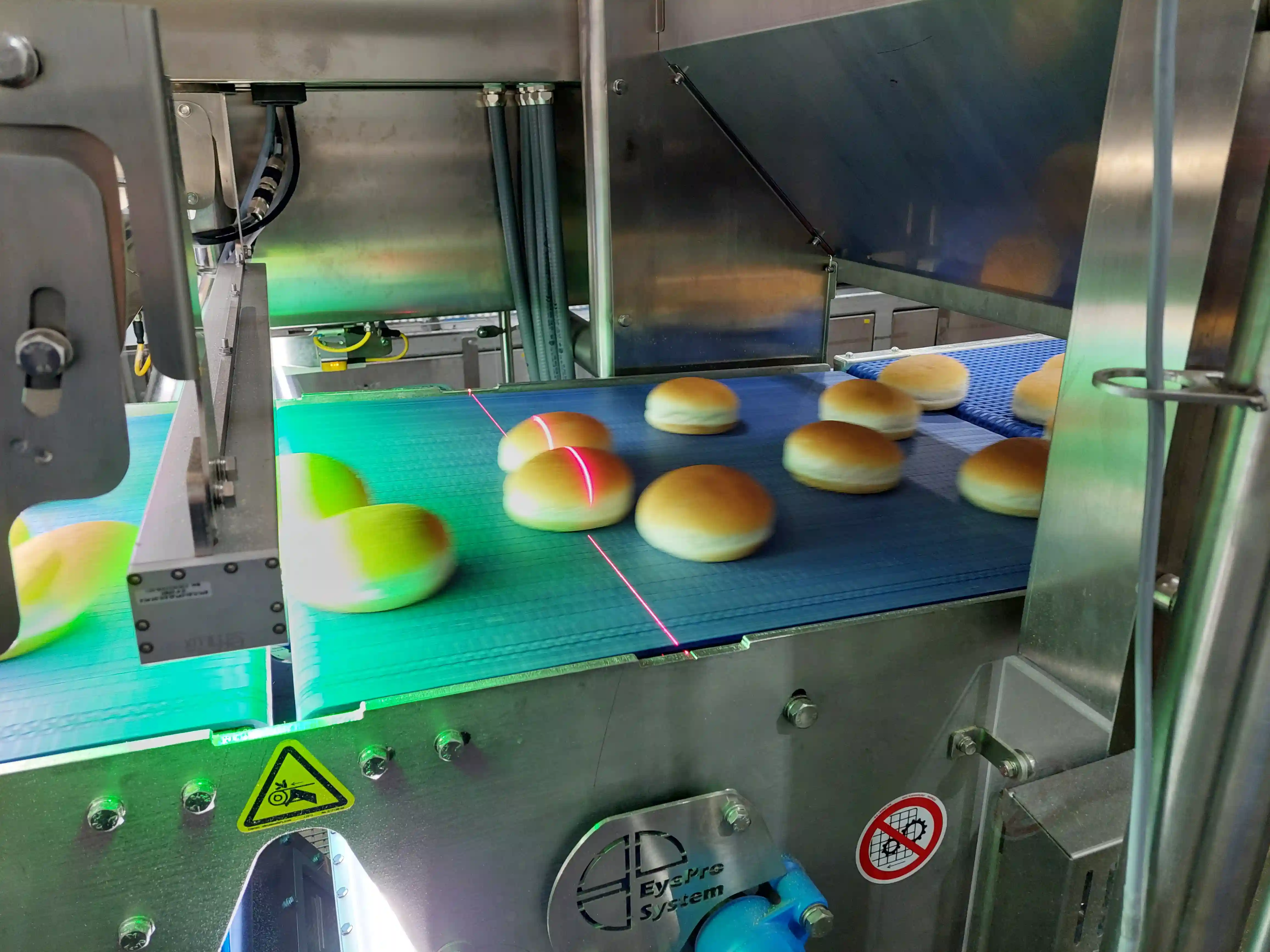
One area where we’ve invested heavily in our R&D is the development of AI-powered vision inspection applications to inspect products at various process stages. Today’s high-paced baking operations simply cannot rely on human inspectors to spot out-of-spec products, especially since this method is entirely subjective and difficult to control across multiple production lines and shifts at a bakery. Our AI vision technologies incorporate high-resolution cameras, specialized lighting, and powerful software that observe all products on the line for vital quality traits like size, shape, color, volume, and more, and also detect foreign anomalies with accuracies beyond what the human eye can achieve.
KPM is on the leading edge of AI model development for vision inspection systems. We have a dedicated staff of data scientists who are constantly researching and improving models with better detection capabilities and lower false positives. Whether it is counting tortillas stacking into a packaging machine or inspecting easy-to-miss foreign materials, like dough deposits on the bottom of a bun, we have only begun to tap into the potential for AI-powered inspection capability.
In what production areas have you already incorporated AI features into your technology?
Yuegang Zhao: Our AI-powered vision systems have been deployed across various baking lines for a range of different tasks. There are two core categories for vision systems: Vision Process Control (VPC) and Final Product Inspection (FPI).
VPC vision systems cover anything the customer wishes to inspect about their products before packaging. This could range from analyzing doughs leaving the shaper or proofing chamber to measuring topping coverage (e.g., seeds on a hamburger bun), before baking. Our AI vision systems are trained to spot even minor product inconsistencies that could signal an issue in the automated production process. VPC technologies remove much of the guesswork and subjectivity from process control, helping operators make better process decisions that ensure quality and safety.
FPI systems, as their category name implies, function as the final check of products’ visible attributes. With the capability to inspect 100% of products on the line, FPI technologies negate the need for routine quality inspection. And because the system never takes a break or a day off, it constantly inspects products to exacting standards while also detecting unwanted foreign materials and hazards.
What are the most frequent requests you receive?
Yuegang Zhao: Vision inspection technology is not new to the baking industry, but requests for more complex, deeper measurements have been driving the development of new AI-based applications. For instance, a hamburger bun producer used to be satisfied with simple attributes like bun shape and color, and with the assurance that it would fit sufficiently into product packaging. However, they are now interested in detailed measurements, such as the shine on the bun or the presence of air bubbles, in their final products. AI vision systems are much better equipped to spot these intricate details, which will simply open the door to even more complex measurement requests going forward.
Another common request trend we’re seeing is the demand for top- and bottom-product inspection. Most line inspectors can only observe the top side of the products as they pass by on a conveyor, unless they pull samples from the line. But pulling a handful of product samples at a time is simply not representative of the production, especially with the high volumes bakeries operate today. AI-based vision systems can be configured with top- and bottom-facing cameras to collect this vital quality and food-safety data.
Then, they are always interested in product rejection methods to automatically remove out-of-spec products from the line. We’ve worked with companies to develop unique rejection solutions ranging from lifting nosebars to air jets that briskly remove affected products without disturbing other products on the line or impacting process flow.
How is machine learning defined to optimize various production steps in real time?
Yuegang Zhao: Applications of machine learning span the entire baking process. After the mixing and then onto dough shaping, an AI-powered vision system can compare each piece against learned tolerances for shape, size, and other attributes, signaling upstream equipment that may need recalibration.
During proofing, the AI vision system monitoring dough rise and surface texture over time may be able to predict whether proofing conditions (temperature, humidity, and time) are producing optimal volume.
At the baking/oven exit stage, vision systems can monitor crust color, surface uniformity, shape deformation, cracking, and other features. If products fall out of alignment, the system can feed signals back to oven controls to adjust zone temperatures, belt speed, or steam injection, to correct these defects in near real-time.
What are the challenges with AI decision-making algorithms and how are consistent results ensured?
Yuegang Zhao: The bottom line is that AI models are only as good as the data and the training method. In a bakery operation, product appearance can vary based on ingredient quality, seasonal flour characteristics, equipment wear, ambient humidity, and many other factors. If the training dataset doesn’t capture this full range of conditions, the model will reject acceptable products or pass defective ones. This is why building a representative dataset, continuous monitoring, and periodic retraining can become expensive and time-consuming, but because production conditions can evolve at random times, this effort is important for success.
What opportunities do you see in expanding AI use in bakeries?
Yuegang Zhao: Many bakeries we have worked with have noticed a growing and troubling trend: Over the last few years, many master bakers who have institutional product and process knowledge are leaving the industry, whether by retiring or finding a new line of work. When they leave the bakery, their knowledge goes with them. It can take years for the next generation of master bakers to learn the equipment, the lines, and the product standards of an experienced master baker, but here is where AI can provide a significant opportunity.
In the case of master bakers, their process decision-making is second nature. They can know by feeling the texture of a dough or looking at the proofing height of products leaving the chamber that an adjustment may be necessary. The problem is – this information and know-how is all in their brain.
Using instrumentation that can help digitize what the master baker is seeing or feeling about their products, and then using that data to train an AI system on those standards so it can assist the next generation of bakers and operators with process decision-making, is a massive opportunity for the industry. An instrument like the Mixolab Universal Dough Analyzer is an emerging tool to acquire digital data as it objectively measures the torque of a dough through a heating and cooling process. Protocols now exist to output dough sample data in as little as two minutes of testing time.
Now, by sampling dough from the line with a Mixolab, and benchmarking its analysis against the AI-powered system, a lot of the master baker’s expertise can be standardized and streamlined. We are certainly still in the early stages of this concept, but something we are exploring with our current customers.
However, it’s important for bakeries to act now and consider these new quality control methods before more master bakers leave this industry.
What does your R&D prioritize in further AI advancements? And how are quality and safety concerns covered?
Yuegang Zhao: We are at the point now where our customers are actually driving a lot of the advancements for our products. Rarely does a day go by where we are not presented with a new challenge or idea to improve the process and food safety efforts of our users.