Back to Flour: Understanding What Impacts Flakiness of Baked Products
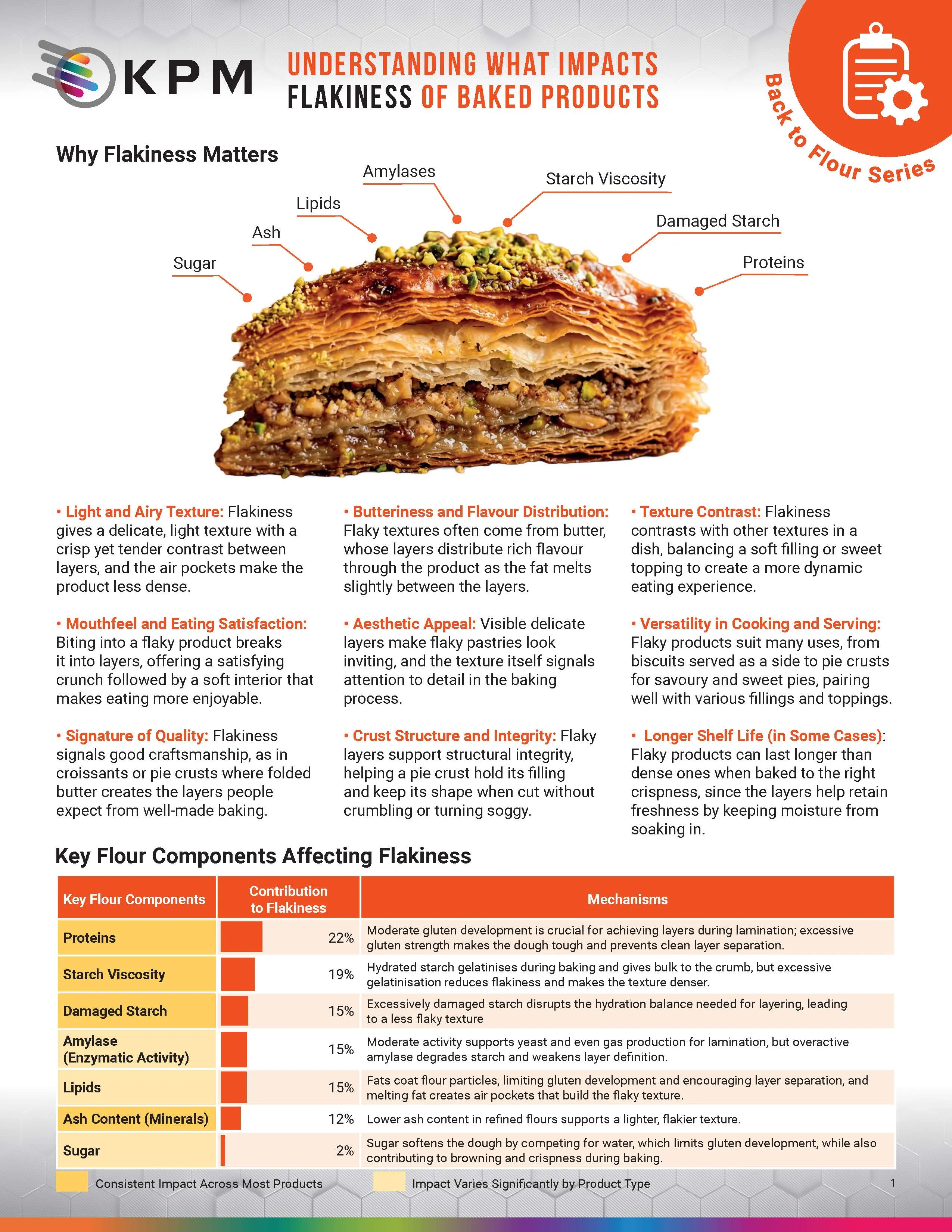
Flakiness is the hallmark of well-made pastry, and it works on several levels at once. On the plate, it gives a delicate, light texture where crisp and tender layers contrast, air pockets keep the product from feeling dense, and visible layers make a croissant or pie crust look inviting. In the mouth, biting through those layers delivers a satisfying crunch followed by a soft interior, often carrying the rich flavour of butter as the fat melts between the sheets. It also earns its reputation as a mark of craftsmanship, since folded butter and clean layering are exactly what people expect from quality baking. Beyond appearance and taste, flaky layers reinforce structure, letting a pie crust hold its filling and keep its shape, and in some cases they even help the product stay fresh longer by keeping moisture from soaking in.
Flour composition governs how well those layers form. Proteins matter most: moderate gluten development is essential for lamination, whereas too much strength toughens the dough and blocks clean separation. Starch viscosity follows, giving bulk to the crumb but reducing flakiness when gelatinisation goes too far. Damaged starch, amylase activity, and lipids each carry equal weight, disrupting or supporting the hydration balance and layer definition in their own way, while ash content favours a lighter texture in refined flours and sugar plays only a marginal role.
This document is part of the Back to Flour Series, an educational program that connects flour science to bakery product characteristics. Learn more here.