Back to Flour: Understanding What Impacts Flexibility of Baked Products
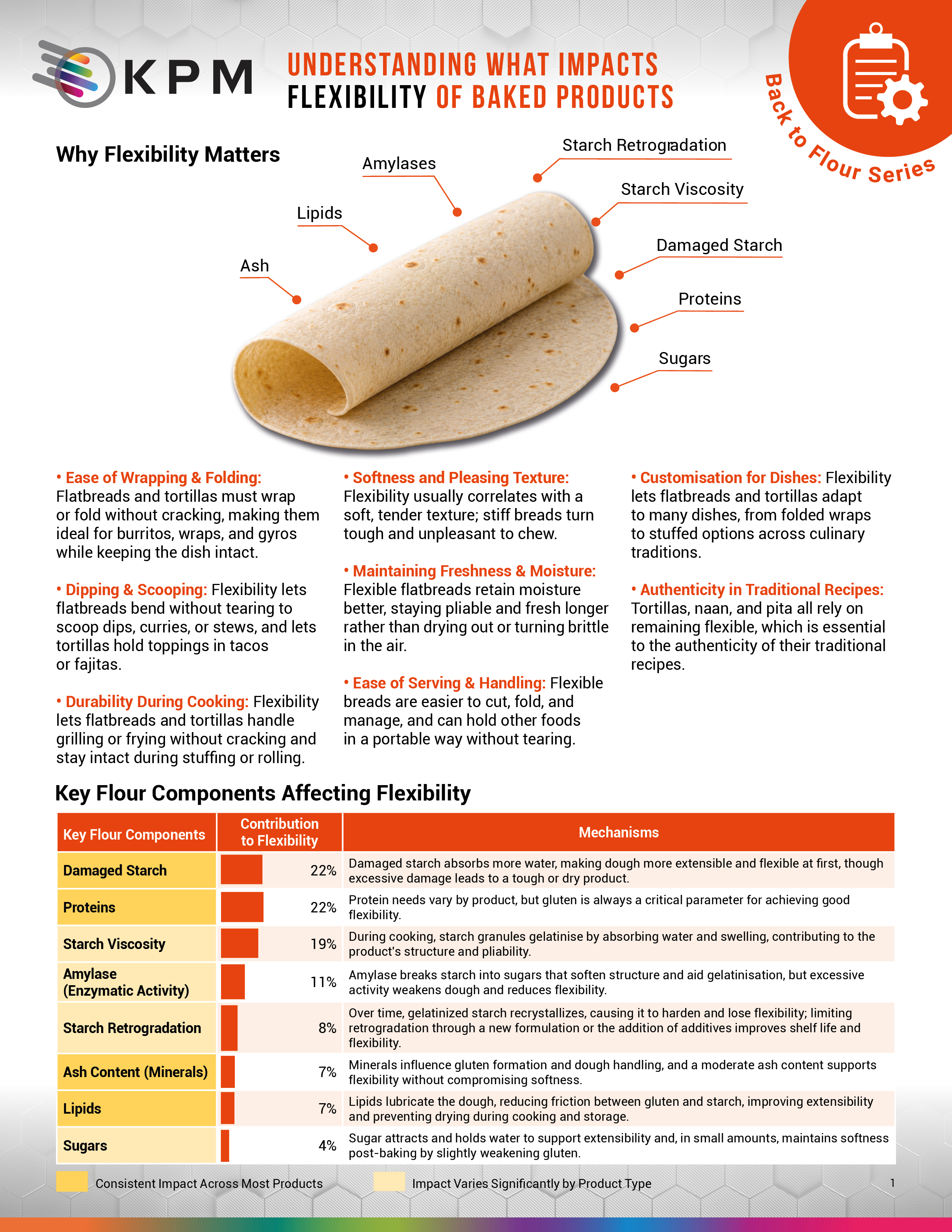
For flatbreads and tortillas, flexibility is what makes them work. It lets them wrap or fold without cracking, keeping burritos, wraps, and gyros intact, and it allows them to bend without tearing to scoop dips, curries, or stews or to hold toppings in tacos and fajitas. That same pliability helps products survive grilling or frying without breaking and stay whole during stuffing or rolling. Flexibility also tends to go hand in hand with a soft, tender texture, since stiff breads turn tough and unpleasant to chew, and it supports freshness, as pliable flatbreads hold moisture better and resist drying or turning brittle. Easier to cut, fold, and serve, flexible breads adapt to countless dishes, and for tortillas, naan, and pita, remaining flexible is essential to the authenticity of their traditional recipes.
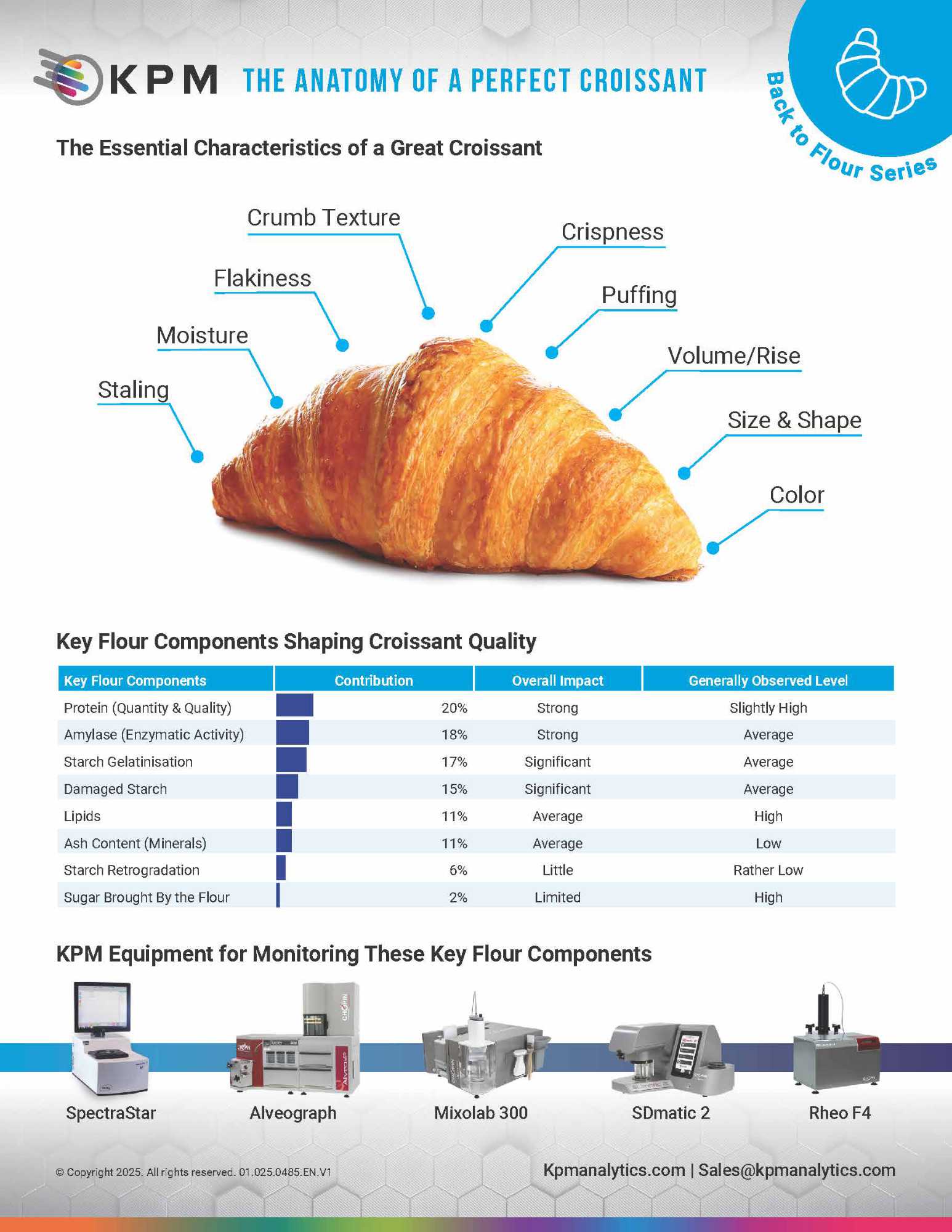
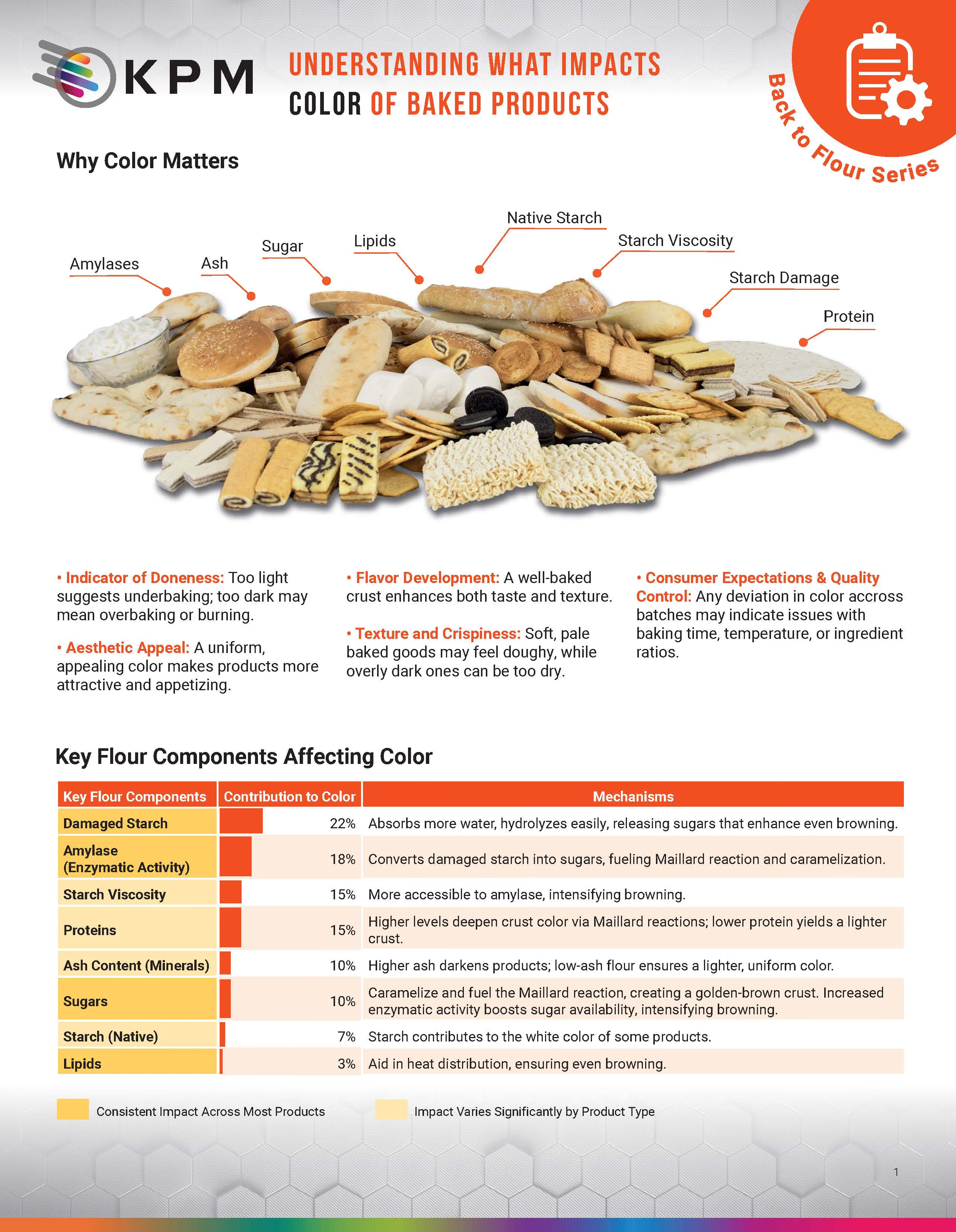
Flour composition sets how well this pliability holds. Damaged starch and proteins weigh most heavily, the former raising extensibility through greater water absorption, the latter making gluten a critical parameter whatever the product. Starch viscosity follows, shaping structure and pliability as granules swell during cooking, while amylase activity softens the structure but reduces flexibility when overactive. Starch retrogradation works against flexibility as recrystallisation hardens the product over time, and ash content, lipids, and sugars each contribute in smaller ways, from supporting gluten handling to lubricating the dough and holding water. As the second table shows, these effects vary between flatbreads and tortillas.
This document is part of the Back to Flour Series, an educational program that connects flour science to bakery product characteristics. Learn more here.