Back to Flour: What Drives Puffing in Baked Products
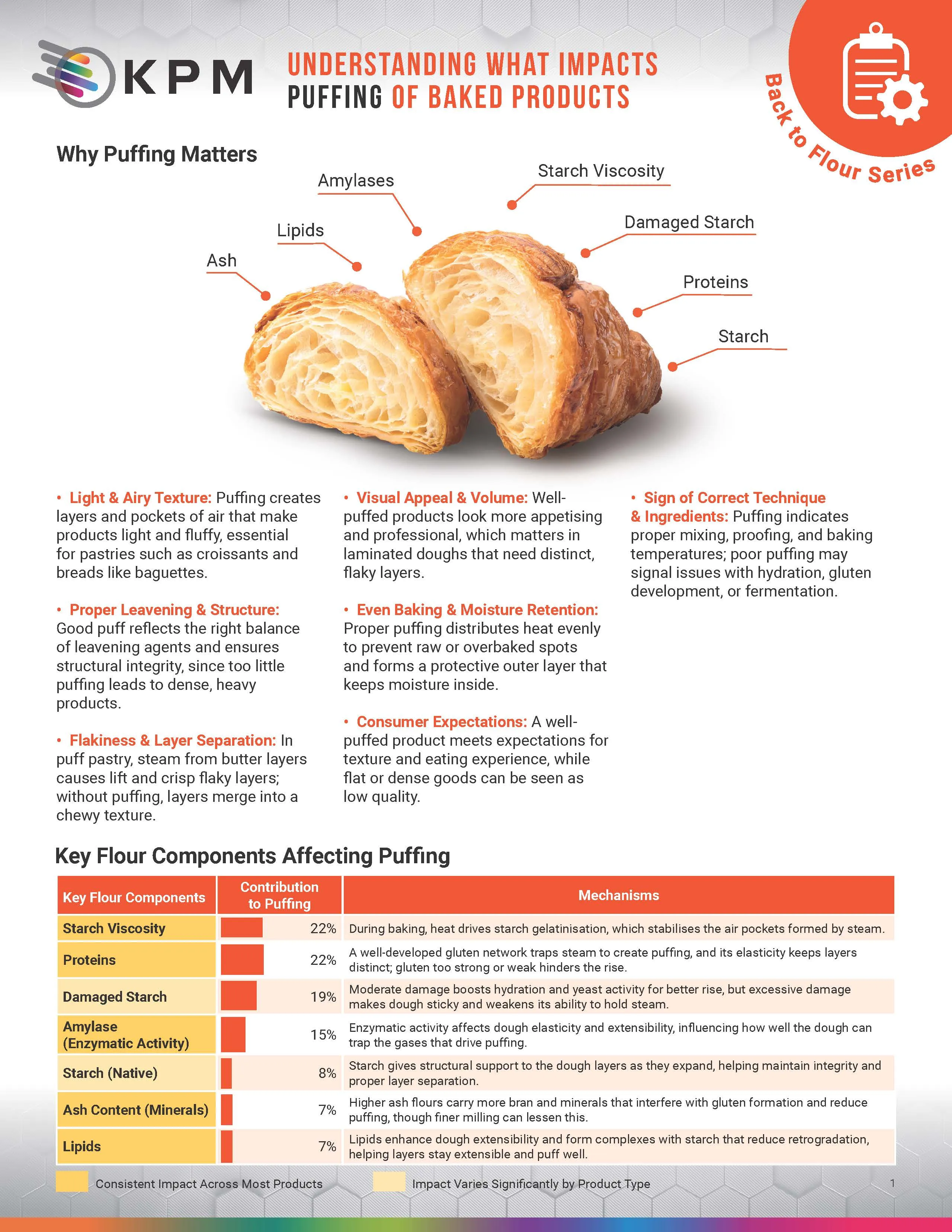
Puffing is what gives baked products their lift, and it shapes both how they look and how they eat. By creating layers and pockets of air, it makes products light and fluffy, an effect essential to pastries such as croissants and breads like baguettes. In puff pastry, steam released from butter layers drives the lift and produces crisp, flaky layers; without it, those layers merge into a chewy texture. A good puff also reflects the right balance of leavening and sound structural integrity, since too little leaves products dense and heavy. Beyond texture, well-puffed products look more appetising and professional, distribute heat evenly to avoid raw or overbaked spots, and form a protective outer layer that keeps moisture inside. In this sense, puffing works as a signal of correct technique, since poor results often point to problems with hydration, gluten development, or fermentation.
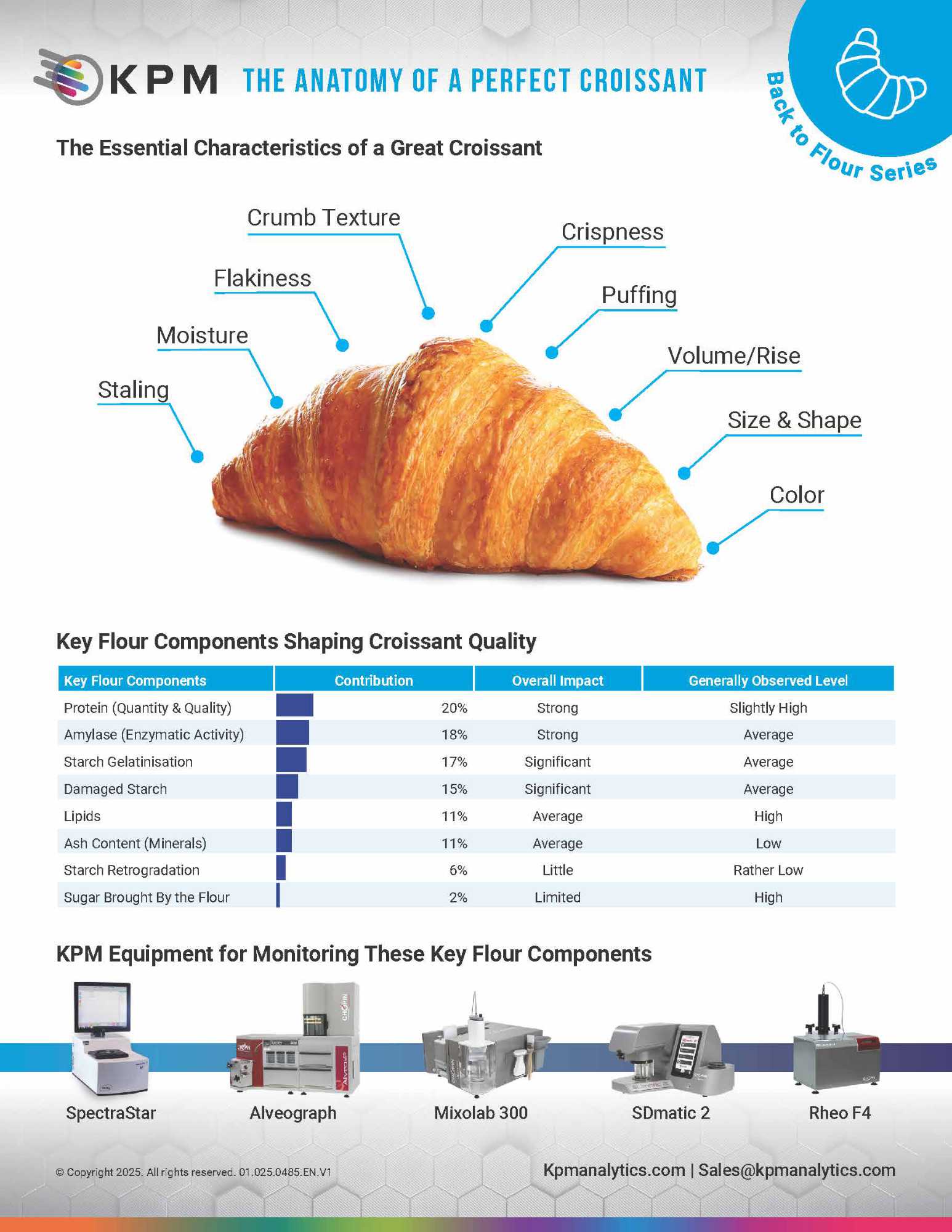
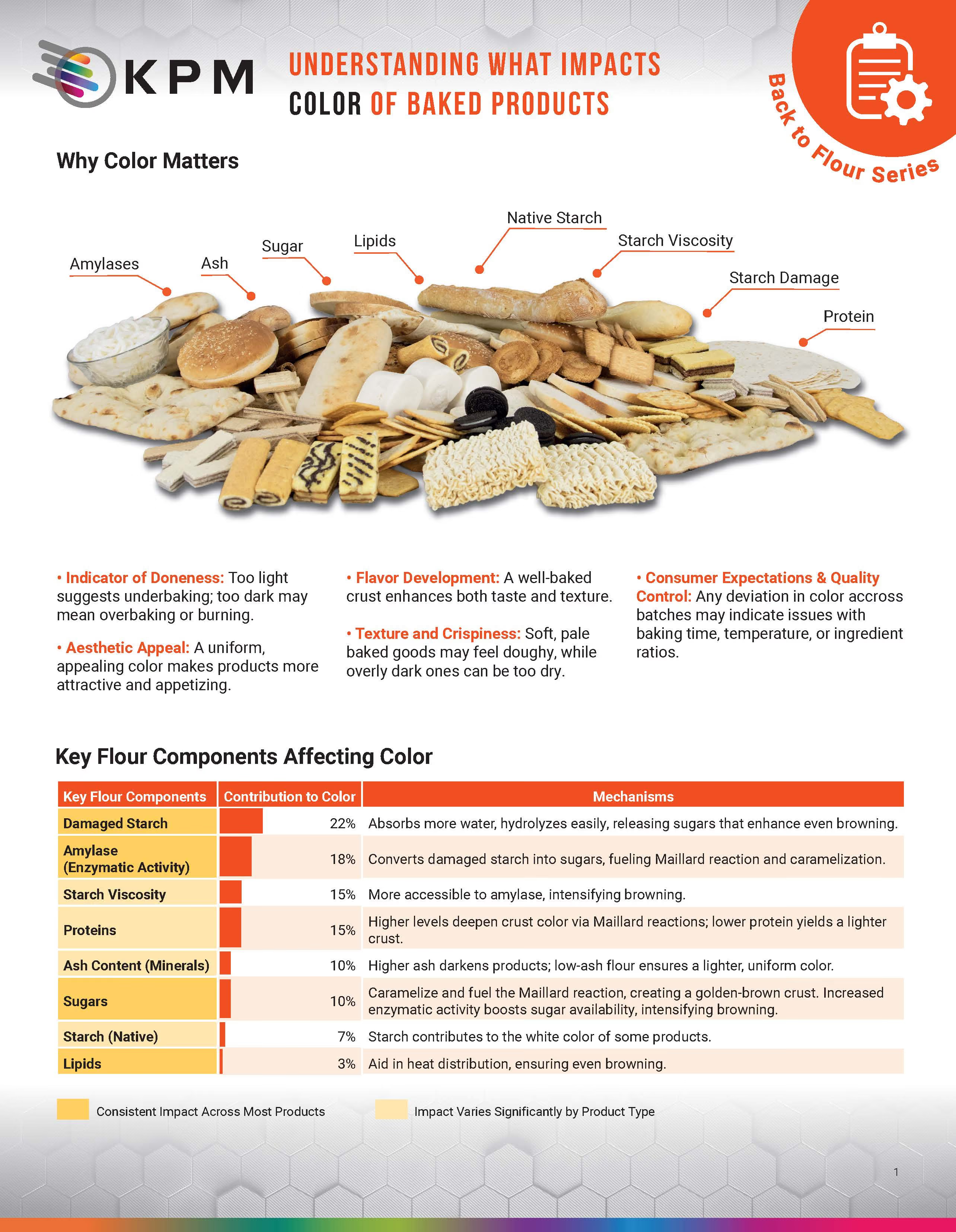
Flour composition determines how effectively that lift occurs. Starch viscosity and proteins carry equal, leading weight, the former stabilising the air pockets through gelatinisation, the latter trapping steam within a well-developed gluten network. Damaged starch follows, boosting hydration in moderation but weakening steam retention in excess, while amylase activity shapes the elasticity and extensibility that let dough hold gas. Native starch supports the expanding layers, and ash content and lipids each play a smaller role, one tending to interfere with gluten formation, the other helping layers stay extensible. As the second table shows, these contributions differ from one product to another.
This document is part of the Back to Flour Series, an educational program that connects flour science to bakery product characteristics. Learn more here.