A Brief Overview of Foreign Object Detection Technologies

.webp)
Ensuring Every Bite is Safe
At its core, foreign object contamination is a multi-dimensional threat:
- Consumer Safety First: The most immediate concern is the health of the consumer. A stray shard of glass, a fragment of metal from a worn machine, or a piece of hard plastic can cause serious injury, choking, or dental damage.
- Brand Reputation and Trust: In the age of social media, a single "discovery" in a product can go viral in hours. A recall doesn't just cost money; it erodes years of built-up consumer trust that is incredibly difficult to regain.
- Operational Efficiency and Waste: Detecting a contaminant late in the process often means discarding entire batches of perfectly good food. Efficient detection at the right stage reduces food waste and keeps the line moving.
- Regulatory Compliance: With tightening standards, robust foreign object detection isn't just a "nice-to-have" it can be a legal and operational requirement.
What is X-Ray in Food Inspection?
X-ray inspection systems work by passing high-energy beams through a food product to measure density. As the beam travels through the product, some of the energy is absorbed. A detector on the opposite side captures the remaining energy, creating a grayscale image in which denser objects appear darker.
What can it detect?
X-ray is considered the gold standard for detecting dense contaminants, including:
- Metal (stainless steel, ferrous, and non-ferrous)
- Glass
- Calcified bone
- Stone and high-density plastics
What kind of data does it provide?
X-ray systems provide density-based detection data, logging the frequency and type of dense contaminants found. Useful for detecting dense internal contaminants and operational logging data, but limited to high-density objects and unable to detect plastics, organics, or assess color, texture, shape irregularities, bruising, or other visual surface quality issues.
What is Hyperspectral Imaging in Food Inspection?
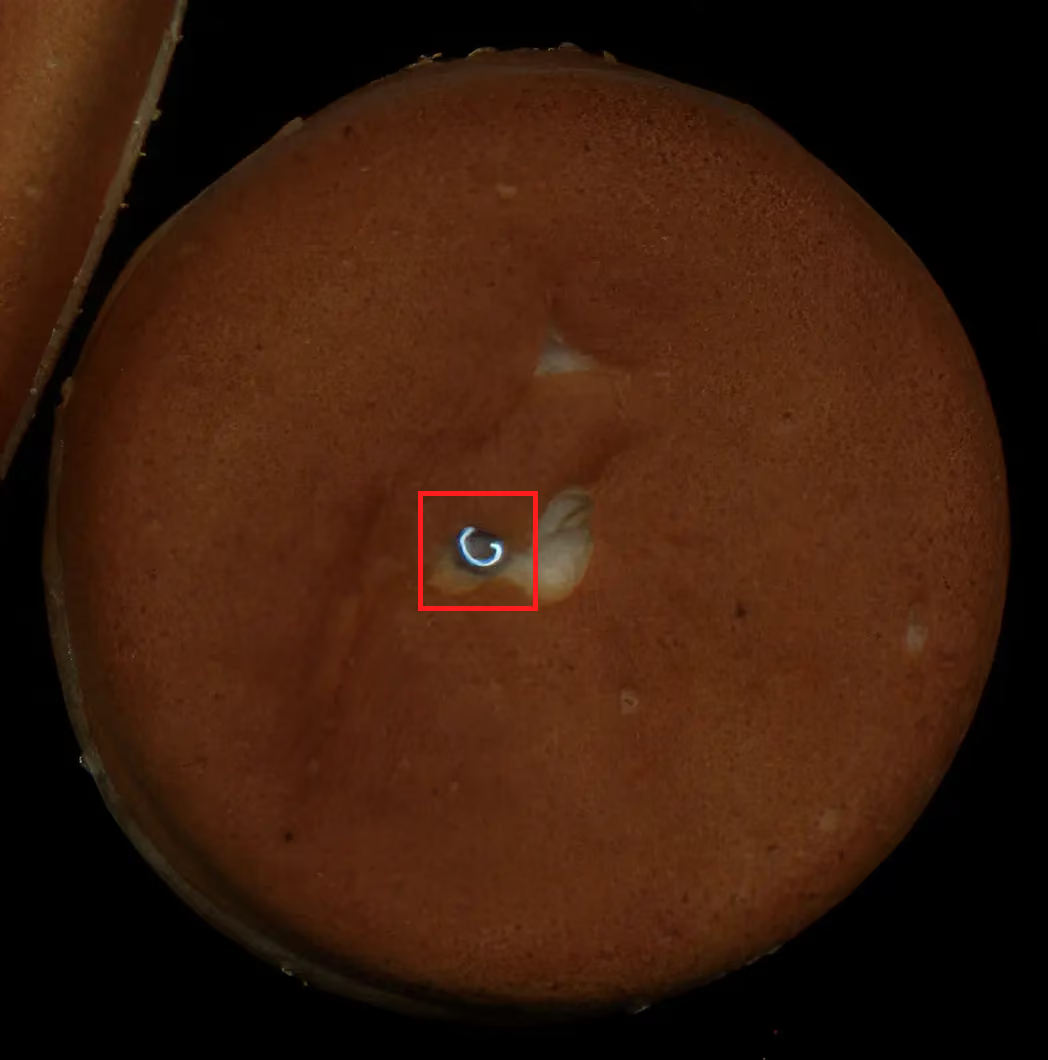
Hyperspectral imaging (HSI) combines traditional digital imaging with spectroscopy. While the human eye sees only three bands of light (red, green, and blue), hyperspectral sensors collect data across hundreds of narrow spectral bands. This creates a "chemical fingerprint" for every pixel in the image.
What can it detect?
HSI excels at finding organic contaminants that are the same density or color as the product, such as:
- Wood, cardboard, and paper
- Insects
- Stems, pits, or shells in produce
- Cross-contamination of different food types
- Compositional information about products
What kind of data does it provide?
Multispectral imaging systems log foreign body detection events across a wide range of materials that X-ray and metal detectors cannot see. Beyond foreign material detection, it also captures compositional data, such as moisture distribution across every product, giving managers insight into process consistency and product quality that no other inspection technology can provide.
What is AI Vision Imaging in Food Inspection?
AI Vision uses advanced deep-learning algorithms and high-resolution cameras to "see" and "interpret" products much like a human would, but with much higher speed and consistency. Instead of relying on simple color or density thresholds, the system is trained on thousands of images to distinguish between what a "perfect" product looks like versus a "defective" one.
What can it detect?
AI Vision is incredibly versatile, identifying:
- Product defects (discoloration, bruising, surface damage)
- Shape, size, and ratio deformities
- Wood, bone, metal, plastics (including clear plastic), foam, and many other materials
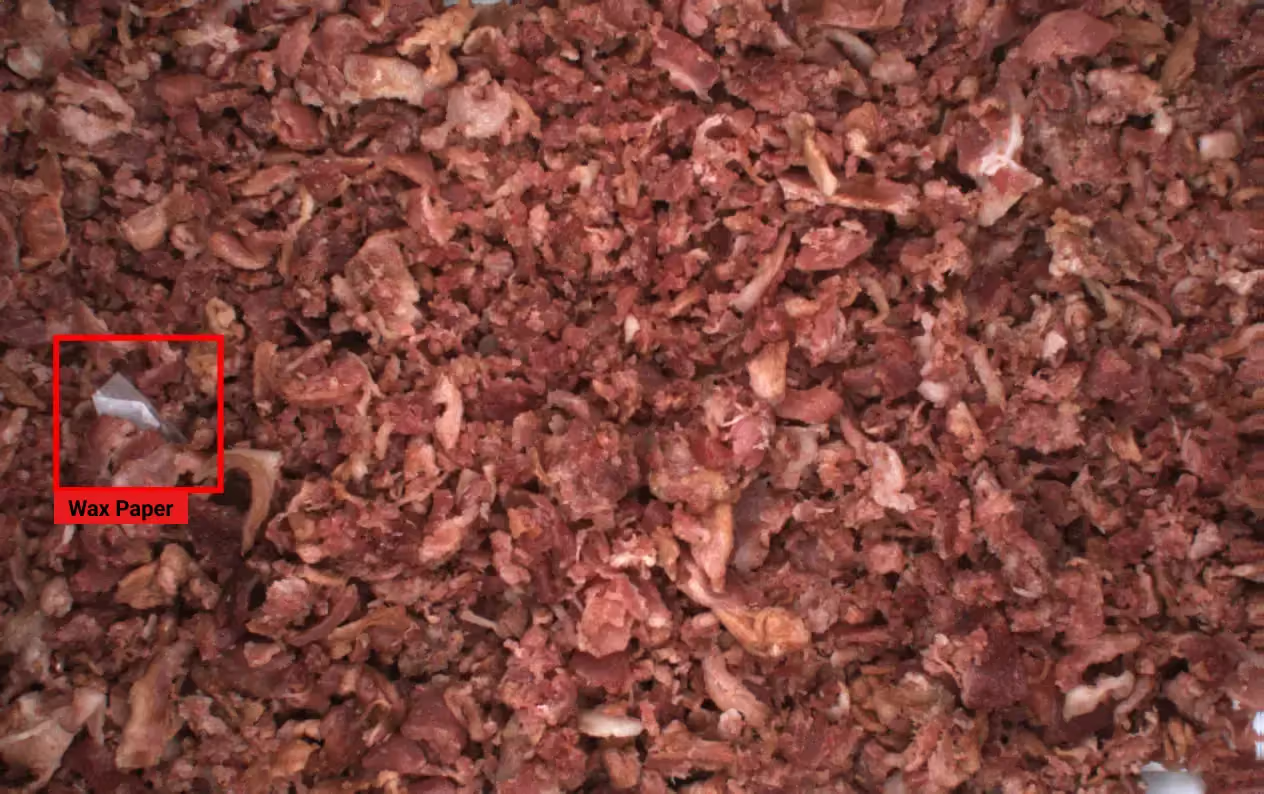
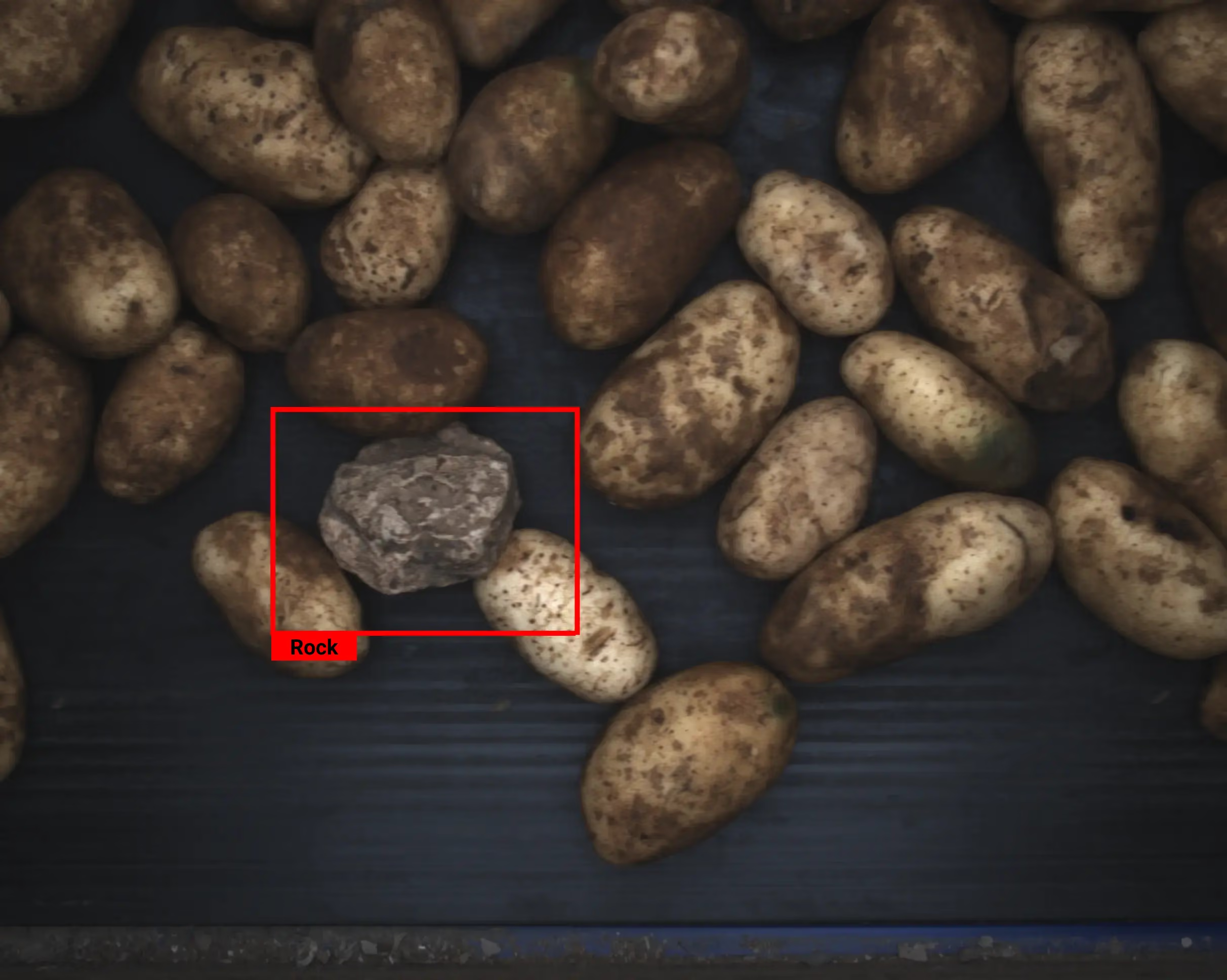
KPM Analytics offers the SIFTAI Foreign Material Detection System, which utilizes these advanced algorithms to catch defects that traditional systems miss.
What kind of data does it provide?
AI-based vision systems log real-time detection events while automatically classifying foreign materials by name distinguishing between specific contaminants like "plastic," "wood," or "metal." These granular insights, paired with rejection rate trends, give managers a clear, ongoing picture of exactly what is entering the line and from which source. This level of detail supports both rigorous food safety reporting and continuous process improvement. Furthermore, because the AI models are refined over time, classification accuracy only improves the longer the system runs.
Which System is Right for You?
The right choice depends on your specific risk profile and processing challenges.
- If you are concerned about metal fragments from equipment, or dense internal objects X-ray inspection is essential.
- If chemical composition and internal product consistency are priorities, hyperspectral imaging may be the best fit.
- If your challenge involves detecting a wide range of defects and contaminants—such as clear plastic fragments or subtle quality issues—AI Vision provides unmatched flexibility.
In many modern food processing environments, a layered approach combining multiple technologies delivers the strongest food safety and quality assurance program.
By integrating the appropriate inspection technology, food processors can improve food safety, reduce waste, enhance product consistency, and protect their brand and bottom line.
If you want a deeper dive, check out some of our resources, Or talk with our team


.avif)