Detecting Clear Plastic in Food Production

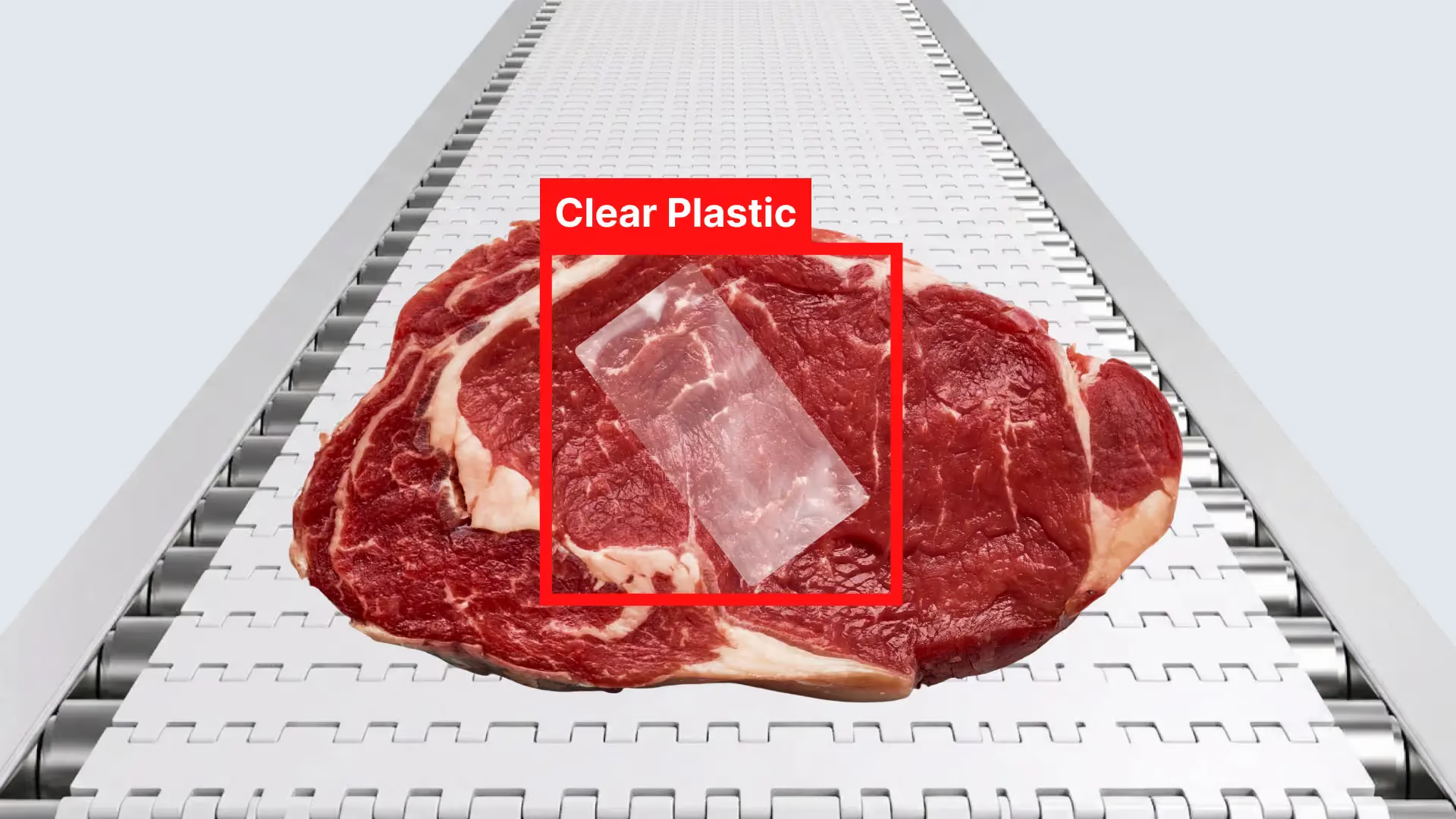
Physical contaminants are a constant challenge in food safety and quality control. While metal and dense materials like stone have long been the focus of inspection systems, one of the most elusive materials is clear plastic.
Why is Finding Clear Plastic So Difficult for Traditional Foreign Material Detection Systems?
Traditional vision systems and inspection methods often rely on color contrast or density to identify foreign materials (FM). X-ray machines, for example, are excellent at identifying high-density contaminants like metal and bone. Low-density contaminants like clear plastics are too similar to food to be differentiated by X-ray equipment.
Standard color cameras and traditional vision inspection struggle with clear plastic because there is no distinct color. Additionally, clear plastic reflects the colors and textures of the surrounding product, making it difficult for standard vision systems to differentiate. This lack of visual contrast means that traditional algorithms often dismiss the plastic as a highlight or natural product variation
Why Clear Plastic is a Risk
Beyond the technical difficulty of detection, clear plastic represents a major threat to both consumer safety and a manufacturer’s bottom line:
- Injury and Choking Hazards: Sharp shards from rigid plastic can cause dental damage or internal lacerations, while thin films pose a high choking risk for children and the elderly.
- Microbial Vectors: Plastic fragments aren't just physical hazards; they often carry "hitchhiking" bacteria like Listeria or Salmonella from warehouse environments or raw ingredient handling.
- High Recall Costs: Because it often bypasses standard detectors, clear plastic is a common cause of "undetected" material reaching the market, triggering multi-million dollar recalls.
- Brand and Regulatory Risk: A single viral photo of a plastic contaminant can destroy consumer trust overnight. Furthermore, global standards (like FSMA and SQF) now demand technology that goes beyond basic metal detection.
How Does Clear Plastic Enter the Food Production Process?
Clear plastic is ubiquitous in food production environments. Common sources of contamination include:
- Packaging Materials: Liners, shrink wrap, and plastic bags used to transport raw ingredients.
- Safety Gear: Fragments from disposable gloves or safety glasses.
- Equipment Components: Wear and tear on machine guards, gaskets, or plastic conveyor parts.
How KPM Analytics Solves Clear Plastic Foreign Material Detection
KPM Analytics has new technology leveraging advanced AI models and sophisticated imaging technology to detect what traditional methods miss. KPM Analytic’s AI is trained to recognize the unique textures, edges, and light-reflective properties of clear plastic. This allows our systems to differentiate between a piece of clear plastic and the natural sheen of moist protein, a piece of cheese, or the natural texture of various food products.
The SiftAI® Foreign Material Detection System offered by KPM Analytics is specifically designed to handle these complex detection tasks in real-time on production lines.
Does The Type of Food Product Affect Clear Plastic Detection?
While the background "noise" changes, the core AI technology remains effective across a wide variety of applications. Regardless of the product, irregular shapes of beef trim or the fine texture of shredded cheese the AI adapts to the environment to ensure clear plastic is identified and removed before it reaches the consumer.
View our videos on clear plastic detection here.
Want to learn more information or recieve a demo?

.avif)