Inspection to Prediction: How AI Is Redefining Food Quality Control

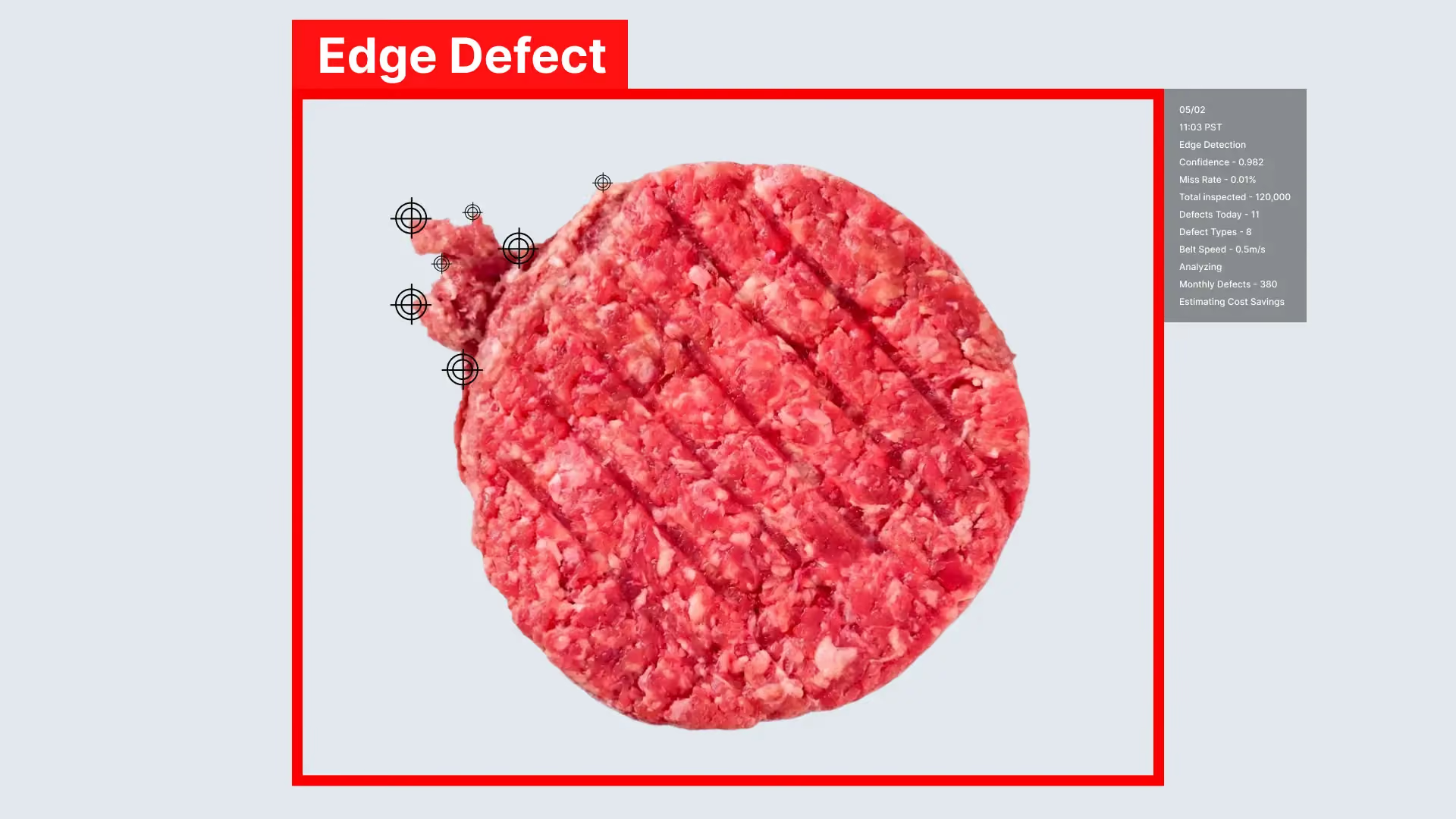
AI-Driven Vision Systems: A New Standard for Food Quality Inspection
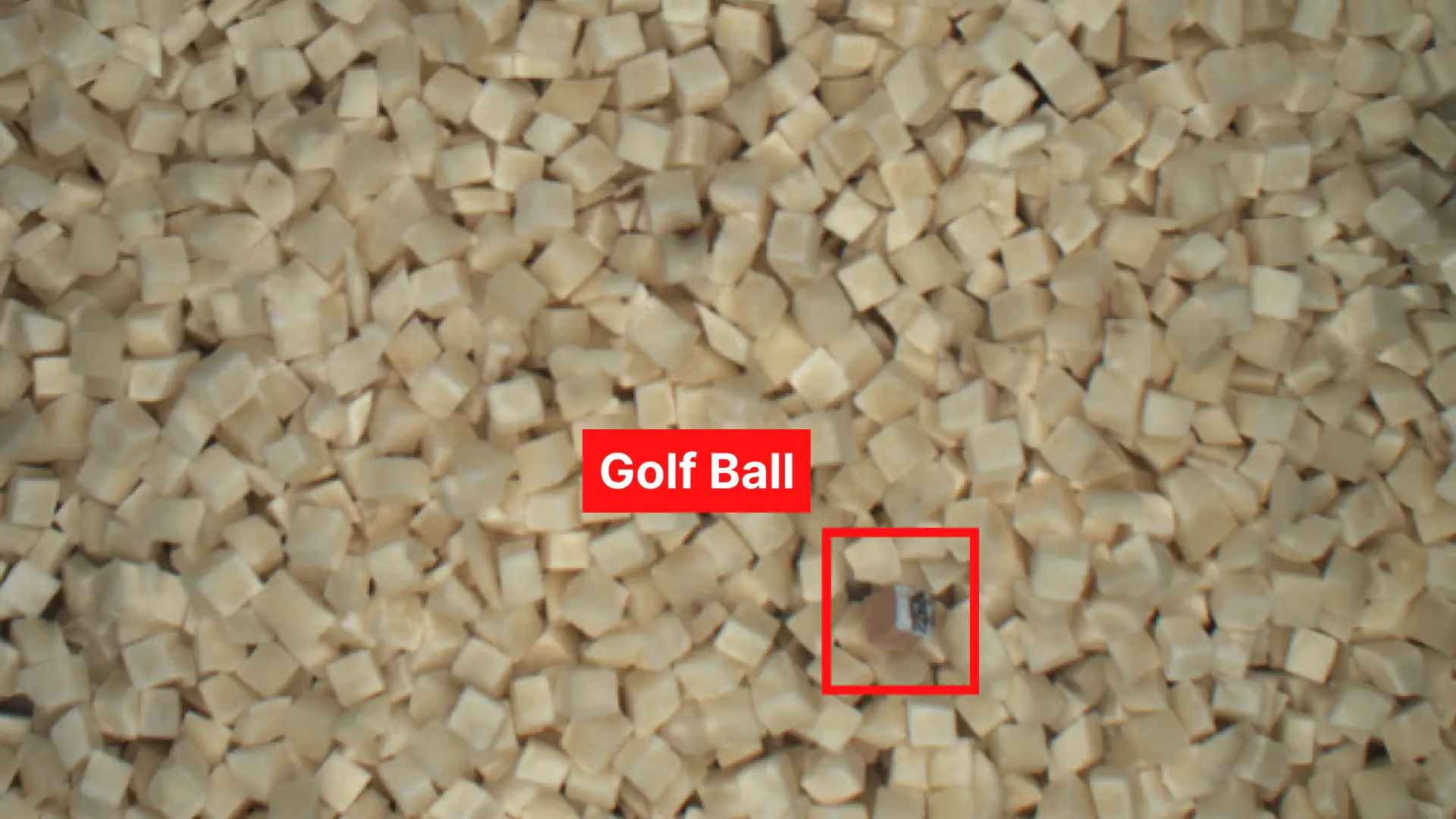
One of the most impactful applications of AI in food manufacturing today is real-time visual inspection. AI-driven vision systems pair high-resolution cameras with machine learning algorithms to detect defects, foreign material (FM), shape irregularities, discoloration, and surface contamination at speeds and consistency levels that manual inspection can't match.
In practical terms, vision systems are currently deployed across a wide range of food categories:
- Baked goods and snacks: Detecting surface imperfections, uneven coloring, and shape deviations, helping optimize baking times and reduce waste.
- Fresh produce: Assessing color, size, and texture to identify bruising, mold, or ripeness variations, improving grading accuracy and product uniformity.
- Meat and poultry: Ensuring trim levels, fat distribution, and portion accuracy meet specifications.
What makes modern AI vision systems particularly powerful is their versatility and potential for continuous improvement. As product specifications change or new defect types emerge, new AI models can be developed to meet customers' evolving needs offering an innovative, customizable approach to inspection that adapts alongside production requirements.
The split-screen below illustrates the difference between what a human inspector sees on a high-speed conveyor line and what an AI vision system detects in the same moment. While both panels show the same product stream, the AI overlay identifies and classifies each item in real time, flagging discoloration and irregular shapes that are easy to miss at line speed (Some lines might be slower or faster depending on many varied factors). Press play on either panel to see it in action.
Predictive Analytics: Catching Problems Before They Happen
Beyond real-time defect detection, AI is increasingly used to anticipate manufacturing issues before they arise. This is where predictive analytics comes in - a discipline that leverages AI and machine learning to analyze both historical and real-time production data, uncovering patterns that help forecast problems before they reach the end of the line.
In food manufacturing, predictive analytics helps with:
- Equipment and maintenance forecasting: Cameras monitor machinery for wear or residue buildup, aiding predictive models that schedule cleaning and maintenance to prevent downtime and contamination.
- Root-cause analysis: Visual evidence paired with operational data helps pinpoint exactly where and why issues originate, strengthening predictions for future runs.
- Operator and workflow insights: Vision-based analytics reveal how human factors influence quality, allowing predictive models to recommend training or workflow adjustments.
- Process and quality optimization: Real-time image data helps adjust production variables, like slicing thickness, fill levels, or baking time, to maintain consistent quality and reduce waste.
- Continuous improvement through learning: Labeled image datasets of good and faulty products help AI models become increasingly precise in predicting emerging quality issues.
- Identify trends and patterns linked to out-of-spec batches: By analyzing large sets of visual data over time, AI models uncover correlations between defects, tools, and process conditions, improving long-term reliability.
- Optimize energy and resource usage, cutting waste and improving sustainability metrics across the plant.
This predictive capability is especially valuable when combined with data from other analysis tools used throughout the production process, such as NIR for incoming ingredient inspection and flour & dough rheology analysis.
Getting Started with AI in Food Manufacturing
Implementing AI-powered inspection is a significant step forward for any facility, and understanding the entry process helps set the stage for a successful deployment. At KPM, we guide manufacturers through a proven, phased approach:
Despite its promise, AI adoption in the food industry is not without its hurdles. Food manufacturers, particularly small and mid-sized operations, face several significant challenges when integrating AI into their workflows:
- Phase 1 - Assessment: Every project begins with understanding the facility's specific needs. This includes evaluating how current equipment and infrastructure will communicate with new inspection platforms, identifying the right hardware configuration, and capturing initial product images to begin building a training dataset tailored to a facility's products and defect criteria.
- Phase 2 - Pilot deployment: With a baseline established, a focused pilot allows manufacturers to see AI inspection in action on a single line or application. This stage includes team onboarding, equipping operators and quality teams with the knowledge to use and manage the system confidently, as well as early validation against food safety and compliance requirements.
- Phase 3 - Scale-up: Once the pilot demonstrates value, the system can be expanded across additional lines or facilities. Investment planning at this stage helps decision-makers align expectations around timelines, returns, and the scope of broader deployment.
- Phase 4 - Optimization: AI inspection matures alongside the operation. In regulated food manufacturing environments, this means ongoing model validation, documentation, and change control aligned with HACCP and GFSI frameworks, ensuring the system continues to meet evolving production and compliance needs.
At every stage, KPM provides hands-on training, calibration support, and implementation guidance - because a successful AI deployment is as much about the strategy as it is about the technology itself.
Why Tailored AI Models Matter
A common misconception is that AI solutions are one-size-fits-all. In reality, the most effective AI applications in food quality control are those that are purpose-built for specific processes, products, and environments. A vision system trained on flat bread characteristics, for instance, will perform very differently from one calibrated for inspecting fresh berries or chicken nuggets.
This is a principle KPM understands deeply. Just as measuring the moisture level of potato chips requires precise, application-specific calibration to yield meaningful results, AI models must be developed with domain expertise and product-specific training data to deliver reliable performance in the field.
Tailored AI models also enable manufacturers to:
- Set custom quality thresholds aligned with their brand standards rather than generic benchmarks.
- Adapt quickly to seasonal ingredient variability without sacrificing accuracy.
- Build institutional knowledge into the system, preserving expertise even as personnel changes occur.
Automation, Robotics, and AI: The Future of Food Production
Looking ahead, the convergence of AI and robotics is poised to redefine food production at a fundamental level. By 2035, industry analysts anticipate a landscape where:
- Autonomous robotic systems handle complex tasks such as portioning, plating, and packaging with the precision and adaptability previously only possible with skilled human labor.
- Collaborative robots work alongside human operators, taking on repetitive or ergonomically challenging tasks while humans focus on oversight and exception handling.
- AI-orchestrated production lines increasingly move toward real-time optimization , dynamically adjusting speed, temperature, and ingredient ratios based on continuous sensor feedback.
- End-to-end traceability supported by digital traceability systems, including emerging blockchain applications, provides complete visibility from farm to fork, dramatically improving recall response times and consumer transparency.
- Generative AI tools assist food scientists in formulating new products, predicting consumer preferences, and modeling the nutritional impact of ingredient substitutions with potential to significantly accelerate early-stage formulation and concept development.
The road to this future is already being paved. Companies that invest in AI infrastructure today, building the data pipelines, sensor networks, and analytical frameworks needed to support intelligent automation will be best positioned to lead in a food industry that is faster, safer, and more sustainable than ever before.
Conclusion: Embracing AI as a Quality Partner
The food manufacturers seeing the greatest returns from AI aren't the ones replacing people; they're the ones giving their people better tools. When routine inspection is automated and predictive insights surface problems early, quality managers and food scientists are free to focus on what they do best: solving complex problems, driving innovation, and raising the bar for their products.
At KPM Analytics, we believe that the future of food quality lies in the intelligent integration of measurement science, data analytics, and process knowledge. Whether through advanced NIR analysis, vision-based inspection, or AI-powered process optimization, our mission remains the same: helping food manufacturers produce better products, more consistently, with greater confidence - and reduce costs at the same time.
If you're interested in discussing inspection solutions, get in touch with us to start the conversation.
.avif)