Merging the Baker's Hands and the Lab's Memory
.webp)
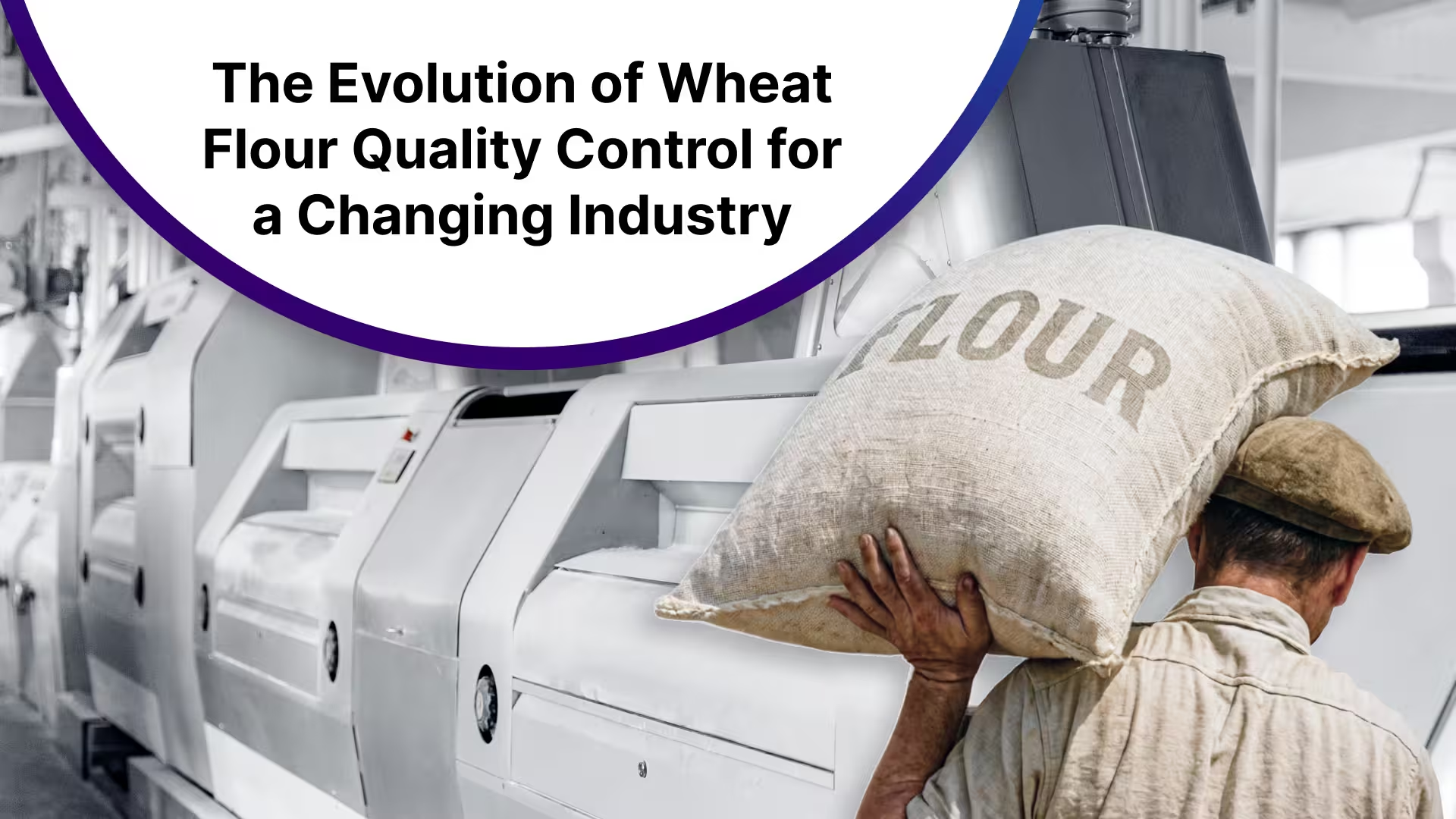
As experienced master bakers retire, the hands-on know-how that once kept bakery production consistent is disappearing. Laboratory measurement doesn't replace the baker's expertise; it captures it as objective, repeatable data, so that knowledge stays on the line from one operator, site, and generation to the next.
For centuries, baking relied on people who simply knew how to make split-second process decisions based on experience. A master baker would touch the dough, read its behavior, and adjust the process on the spot, correcting by feel what the flour couldn't tell them on paper. That expertise took years to build, and it lived in the hands of a few.
Today, those hands are leaving. Across the industry, experienced bakers that plants rely on to fix things when they go wrong are approaching retirement, and a trend that accelerated after the pandemic has pushed others toward different careers. In many plants, the know-how that keeps production running is shared between a handful of individuals, it was never written down, and when they go, a piece of the plant's capability goes with them.
What happens when a master baker retires?
The problem isn't only that expertise is rare and leaving. It's that expertise, by its very nature, is hard to reproduce. Give the same flour to two skilled people and they may read it differently. Even the same person, on two different days, may not judge a dough identically. As long as the master baker is on site, their judgment is the reference, but they aren't present 24/7, and here are far less master bakers looking for work today to replace those that leave. When the reference leaves, what's left is not just a gap in skill; it’s a gap in consistency, and consistency is what an industrial line lives or dies by.
Should the lab replace the baker, or work with them?
For a long time, the two were treated as separate worlds: the lab checked the flour, the bakery did the real work, and they rarely spoke. But they were never meant to oppose each other. The baker's touch brings something no instrument can match: the ability to feel the dough directly, read how it behaves, and sense when something is off. The lab brings something no pair of hands can match: an objective, repeatable reference that returns the same answer no matter who runs the test. Neither is complete on its own.
This is where the two finally meet. The point of measurement is not to replace the baker's eye. It's to give their instinct a memory.
What dough and flour properties can a lab actually measure?
Measurement lets what the expert knows be shared, repeated, and kept.
And there are many properties that laboratories tools can measure simply, including:
- Dough elasticity, extensibility, and baking strength
- Dough behavior when mixing and heating
- Proofing activity, and much more…
Water absorption, judged by hand, depends on the person; measured, it becomes a single figure every baker on the line can work to. And rather than baking every sample, measurement can flag which flours clearly need attention, so the expert's time goes where it truly makes a difference. In each case, the instrument doesn't overrule the baker. It captures the feeling instead of letting it walk out the door.
How do you keep the craft consistent once the expert is gone?
Once the feel is captured as data, what used to live in one person's hands becomes a reference the whole team can use, from one batch to the next, from one site to another, and from one generation to the next. A new operator who isn't yet an expert can still hold the line, because the standard no longer depends only on who happens to be on shift. This isn't about turning bakers into data scientists, or trusting a curve over a craftsman. It's about making sure that when the master baker retires, the plant doesn't lose everything they knew.
The baker's judgment will always matter. The answer isn't to replace it with a machine, but to pair it with an objective, repeatable reference, so the craft doesn't just survive, it stays consistent.
Losing an expert shouldn't mean losing what they knew. Two KPM white papers by Arnaud Dubat show how to make that knowledge stay:
- Why Your Flour Quality Control Sometimes Fails, and How to Fix It turns disappearing expertise into measurable know-how,
- Beyond Baking Tests: Turning Sensory Evaluation into Quantifiable Metrics shows how to put objective numbers on what your best bakers see and feel.
Read them before your next expert walks out the door.
No. Measurement is a complement to the baker's judgment, not a substitute. The baker's hands feel the dough and sense when something is off; the lab provides an objective, repeatable reference. Neither is complete on its own.
Experienced bakers are reaching retirement age, and a trend accelerated by the pandemic has pushed others toward different careers. Fewer skilled bakers are available to replace them, so the hands-on know-how that once kept production consistent is leaving the industry.
It means translating a baker's expert judgment, such as how a dough should feel or how much water it needs, into objective measurements. Once captured as data, that know-how can be shared across a team and kept even after the expert leaves.
Common measurable properties include dough elasticity, extensibility and baking strength; dough behavior during mixing and heating; proofing activity; and water absorption, among others.
Because an industrial line depends on producing the same result whoever is on shift. When judgment lives only in one expert's hands, output varies from person to person and day to day. An objective reference keeps results consistent regardless of who runs the line.