Arnaud Dubat

Arnaud Dubat

Arnaud holds a Master's Degree in Sciences and Techniques for the agro-food industry and a Master's in International Marketing and Strategy. His original background is in Biochemistry, and he also holds a Miller’s Degree from the French Milling School (ENSMIC). He started working for CHOPIN Technologies, a KPM Analytics product brand, in 1989. His various occupations in the company (he started as an after-sales technician) and his current role put him in constant contact with bakery manufacturers and bakery quality control teams. Arnaud is a standardization expert for AFNOR, ISO and CEN. He is active with the BIPEA, corporate member representative for ICC and is also actively involved in Cereals and Grains standardization working groups.

Arnaud Dubat

Posts

Arnaud Dubat

External Publications

Thermomechanically Induced Protein Aggregation and Starch Structural Changes in Wheat Flour Dough

Various studies have been carried out on wheat flour to understand protein and starch changes when subjected to mixing and temperature constraints, but structural changes of proteins and starch at the typical moisture levels of a dough system are not fully understood. The aim of this research was to improve our understanding of (micro) structural changes at the mesoscopic level, using: empirical rheology, microscopy (light and scanning electron microscopy), sequential protein extractions and glutenin macropolymer (GMP) wet weight, along mixing-heating-cooling stages of the Mixolab® assay. Studies were performed in three wheat flours with different protein content. The rheological analysis allowed identifying the role of the proteins and the relationship between the protein content and different primary and secondary parameters obtained from the recorded curves. The progressive heating-mixing stages during the Mixolab assay result in a dynamic re- and de-structuring of proteins involving interactions between the flour proteins from water-soluble to SDS soluble to SDS insoluble and vice-versa. The microstructure analysis using light, polarized and scanning electron microscopy revealed the changes that proteins and starch molecules undergo during mixing, heating and cooling. Qualitatively, the starch structural changes, swelling and gelatinization observed by microscopic techniques show some parallels with protein (and glutenin) content of the respective flour. Nevertheless, this tentative finding needs further confirmation by studying flour samples with a large difference in glutenin content.

Gluten Composition, Gluten Quality, and Dough Mixing Properties

Triticum dicoccum and Aegilops tauschii carry genes/alleles influencing favorably yield, resistance to diseases, and tolerance to abiotic stresses. Hybrids made by crossing these two species, are referred to as synthetic wheats. Synthetic wheat has been crossed to modern wheat genotypes to combine desirable traits from the first into agronomically-acceptable wheat hybrids. A set of 14 synthetic-derived, agronomically-acceptable, wheat lines and 8 common wheat cultivars, were examined in relation to Glu-1/Glu-3 glutenin subunit composition, gluten quality-related parameters (protein and SDS-Sedimentation), and dough viscoelastic properties (using the National-Mixograph and the Chopin-Mixolab dough mixers and the Alveograph). Nine lines possessed the Glu-1/Glu-3 glutenin composition of the common wheat parent (Cv. Pastor, Glu-1: 1, 17+18, 5+10, Glu-3Ac, and Glu-3Ag); other two showed the Glu-D1t subunit, 1.5+T2, from Ae. tauschii, and other five genotypes possessed the Glu-A3b’ allele, from T. dicoccum. The wide differences in the gluten quality-related parameters observed among the synthetic-derived lines could not be clearly associated to their differences in Glu-1/Glu-3 allelic composition. However, the Glu-D1t subunit 1.5+T2 was present in the lines showing the best gluten extensibility but the weakest gluten type. The Chopin-Mixolab proved to be a potential instrument to screen breeder’s lines for gluten quality; when testing whole grain flour, the dough development time stability, and breakdown parameters of the Mixolab showed high correlation with the dough strength parameter W of the Alveograph.

Potential utilization of Mixolab for quality evaluation of bread wheat genotypes

The aim of this study was to determine the possibility of using Mixolab to assess the quality of different wheat genotypes. Mixolab data were compared with various flour quality characteristics and bread volume. The samples were chosen to represent a wide range in terms of grain and rheological properties and baking quality. There are eight paramaters used to evaluate a Mixolab curve. C1 and C2 are related to protein quality, whereas C3, C4 and C5 are related to the starch characteristics. Slopes α, β, γ are the indicators of protein weakening, starching speed, and enzymatic degradation. There were significant correlations between two Mixolab parameters (Stability and C2) and Zeleny sedimentation and Alveograph W values (P < 0.01). Some of the Mixolab parameters (C3, C4, C5) were correlated with Alveograph G and P/L value (P < 0.01). Mixolab values are generally in agreement with Farinograph values. There were significant negative correlations between most of the Mixolab parameters (Stability, C2, C3, C4) and Farinograph softening degree. Stability and C2 parameters of Mixolab were also significantly correlated with Farinograph stability values (P < 0.01). The correlation between Mixolab stability and Farinograph stability was considerably high (r = 0.907, P < 0.001). The Mixolab parameters C3, C4, and C5 were significantly correlated with bread volume. Significant correlations were observed between slope α and Zeleny sedimentation (P < 0.05), Alveograph W (P < 0.01), Farinograph softening degree (P < 0.001), and stability (P < 0.001) values.

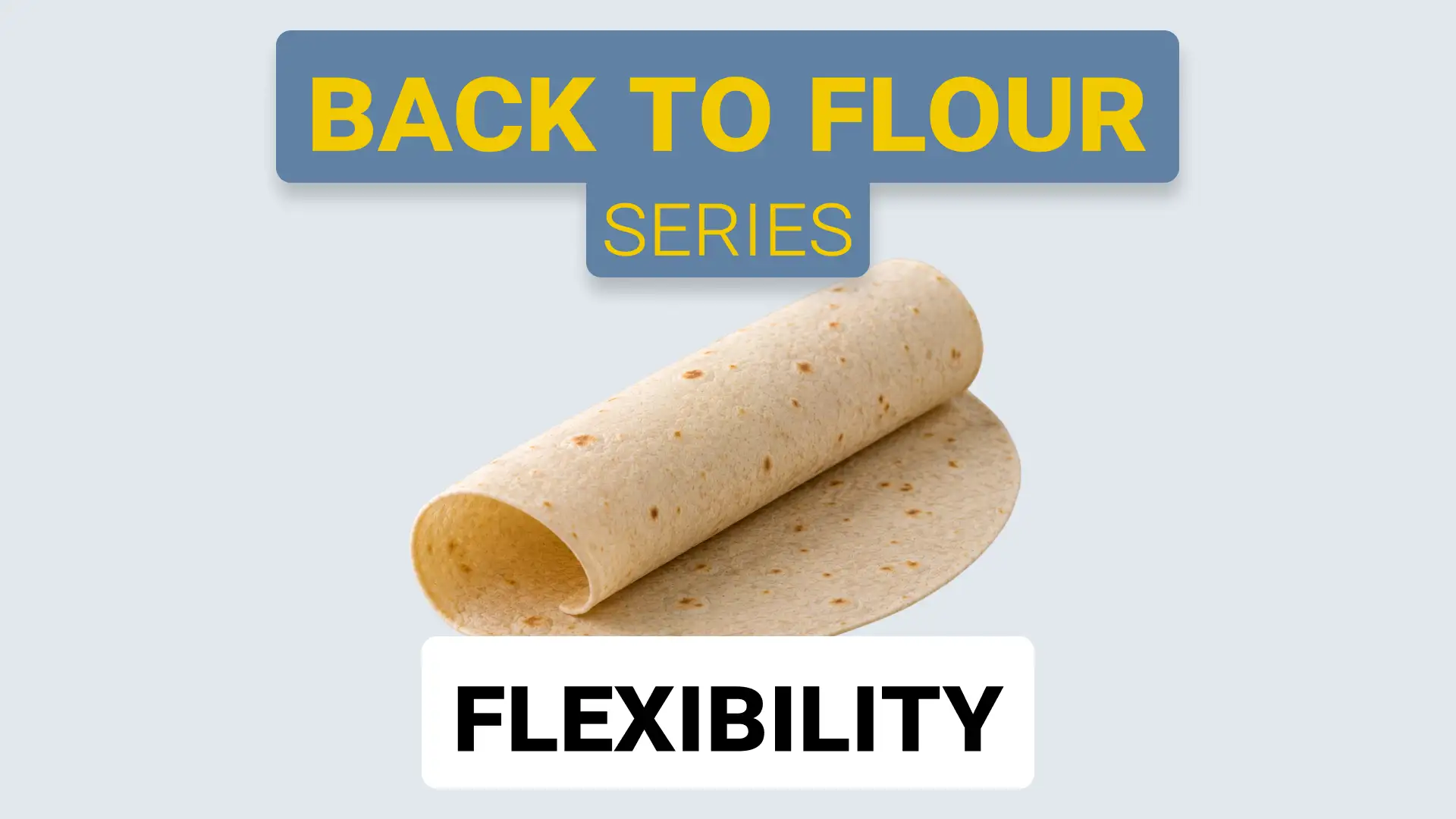
Quality attributes of whole wheat flour tortillas with sprouted whole wheat flour substitution

Sprouted whole-grain foods are an emerging trend in the food market due to consumers' desire for health-promoting foods. The objectives of this study were to examine the rheological properties of whole-wheat flour (WWF) with sprouted WWF substitution (0, 25, 50, 75 and 100 g/100 g) and tortilla products made from it. Flour samples were analyzed for gluten index, color, solvent retention capacity, and Mixolab parameters, while tortillas were analyzed for weight, diameter, color, opacity, texture, rollability, and sensory attributes. Mixolab data showed that water absorption, dough development, and stability times decreased with an increase of sprouted WWF substitution. In terms of tortilla baking performance, tortillas made with higher amounts of sprouted WWF were larger in diameter and specific volume, brighter, and more opaque, and received higher sensory scores in color, flavor, and overall acceptability. For texture parameters, tortillas made with a higher percent of sprouted WWF required less force to break, which indicated that tortillas were less firm. After 16 d of storage, tortillas made with higher amounts of sprouted WWF were more rollable and shelf-stable. The results demonstrated that sprouted WWF could bring benefits to WWF tortilla's baking performance, i.e. better appearance, higher consumer acceptability, and longer shelf life.

Affiliations & Partnerships