Smarter Eyes on the Line: AI Inspection Sees what Humans Miss

This article originally appeared in Food & Drink Technology. Click here to access the article on the publication's website.
The growing demands food processors face to produce more products at higher volumes without sacrificing quality are not going away.
Now several years removed from the Covid-19 era, turnover in food manufacturing has remained stubbornly high, leaving many processors searching for better solutions to meet these demands.
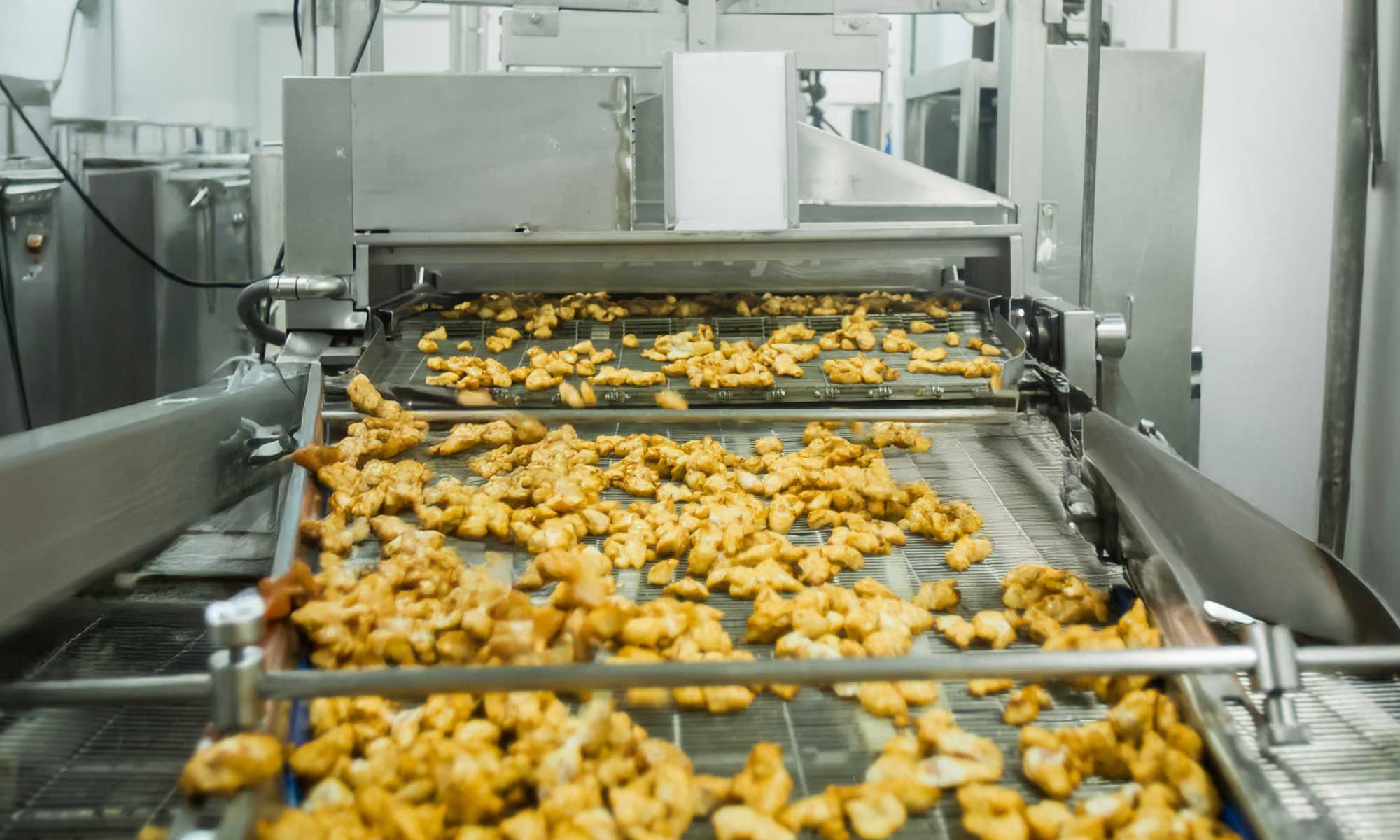
Traditional methods for inspecting products, whether through routine sampling or observing rows of products speeding on conveyors, have become nearly impossible to maintain with today’s processing speeds. Manual inspection is labor-intensive, mundane, and depends heavily on the operator’s experience, making consistency difficult even in the best-run operations.
As many food brands have found, today’s AI-powered vision inspection technologies outperform human-only inspection in several ways. Firstly, an AI vision system never experiences fatigue; it maintains its high standards to analyze all products objectively, all day, every day. Additionally, human inspectors typically inspect only the topside of products.
A vision inspection system equipped with top-, bottom-, and side-view cameras ensures 100% product inspection. Implementation of an AI system also enables product inspection past what humans can see. Multispectral and hyperspectral imaging allow compositional analysis beyond the visible spectrum.
While they have been used in food processes in some fashion for more than a decade, AI-based vision inspection still raises a lot of questions among food processors skeptical about their capabilities and use cases.
Three ways food processors benefit from AI-based vision inspection today
1) Reduced product recalls caused by foreign materials
Foreign materials come in many forms. Bits of conveyor or metal shards from machinery, flecks of plastic or film from packaging, or an inattentive line worker accidentally leaving their PPE on the processing line, can all cause massive product recalls.
Most food processing plants use X-rays or metal detectors to inspect foreign objects at critical process stages. However, those inspection system types are only effective when detecting solid objects. This means soft foreign materials like paper, films, plastics, wood, or cosmetic defects like caked-on dough on baked goods, may pass by undetected.
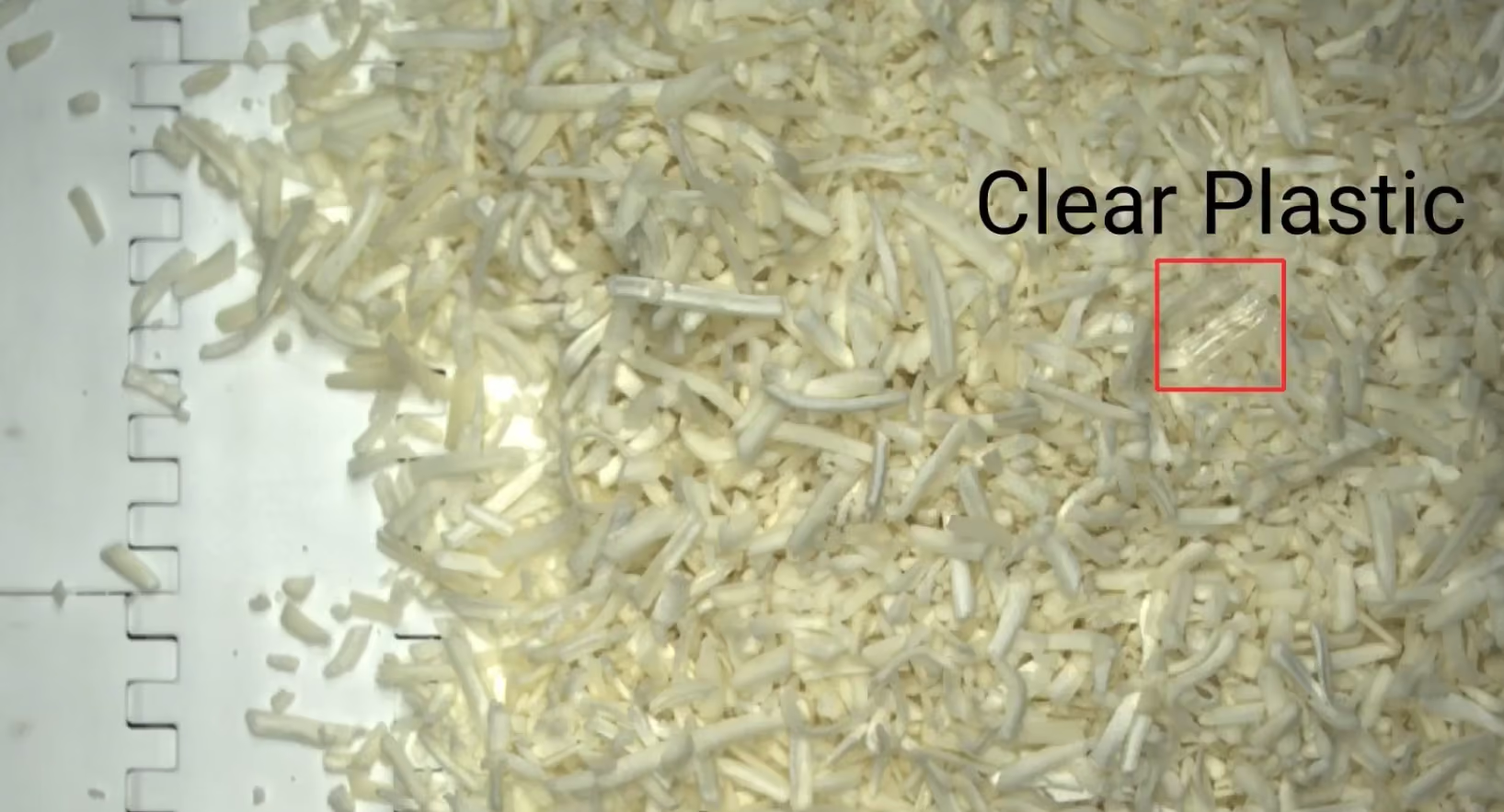
Today’s AI-based vision inspection technologies are well equipped to detect traditionally challenging foreign materials from product surfaces. An AI vision system can differentiate products with natural variations from foreign anomalies that even the keenest operator may miss, such as clear plastic on a bed of shredded cheese or a chunk of white rubber on a pile of ground beef.
Modern AI-based vision inspection models can now detect soft foreign materials, such as paper and plastic, that typically evade X-ray and metal detection.
Every avoided product recall saves food brands millions of dollars; if the AI vision system finds just one potentially hazardous foreign material from the processing line, that effort alone may pay for the system investment multiple times over.
2) More consistent product quality control at scale
The first vision inspection systems at food production sites were generally used to measure simple product traits like size, shape, color, and other basic features. Computing power as well as camera and lighting technologies at the time could only process so much input, but as users began pushing the technological limits to measure more complex product features, or to learn more about their process, vision inspection developers began exploring AI as a method to deploy more measurement capabilities.
Take for instance hamburger buns; for quick serve restaurant (QSR) brands, consistent size, volume, and bake color used to be sufficient quality metrics. In recent years, some QSRs have branched into different and deeper product measurements, such as seed distribution or analyzing the shine on the bun. Now with advanced camera and lighting technology, an AI-powered system can quantify these particularities at full-line speed, allowing operators to make necessary adjustments to ensure consistency with each production run.
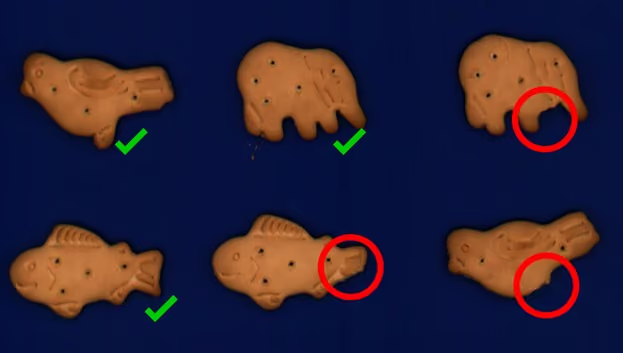
Another quality assurance value from AI-based vision inspection technologies is their ability to detect subtle anomalies and defects on products. Take, for example, an animal cracker production line. Each cracker has detailed features that identify it with a specific animal. Too many broken crackers reflect poorly on the brand.
With an AI vision system trained to inspect 100% of crackers leaving the oven or cooling zone, these shape recognition and defect detection capabilities can be very reliable and used to drive a rejection mechanism to remove faulty products from a line. If an elephant is missing its trunk or a bird missing its beak, the AI system makes that determination faster and more consistently than the average product inspector.
By saving on labor, reducing waste, and improving operational efficiency, an AI-based inspection system used for quality control delivers a quick return on investment through multiple facets.
3) Production process optimization and yield improvement
Each AI vision inspection system can become a data powerhouse for food processing organizations. At the floor level, vision data can help uncover root causes of process inconsistencies. Take a chicken nugget production plant as an example: a single facility may have multiple batch fryers that cook the breaded product. After product is cooked and enters the cooling zone via conveyors, an in-line inspection system may detect discoloration on products from a specific fryer, which may indicate the oil needs to be changed or temperature adjusted.
At the plant level, vision data may help uncover production trends operators can use to be more proactive with their decision making. For instance, if a certain quality defect is happening more often during one production shift compared to others, or if the defects can be tied to a specific supplier’s ingredient lot, vision data can save quality managers significant troubleshooting time.
Is your company considering AI inspection?
AI-powered vision inspection does not replace the importance of experienced QA teams, but instead reinforces them by delivering consistent real-time inspection, allowing the team members to focus on other more important tasks at the plant. For processors across baking, meat, and fresh produce, the result is fewer surprises, stronger compliance, and greater confidence that every product meets the highest quality and food safety standards.