Back to Flour: How Important Is Ash Content in Baking Products?
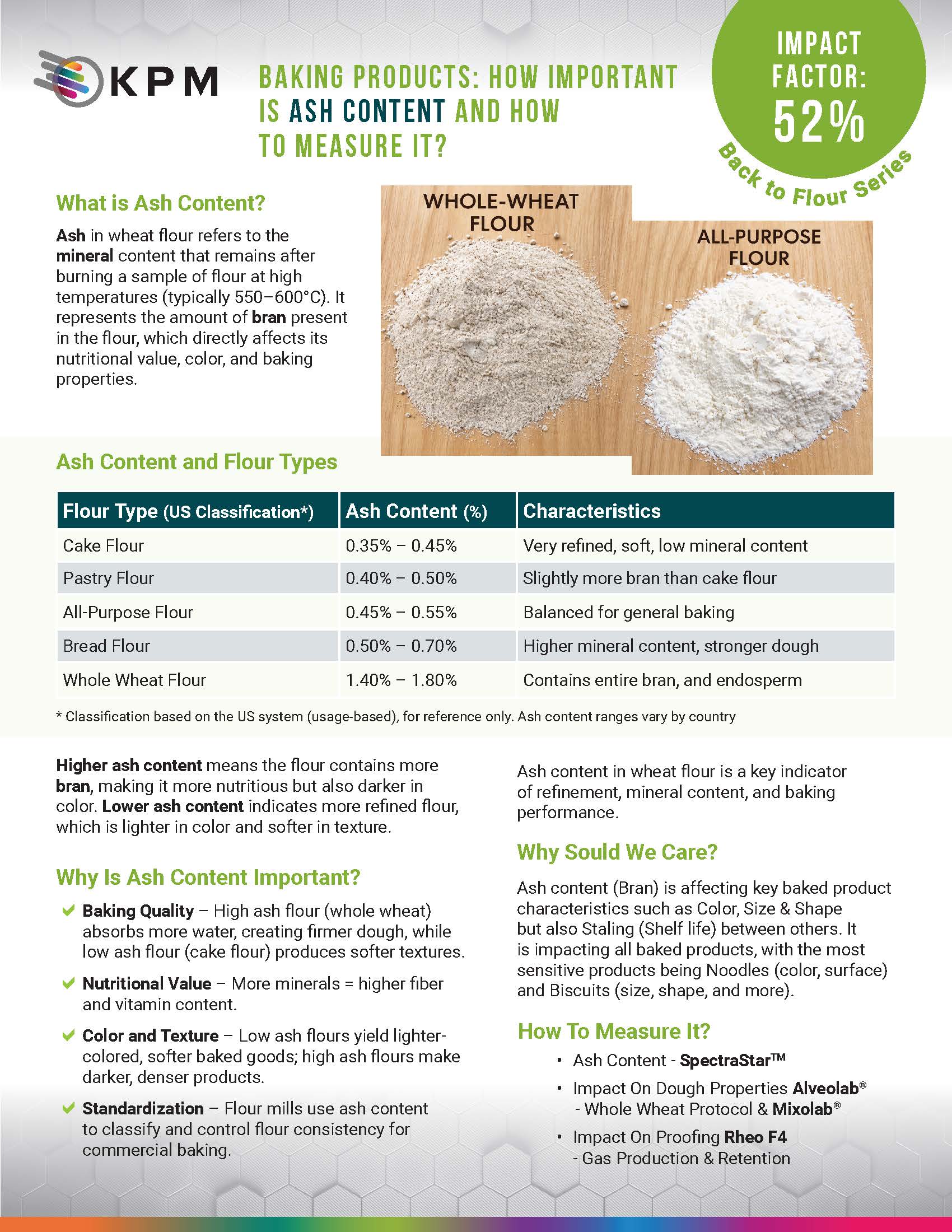
Ash content refers to the mineral content that remains after a flour sample is burned at high temperatures, typically 550 to 600°C. It represents the amount of bran present in the flour, which directly affects its nutritional value, colour, and baking properties. Higher ash content means more bran, making the flour more nutritious but darker in colour, while lower ash content indicates a more refined flour, lighter in colour and softer in texture. This measure is a key indicator of refinement, mineral content, and baking performance, which is why flour mills rely on it to classify and control consistency: cake flour sits at the low end of the scale, all-purpose and bread flours in the middle, and whole wheat flour at the high end, containing the entire bran and endosperm.
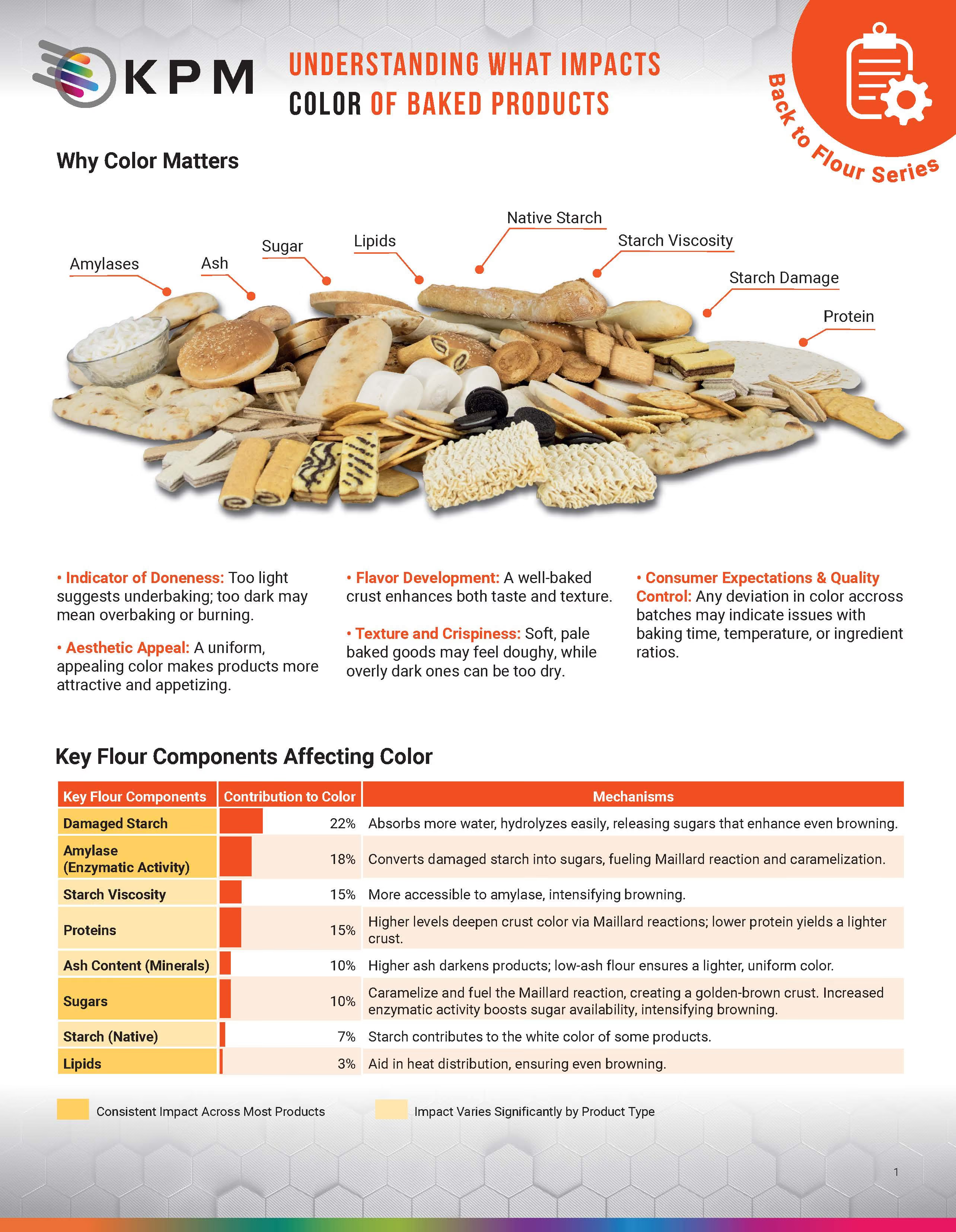
Ash content matters on several fronts. It shapes baking quality, since high-ash flour absorbs more water and creates firmer dough while low-ash flour produces softer textures; it raises nutritional value through higher fibre and vitamin content; and it governs colour and texture, with low-ash flours yielding lighter, softer products and high-ash flours giving darker, denser ones. Its influence reaches key characteristics such as colour, size and shape, and staling, affecting all baked products, though the most sensitive are noodles, for colour and surface, and biscuits, for size and shape.
Measurement combines several tools: SpectraStar for ash content itself, the Alveolab whole wheat protocol and Mixolab for dough properties, and the Rheo F4 for gas production and retention during proofing.
This document is part of the Back to Flour Series, an educational program that connects flour science to bakery product characteristics. Learn more here.