Food Manufacturers Are Embracing AI. Quality Control Is Where It Pays Off.

AI has moved from buzzword to business priority across manufacturing. A 2026 survey of manufacturing leaders found that AI adoption jumped from 53% to 72% in just two years [1]. Food and beverage companies are part of that wave, exploring how AI can support everything from planning to maintenance to food safety.
For many food companies, the strategy is still taking shape. Only 41% of food and beverage companies have a formal AI initiative [1]. That isn't a sign of falling behind. It's an opportunity to choose where to start, and one area stands out: quality control on the production line.
Quality is Where AI is Gaining Ground
Manufacturers are already moving in this direction. Quality control is the top AI use case in manufacturing, named by 50% of manufacturers, and 47% now use AI in quality processes, up from 33% a year earlier [1]. Defect detection is one of the leading applications.
For food manufacturers, the reasons are easy to see. Lines run fast, every product matters, and keeping quality consistent across shifts and sites is hard to do with manual checks alone.
Why Vision Inspection is a Natural Fit
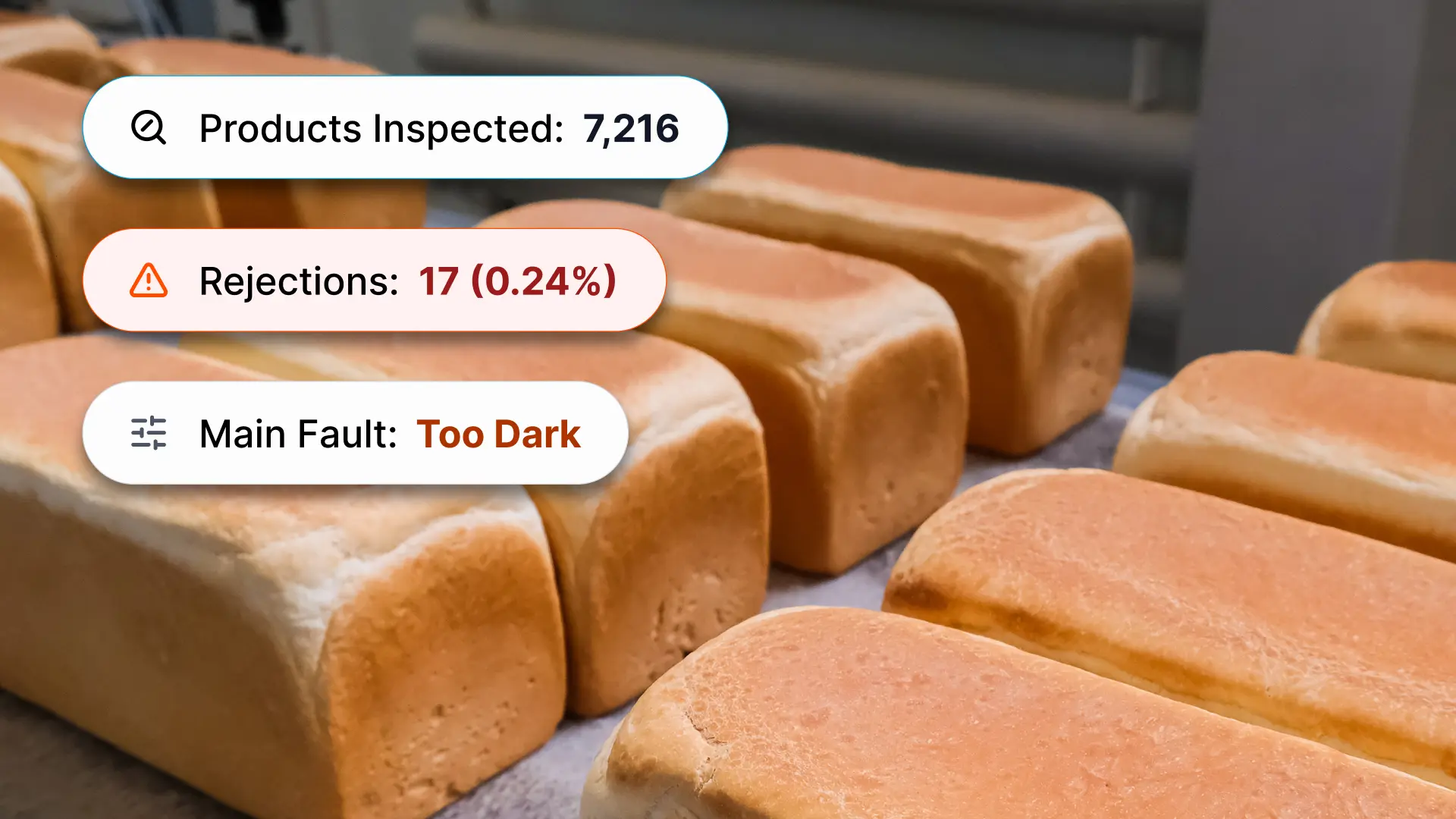
Vision inspection creates its own data. Cameras on the line capture clean, structured measurements of every product at the moment it's made, and the system acts on that information in real time as product moves.
That makes it different from many other AI applications. It doesn't have to wait for data from systems across the business to be connected before it can deliver value. It works where the product is, where the data is generated, and where decisions need to happen.
Why AI is Harder to Scale in Other Areas
Across manufacturing, only about 10% of companies have scaled AI across their operations [1]. In food and beverage, nearly 40% of teams cite disconnected systems and data as the single biggest barrier [1], and almost 70% of manufacturers still run a mix of legacy and modern equipment [1].
That's normal. Food plants grow over years or decades, and bringing every system together takes time. It's also why vision inspection is such a practical starting point. It builds a strong data foundation at the source while delivering results on the line from day one, and that data can connect to broader initiatives as they mature.
What This Looks Like on a Bakery or Snack Line
At KPM, our vision systems for baking and snack food manufacturers put this approach to work at several points in production.
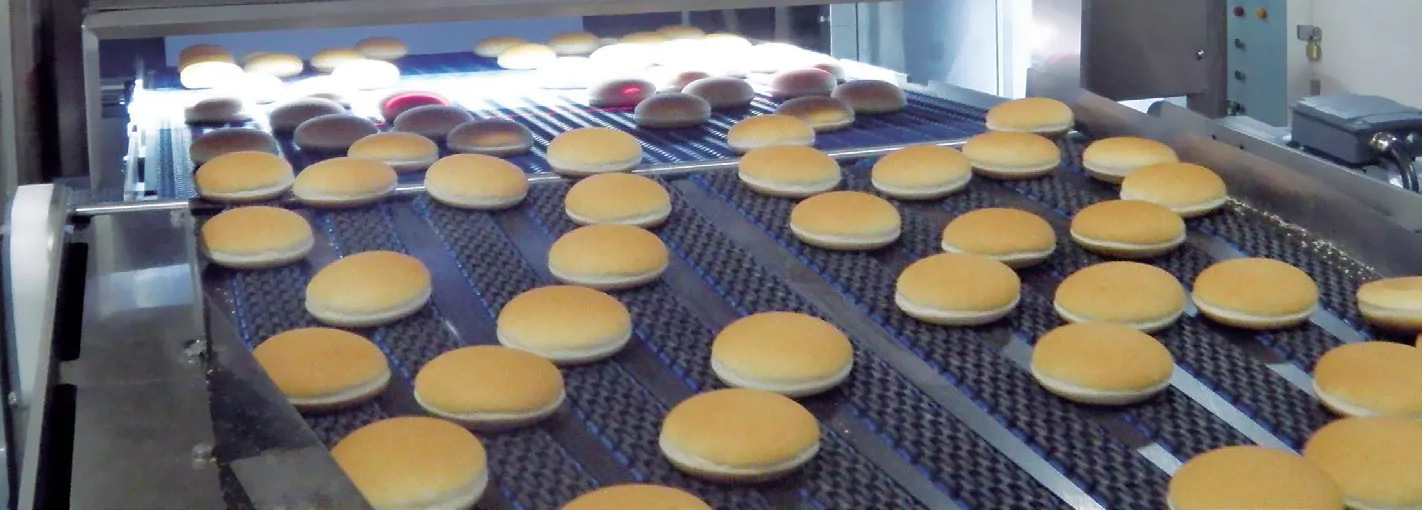
In-line inspection. The Q-Bake In-Line Vision Inspection System uses AI to analyze multiple attributes of every product at full line speed, including color, shape, size, topping, and foreign material, with automatic rejection of products that don't meet spec [2][3].
Over-line process control. Vision stations placed after individual production steps monitor shape, height, and color throughout the process, not just at final inspection. Operators see real-time trends and get automatic warnings when parameters drift outside their limits. At the oven exit, measured bake color can automatically adjust oven settings, and on a flour tortilla line, measured diameters can automatically adjust the press [4].
Vision-based lane balancing. The KPM Laner uses vision to balance product across packaging lanes, helping keep downstream packaging running smoothly [3].
Each of these does the same thing at its core: it generates reliable data on the line and puts it to work immediately.
Building Momentum From the Line Out
Choosing the right first application matters. AI in quality control does more than improve inspection. It gives your team hands-on experience with AI, creates reliable production data that other initiatives can build on, and shows the organization what AI looks like as part of everyday operations.
While other AI projects work through integration and data challenges, your line can already be measuring, learning, and improving product quality.
The Takeaway
Food manufacturers' growing interest in AI is a strength. The opportunity now is to put it where it can deliver and scale. For quality control, that point has already arrived.
Your AI journey can start where your product does: on the line.
Sources
[1] Food Industry Executive, Why Only 10% of Manufacturers Have Actually Scaled AI: https://foodindustryexecutive.com/2026/07/food-manufacturers-fear-moving-too-slow-on-ai/
[2] KPM Analytics, Q-Bake Vision Inspection System: https://www.kpmanalytics.com/products/vision/q-bake-vision-inspection-system
[3] KPM Analytics, Vision Inspection Manufacturing Facility Expansion: https://www.kpmanalytics.com/news-events/kpm-analytics-expands-vision-inspection-manufacturing-facilities-to-support-baking-and-snack-food-brands
[4] KPM Analytics, Vision-Based Process Control Solutions: https://www.kpmanalytics.com/products/vision/process-control-solutions-for-bakery-production
Yes, when measuring 100% of all products, a wealth of key production and productivity data such as: throughput/capacity %, defects % , uptime/downtime %, and changeover time.
Yes, we have interfaced to a variety of systems for real-time data collection and reporting. We also offer real-time process monitoring dashboards.
Yes, you can install multiple dashboards to monitor lines in real-time. All data from multiple lines and locations can be collected and packed together into detailed reports for enhanced production insights and compliance visibility.
Yes, in most cases we can customize an Over-Line or In-Line system to work with your existing configuration. To be sure, reach out and discuss your ideas with our specialists using the form on our contact page.