Back to Flour: How Important Is Amylases (Enzymes)
Amylases are enzymes naturally present in wheat flour, and their role in baking is far-reaching. By breaking starch down into simpler sugars, they give yeast the fermentable material it needs, which in turn drives a better rise, improved texture, and richer flavour. Two enzymes do most of this work: alpha-amylase, which cuts starch into shorter dextrin chains and stays active at higher baking temperatures to support crust colour, and beta-amylase, which turns those dextrins into maltose to feed fermentation and bring softness to the crumb.
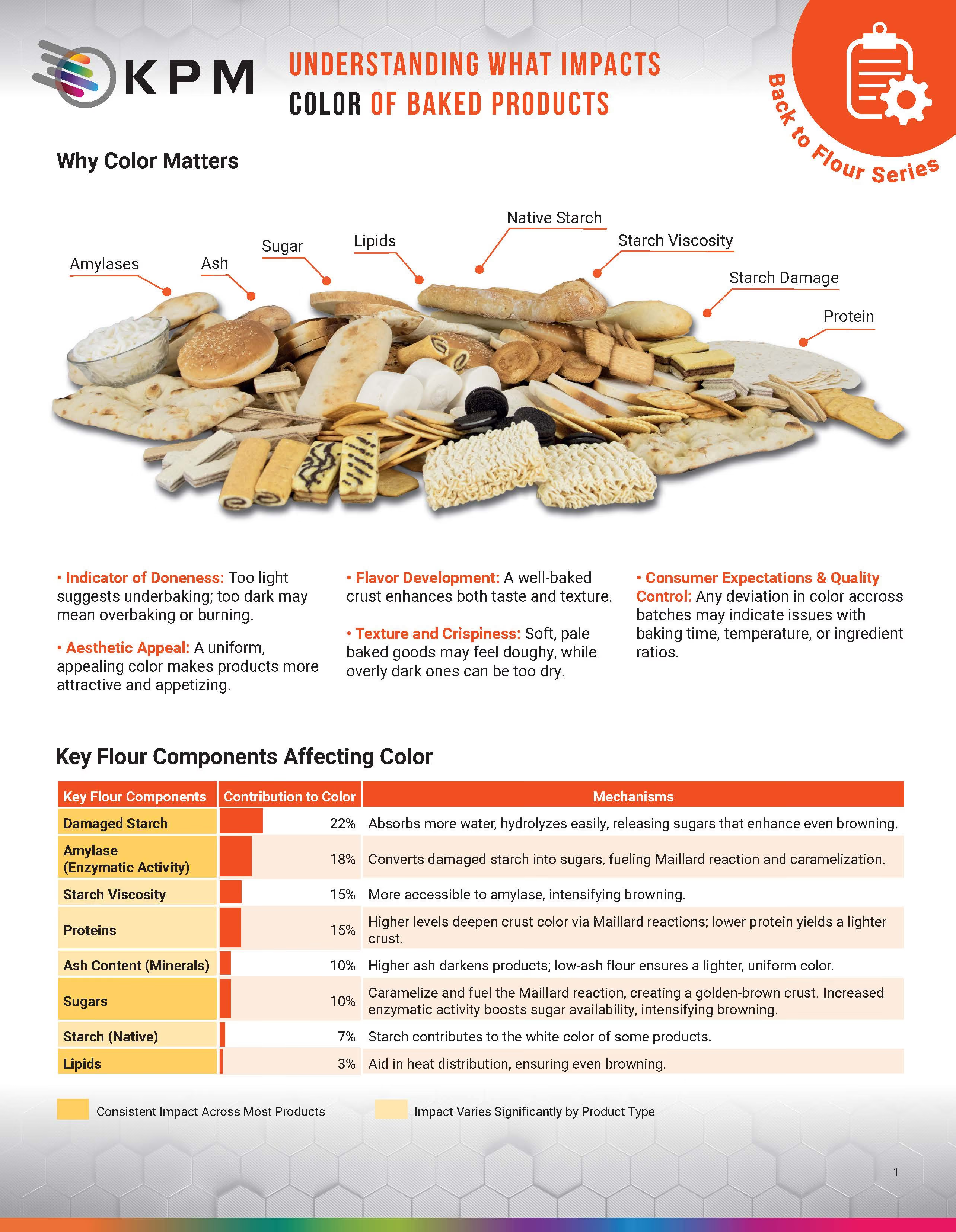
Their influence shows up across the whole process. Amylases support fermentation, contribute to crust browning through the Maillard reaction, improve dough extensibility and handling, and help retain moisture for a softer, longer-lasting crumb. Wheat flour carries them naturally, though levels vary with wheat quality, which is why fungal or bacterial amylases are frequently added in commercial baking to standardise performance, extend shelf life, and enhance texture. Measuring this activity relies on tools such as Vision for the final product, the Mixolab (area C2 to C4) for dough behaviour, and the Rheo F4 for gas production during proofing.
This document is part of the Back to Flour Series, an educational program that connects flour science to bakery product characteristics. Learn more here.