Why Traditional Flour Specifications May No Longer Predict Product Performance
A flour delivery meets every value on the certificate of analysis. Protein is in tolerance, moisture is on target, Falling Number sits comfortably inside specification.
Then production starts, and the dough behaves nothing like it should.
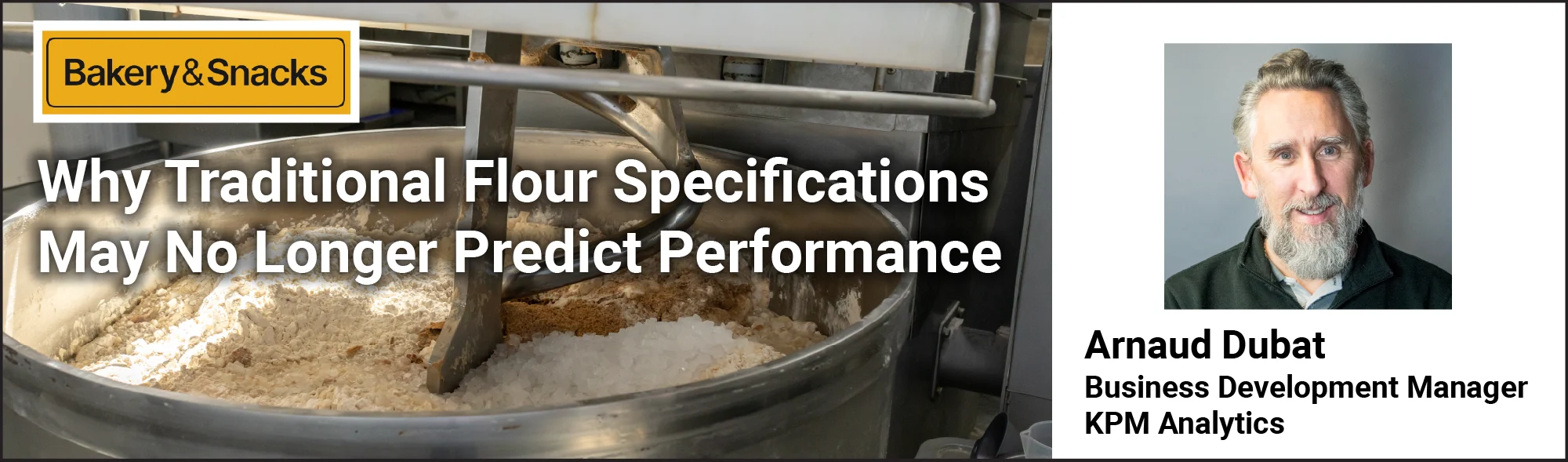
In a new article from Bakery & Snacks, Arnaud Dubat, global business development director at KPM Analytics, explains why this keeps happening.
His argument is not that flour specifications are wrong. It is that they no longer capture everything that determines performance on a high speed line. Many bakers still treat one measurement, usually protein content, as the predictor of a successful bake. That expectation comes from tradition rather than from current science.
Arnaud also points out that the answer is not universal. It is product specific and plant specific. A parameter that matters greatly at one facility may matter much less at another.
Two pressures make this more urgent. Experienced master bakers are retiring faster than they are being replaced, and AI is being adopted quickly across milling and baking. An AI system can only work with the data it is given, so incomplete flour data limits what it can do.
His recommendation is for bakers and millers to agree on the flour characteristics that actually matter for a given line and product, then build the dataset around those.
Read the full article by Gill Hyslop on BakeryAndSnacks.com.