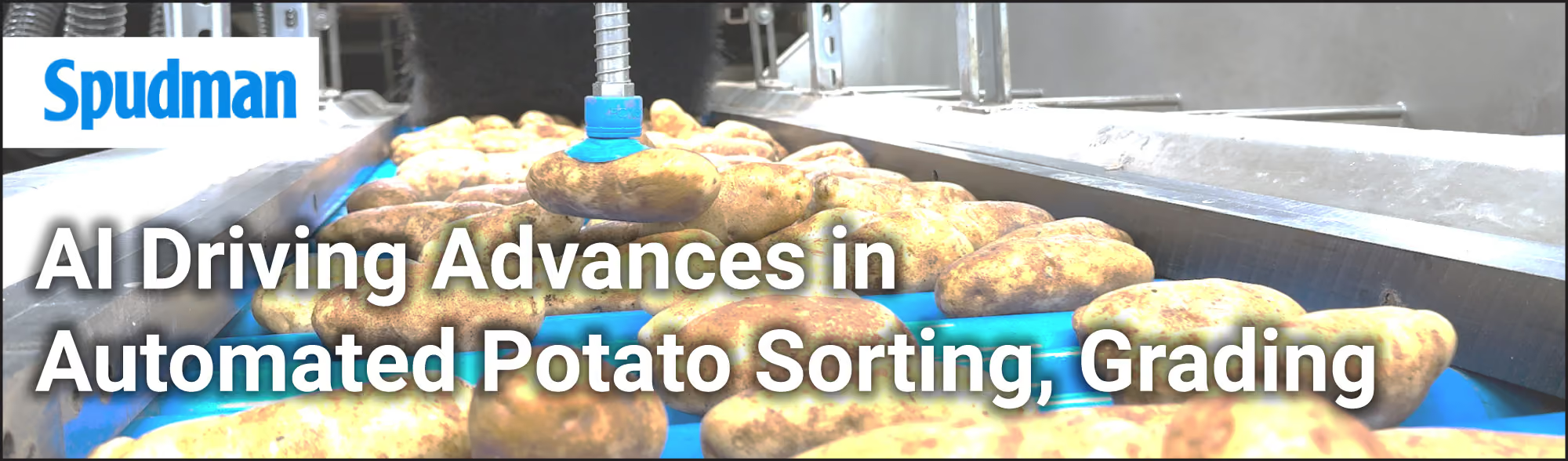
AI Driving Advances in Automated Potato Sorting, Grading
This article originally appeared in an issue of Spudman Magazine. Click here to view the article on the publication's website.
By Melinda Waldrop, Managing Editor, Spudman Magazine
Idaho-based Wada Farms grows more than 30,000 acres of potatoes and other produce, operates a 140,000-square-foot packing shed and banked $37.5 million in 2025 revenue. As one of the nation’s largest grower-shippers of fresh potatoes and onions, the operation has seen firsthand the advancements made possible by artificial intelligence-driven innovation.
The company, family owned since 1943, has also witnessed the power of a stroke of luck.
Wada Farms, an early adapter of KPM Analytics’ cutting-edge SiftAI automated detection and sorting systems for potatoes, has improved accuracy and efficiency while cutting labor by as much as 80% since partnering with the Massachusetts-based technology company, said Kip Yeates, Wada Farms vice president of fresh operations. But none of those achievements may have happened without a chance meeting nearly a decade ago.
“We were a blank page when it came to AI,” Yeates told Spudman. “Somebody was driving a truck and hauling potatoes out of our building and thought his brother-in-law might be interested in trying to help us.”
That brother-in-law was affiliated with AI-powered computer vision system experts Smart Vision Works, which was acquired by KPM in 2023.
Founded by Ph.D.s who were well-versed in coding but not as deep-rooted in agriculture, Smart Vision Works was “looking for good places in food to apply that technology that we were very familiar with,” said Curtis Koelling, KPM vice president of product.
The resulting collaboration between the tech company and the potato grower sparked a successful partnership and a promising new direction for the vision system industry.
The Problem with Potatoes
Historically, vision systems had not made inroads into potato sizing and sorting for a simple reason: Brown potatoes, like the russets that are one of four major varieties grown by Wada, muddied the picture for the color differentiation technology widely used by those systems.
“Russet potatoes are brown,” said Jeremy West, KPM national sales rep for potato vision inspection. “Their defects are brown, for the most part. So it’s really hard to use color differentiation to tell.”
Added Koelling: “A lot of people have been burned by vision technology that overpromises and underdelivers. It puts a sour taste in their mouths.”
Yeates, for one, was not immediately on board with the idea.
“I needed a lot of convincing,” he said. “I was pretty sure it would be the most challenging thing they had undertaken to that point with vision systems. For russets, being able to identify what’s just inconsistent in the netting or the color of the potato versus what’s an actual defect would be extremely difficult.”
Yeates was swayed by a video showing Smart Vision Works tech identifying and removing a sliver of wood from bacon.
“I could hardly identify the wood with my naked eye. They had to actually segment it out of the picture so I could see where it was,” Yeates said. “That’s how they convinced me. … It’s been a while now. This is eight or nine years in the making. We advanced to the point where we could size better than anything we’d seen previously, by a large margin.”
Wada started small, employing a retrofitted camera system to size potatoes “without any grading component, so they could look at them and get the dimensions correct with the vision system — get the length, width and height — and then run that against the density factor to determine the volume of the potato,” Yeates said. “Then we started down the road of the grading, removing defects, and created a model that would allow us to grade potatoes to USDA standards and get rid of broken, green and bruised potatoes.”
Within the USDA standards, “you can have a certain amount of surface area covering the defect,” West said. “To my knowledge, there’s no other system that actually measures the size of the defect and gives you the surface area percentage like we do. That directly correlates to the USDA standard and the standards that are set by the customer as well.”
Tech at Work
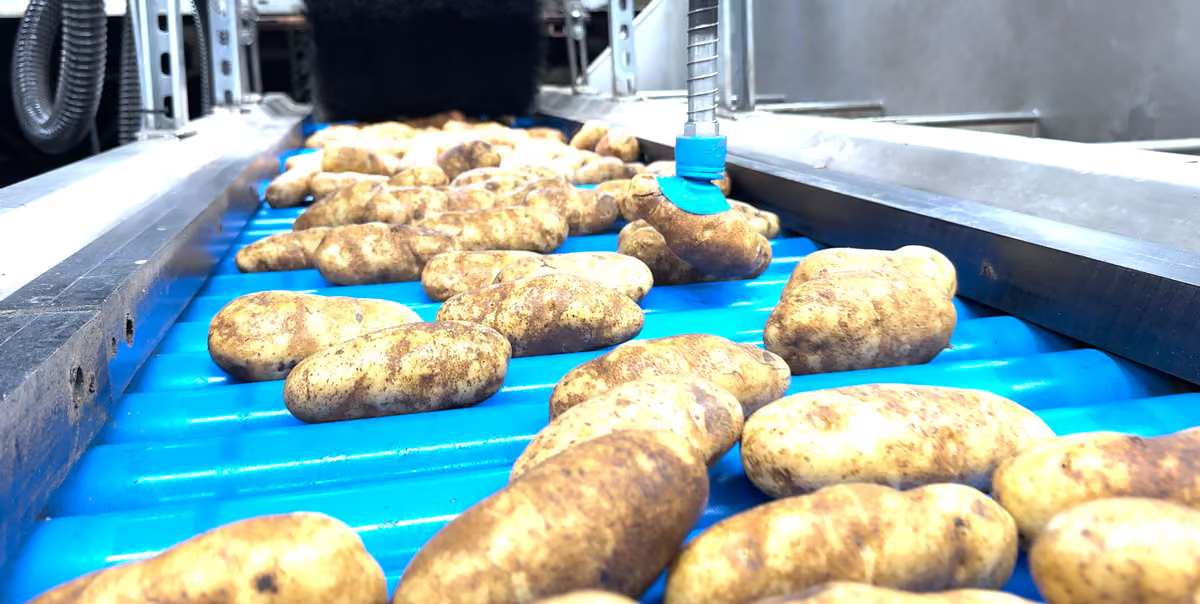
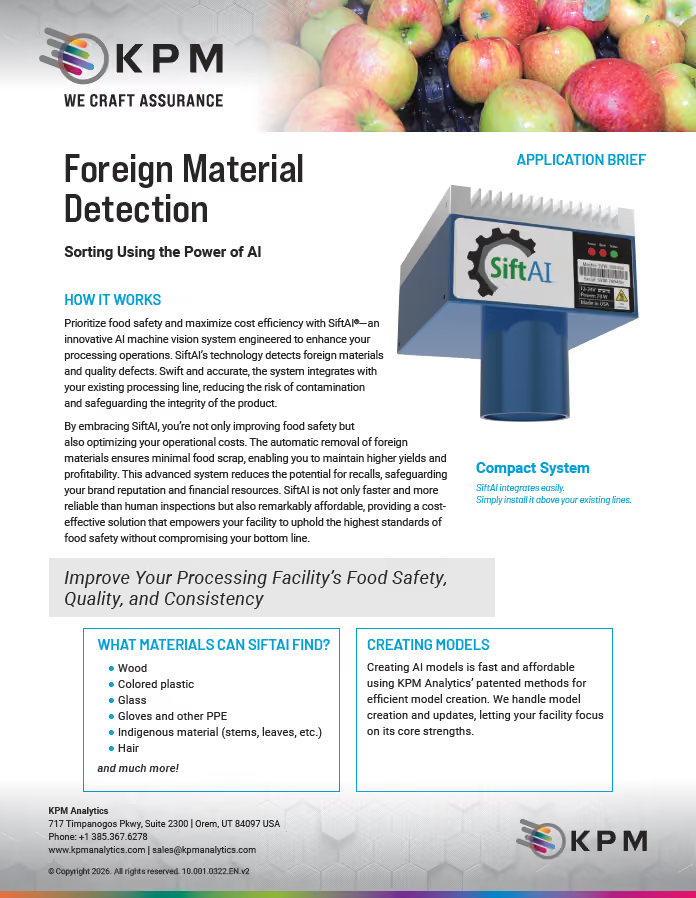
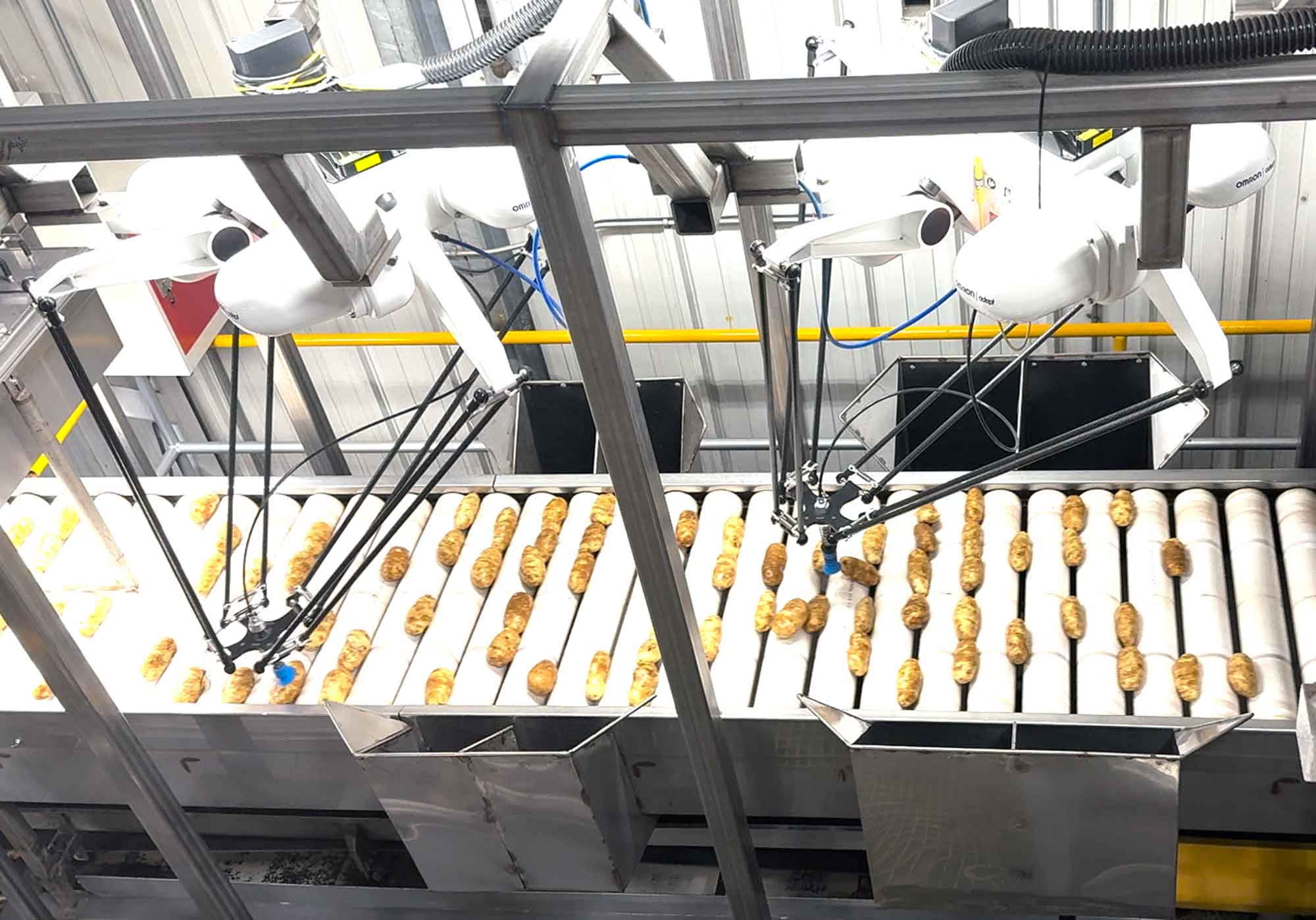
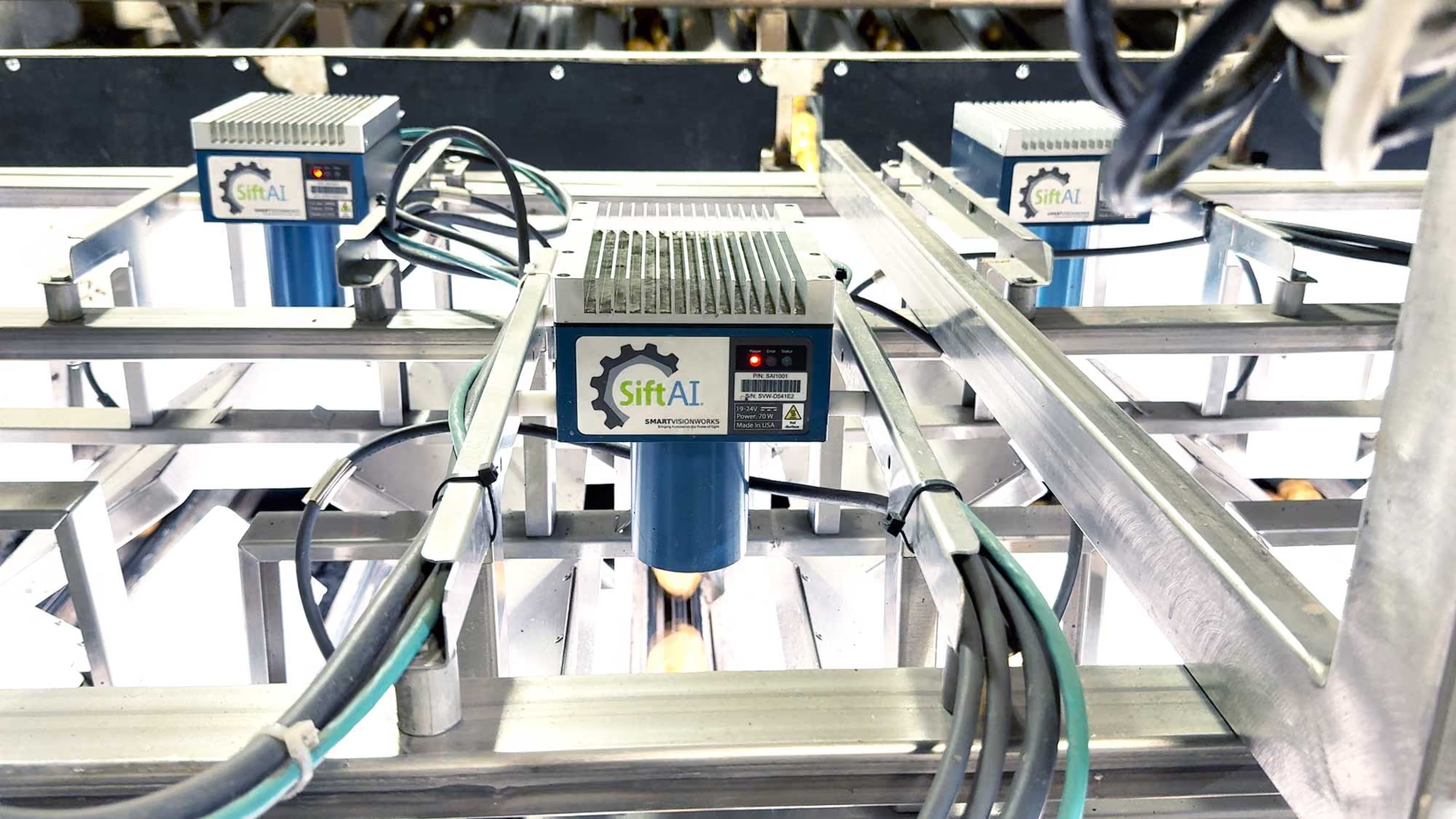
SiftAI’s sorting, sizing and grading systems use advanced vision and AI algorithms to accurately measure potatoes, spot defects and ensure uniform size.
The system includes:
- Smart table for grading and foreign material detection
- Multi-lane potato sorting, sizing and grading system
- Foreign material detection system for food production (mainly used in chipping and processing)
- Robotic sorter
Initially, Smart Vision Works systems didn’t include equipment, Koelling said.
“We just integrated into existing machinery and provided the brains and the eyes,” he said. “Since we’ve been acquired by KPM Analytics, we’ve continued to expand in the potato market and offer additional solutions using the SiftAI platform… We moved beyond color. It’s no longer just a threshold that if the color changes beyond this, it’s a bad product.
“The unfortunate truth is that even inside the same lot, the skin color on a potato can vary. There may be skinning, which a customer may be OK with. Our AI model has been trained on millions of potatoes at this point — different varieties from different seasons, from different fields, different locations. It’s very expert now at identifying defects more than just ‘the color is a little off.’”
Depending on the size of the operation and the equipment used, potato processors and packers can see return on investment in anywhere from 10 months to three years, West said.
Yeates said Wada Farms reduced its labor needs by 75% to 80% while improving sorting accuracy.
“The kind of work we do, it’s hard labor, and we just don’t see folks wanting to do this kind of work,” he said. “AI’s mind isn’t going to wander. It stays on focus and on target. It’s going to do what it’s told to do. Essentially, one robot can get the equivalent (production) cycles of two people. … It’s far better than humans could ever do.”
Automated Road Ahead
In addition to the fruit and vegetable industry, KPM, with more than 100 customers in 100-plus countries, also works with sectors including beverage, snack foods, cereals and grains, according to its website.
Its potato presence drives its growth — as well as technological updates from its competitors, West said.
“Over 70% of the lane sorting is our SiftAI vision heads in Idaho now for potatoes,” he said. “Competition drives innovation, and the innovation has been really good for the growers and the warehouses.”
West emphasized that KPM works to form a partnership with growers, using feedback to improve their products while allowing customers to access and apply company data to their operations. For example, company data may show a prevalence of pressure bruises, which could indicate too-deep storage stacks or an equipment issue.
“If you ever let a grower in the pack shed, the first thing he’s going to do is go look at what’s on the cull belt and see what’s going by,” West said. “He doesn’t want to see any good potatoes on that cull belt. But to be able to take that information about each potato and return that information to him … there’s a lot of information that you can send both ways.”
Looking ahead, West sees additional AI possibilities for potato packers and processors — including before the product makes it to the shed.
“There’s still a lot more advancements that we can make. Whether it’s user interfaces or internal defect detection, it’s a very open market,” he said. “There’s still a lot of areas that need to be served. That includes expanding onto the farm level as well. There’s a lot of stuff that can be done to help before the potatoes are even washed.”
Yeates, once a skeptic, is now eager to see what the AI future holds. He pictures advances “refining what’s in existence, probably giving it a little more horsepower. We need to advance that compute power so we can do more things and do them faster.”
If the past decade is any indication, that vision will become reality.
“The technology over the last 10 years has been leaps and bounds,” West said. “It’s great to see that people are really paying attention to the potato market, because it is truly one of the most valuable markets.
“The growers work hard to grow their product, and there’s no reason we shouldn’t be using the best technology to help them get the best return for that so they can continue to be farmers in the hard years and prosper in the good years.”