Back to Flour: Understanding What Impacts Chewiness of Baked Products
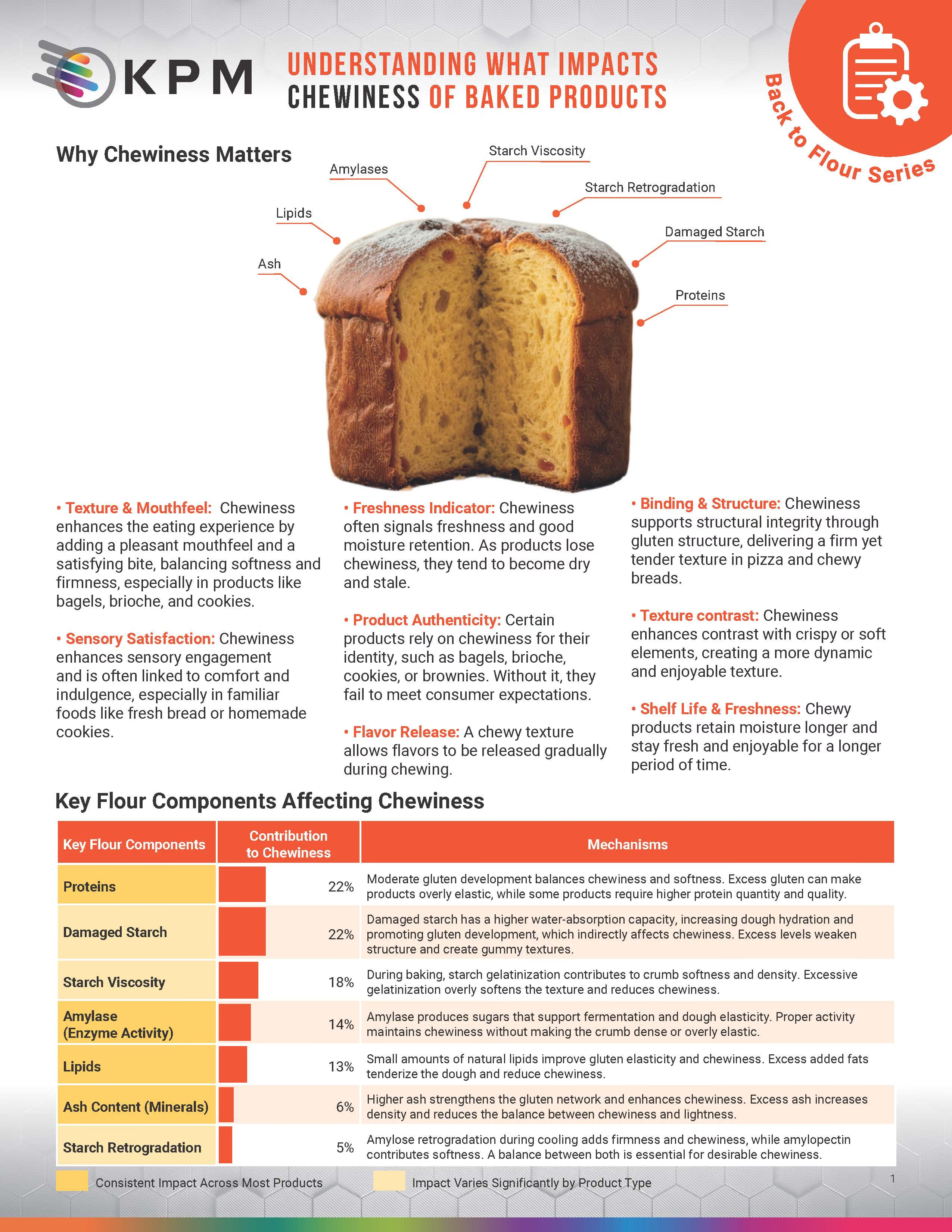
Chewiness is a key texture attribute in baked products and plays an important role in eating experience and product identity. It contributes to mouthfeel by balancing softness and firmness and is closely linked to sensory satisfaction. Chewiness is often associated with freshness and good moisture retention, while its loss is commonly linked to dryness and staling. For certain products such as bagels, brioche, cookies, or pizza, chewiness is an essential characteristic that defines authenticity and consumer expectations. It also influences flavor release during chewing and supports structure by contributing to firmness and cohesion.
This document presents the flour components that influence chewiness and their relative contribution. Proteins and damaged starch show the strongest impact, while starch viscosity and amylase activity have a significant influence. Lipids and ash content contribute to a lesser extent, and starch retrogradation plays a more limited but measurable role. The document also shows that the impact of these components can vary depending on the type of baked product.
By outlining these contributions, the resource clarifies how flour composition underpins chewiness across a wide range of bakery applications.
This document is part of the Back to Flour Series, an educational program that connects flour science to bakery product characteristics. Learn more here.