Back to Flour The Anatomy of a Perfect Hamburger Bun
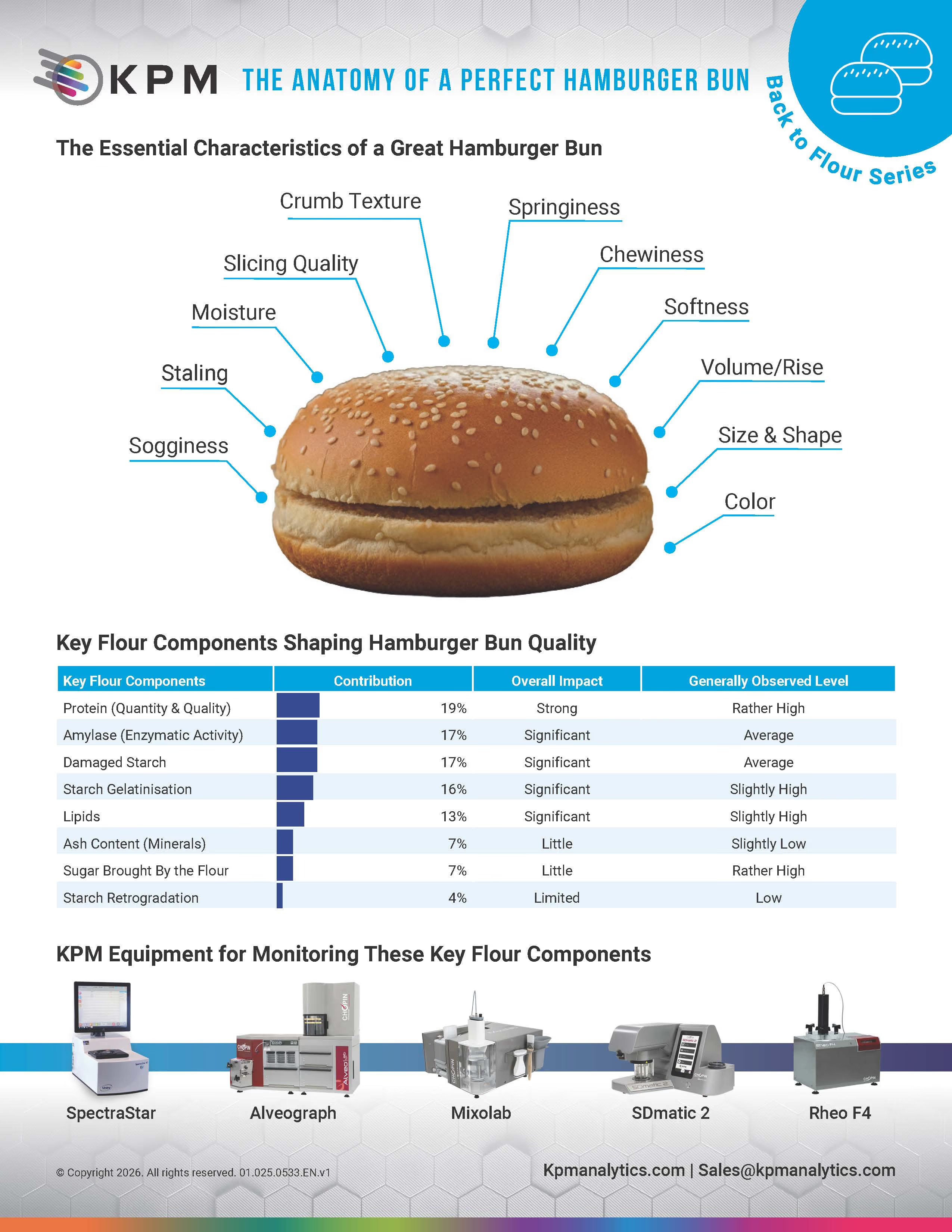
Hamburger bun quality is defined by a combination of essential characteristics related to appearance, texture, and performance. Color, size and shape, volume and rise, softness, chewiness, crumb texture, springiness, slicing quality, moisture, staling, and resistance to sogginess are all identified as key attributes. Together, these characteristics describe how a hamburger bun behaves during slicing, handling, and assembly.
The document highlights the flour components that contribute to these characteristics and their relative impact. Protein quantity and quality show the strongest contribution, while amylase activity, damaged starch, starch gelatinisation, and lipids have a significant influence. Ash content and sugars brought by the flour play a smaller role, and starch retrogradation has a limited impact. The generally observed levels of each component are also indicated for hamburger bun applications.
By presenting the relative contribution of each flour component, this resource helps clarify how flour composition supports consistent hamburger bun quality.
This document is part of the Back to Flour Series, an educational program that connects flour science to bakery product characteristics. Learn more here.