Springiness in Baked Products: The Flour Factors That Make the Difference


Why Springiness Matters
Springiness is one of the most immediate signals a consumer receives when picking up a baked product. Press a soft bun and feel it bounce back: that elastic recovery reflects the quality of the flour, the efficiency of fermentation, and the precision of the baking process. It contributes to mouthfeel, signals freshness, and is closely linked to moisture retention and shelf life. As products age and lose elasticity, consumers instinctively perceive them as less fresh and less appealing. For bakers and millers, controlling springiness means controlling the eating experience from the first bite to the last day of shelf life.
Transformation of Dough - Explore the Keys to Springiness
In the Back to Flour Series, the Transformation of Dough video dedicated to springiness shows how flour composition drives the elastic behavior of the crumb, and why it changes over time.
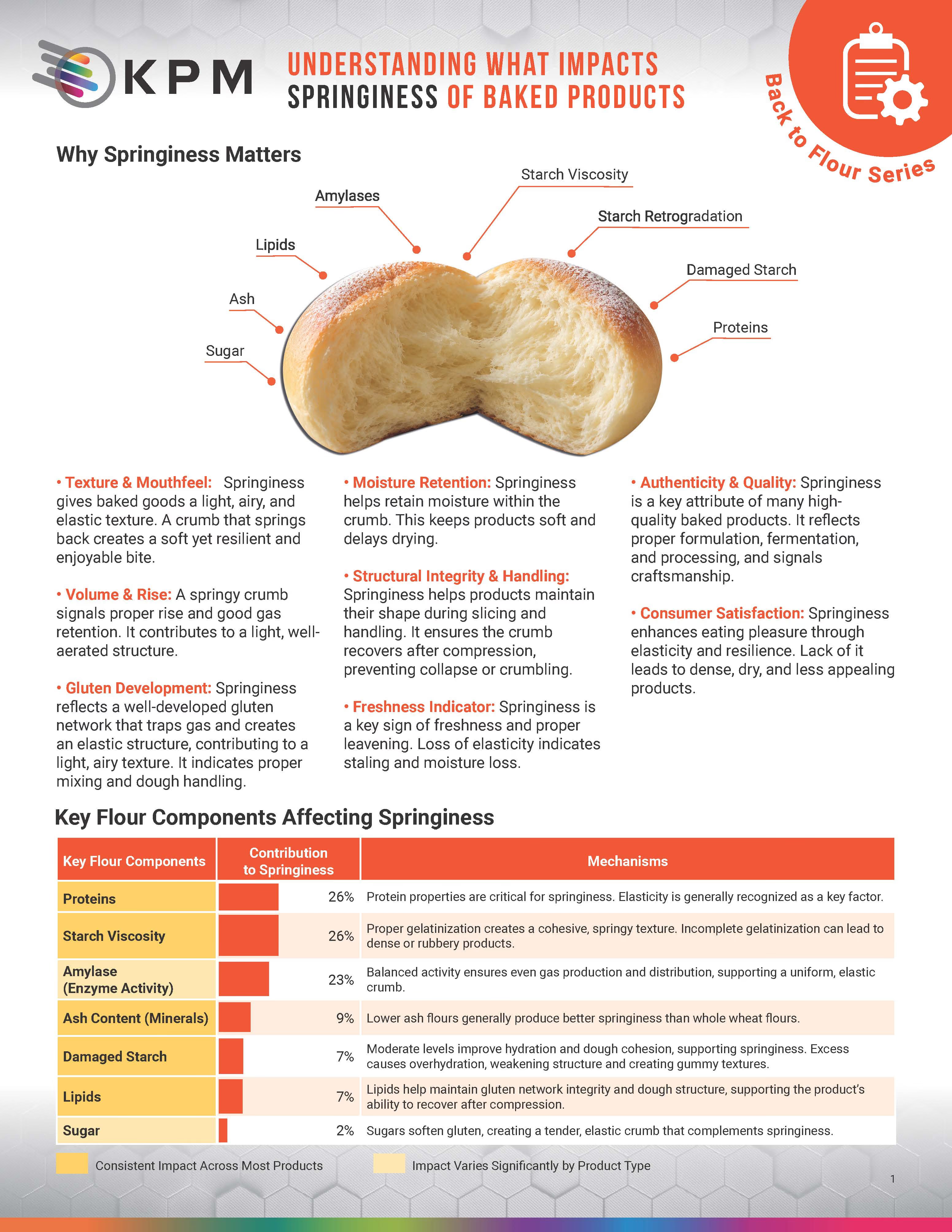
Water absorption sets the foundation. Damaged starch, protein quantity and quality, and fiber content all influence how much water the dough can absorb and retain. Starch functionality then becomes central: proper gelatinization during baking creates the cohesive crumb structure that allows the product to spring back. Starch retrogradation, progressing during storage, works in the opposite direction: it gradually hardens the crumb and reduces elasticity over time.
Enzymes actively manage both sides of this equation. Balanced amylase activity influences gelatinization, slows retrogradation, and sustains gas production during proofing through its coupling with damaged starch. Proteins provide the elastic gluten network that traps gas and gives the crumb its resilience. Lipids reinforce this network, while sugar and ash content contribute depending on the product type and formulation.
Springiness is never the result of a single parameter. It is the combined outcome of flour composition, process control, and time.
For a Quick Overview of Springiness
To complement the video, our PDF guide provides a structured technical overview of the key flour components affecting springiness and how their impact varies across product types, from pan bread and baguettes to sponge cakes, croissants, and steamed buns.
📄 Download the PDF: Understanding What Impacts Springiness of Baked Products
What’s Next?
Springiness connects directly to other texture attributes explored in the Back to Flour Series, including softness, crumb structure, moisture retention, and staling.
The Back to Flour Series is constantly growing, with videos, technical PDFs, and resources across At the Table, Transformation of Dough, Secrets of Flour, and more technical insights to come.
Explore the categories below and stay tuned as we continue to connect flour functionality with product excellence.