Crumbling in Baked Products: When Flour Composition Defines Structure


Why Crumbling Matters
Crumbling is not always a defect. In biscuits or wafers, a controlled crumbly texture is exactly what consumers expect: it contributes to mouthfeel and enhances flavor release as the product breaks apart in the mouth. In a soft bread or a viennoiserie, excessive crumbling is unwanted, it makes products messy, difficult to slice, and signals moisture loss or staling. Whether crumbling needs to be encouraged or limited, the flour composition behind it is always decisive.
Transformation of Dough - Explore the Keys to Crumbling
In the Back to Flour Series, the Transformation of Dough shows that crumbling results from the combined action of several flour components, not from a single parameter.
As discussed in the video, protein plays a central role. When gluten development is strong, it holds the structure together and limits crumbling. When protein levels are intentionally low, as in biscuits or shortbread, the structure is more fragile and crumbling increases. This is by design, and it defines the product's identity.
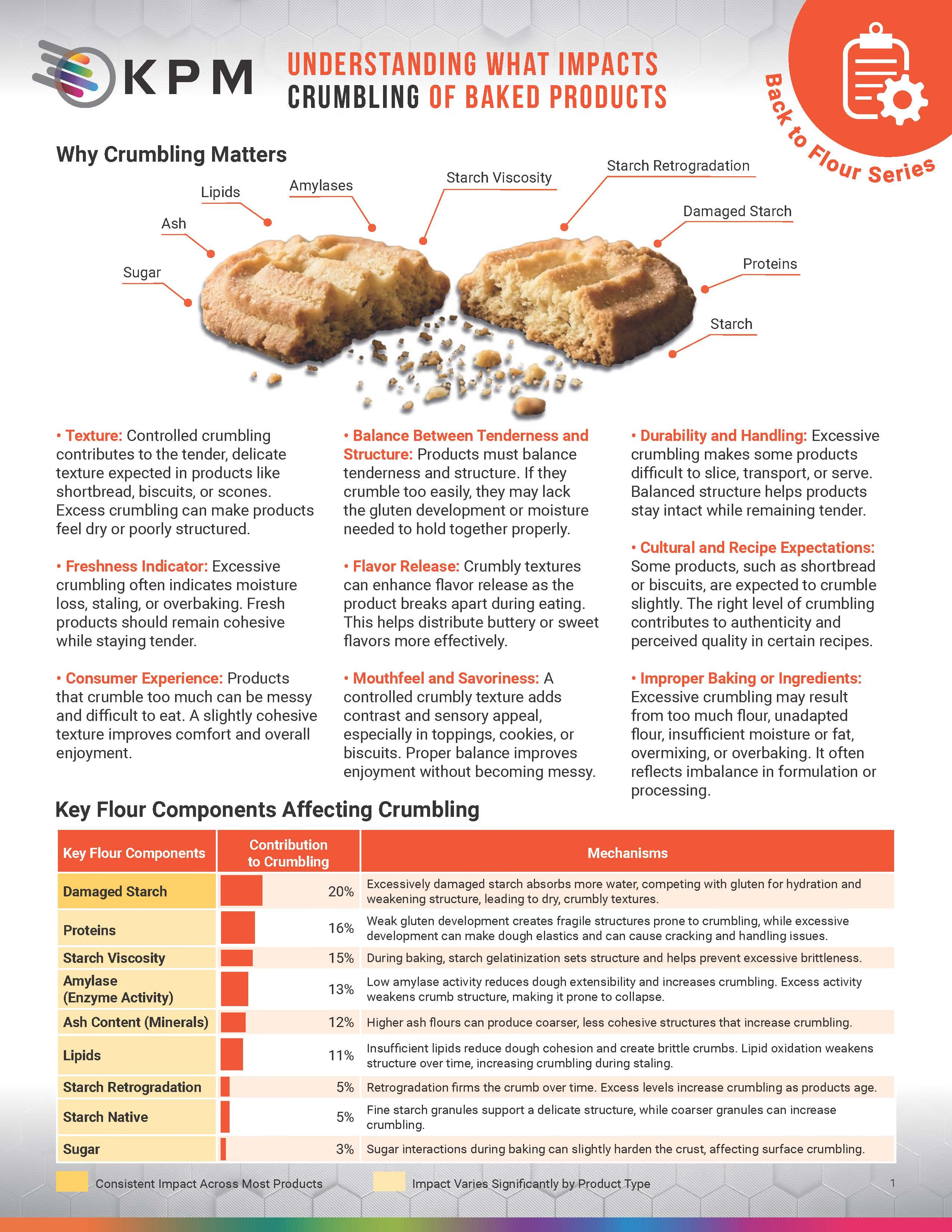
Where protein is lower, starch becomes more dominant. Starch viscosity and gelatinization during baking set the structure and determine how brittle or cohesive the final product will be. Damaged starch also matters: at excessive levels, it competes with gluten for water, weakening the structure and leading to dry, crumbly textures. Starch retrogradation adds a time dimension, as it progresses during storage, the crumb firms and crumbling can increase.
Moisture retention connects all of these mechanisms. A product that holds together at the end of baking can still become crumbly as moisture is lost over time. Amylase activity, ash content, and the balance between protein and starch all influence how well moisture is retained across shelf life. As the video makes clear, crumbling can be corrected in either direction, with the right understanding of flour composition and the right measurement tools.
For a Quick Overview of Crumbling
Alongside the video, we provide a PDF guide summarizing how flour components — damaged starch, proteins, starch viscosity, amylase activity, ash content, lipids, starch retrogradation, native starch, and sugar — influence crumbling across different baked products, from crackers and wafers to pan bread, sponge cakes, and hamburger buns.
📄 Download the PDF: Understanding What Impacts Crumbling of Baked Products
What’s Next?
Crumbling connects directly to other texture attributes explored in the Back to Flour Series, including moisture retention, staling, and crumb structure.
The Back to Flour Series is constantly growing, with videos, technical PDFs, and resources across At the Table, Transformation of Dough, Secrets of Flour, and more technical insights to come.
Explore the categories below and stay tuned as we continue to connect flour functionality with product excellence.