Sogginess in Baked Products: How Flour Composition Determines Moisture Resistance


Why Sogginess Matters
Sogginess is the unwanted transformation of a dry, crisp product into something soft, heavy, and unpleasant. A cracker that loses its snap, a biscuit that no longer breaks cleanly, a croissant that turns wet instead of flaky, these are all signs of sogginess. Consumers expect baked goods to remain crisp, light, or crusty. When that texture is lost, the eating experience suffers and product quality is questioned.
Transformation of Dough - Explore the Keys to Sogginess
In the Back to Flour Series, Transformation of Dough shows how flour composition determines whether a product resists moisture over time, or gradually absorbs it.
As discussed in the video, dry products such as crackers, biscuits, and wafers are produced by removing as much water as possible during baking. The challenge begins after production: if the surrounding air is humid, the product starts absorbing moisture from the environment. This is sogginess, and it is directly linked to how certain flour components behave.
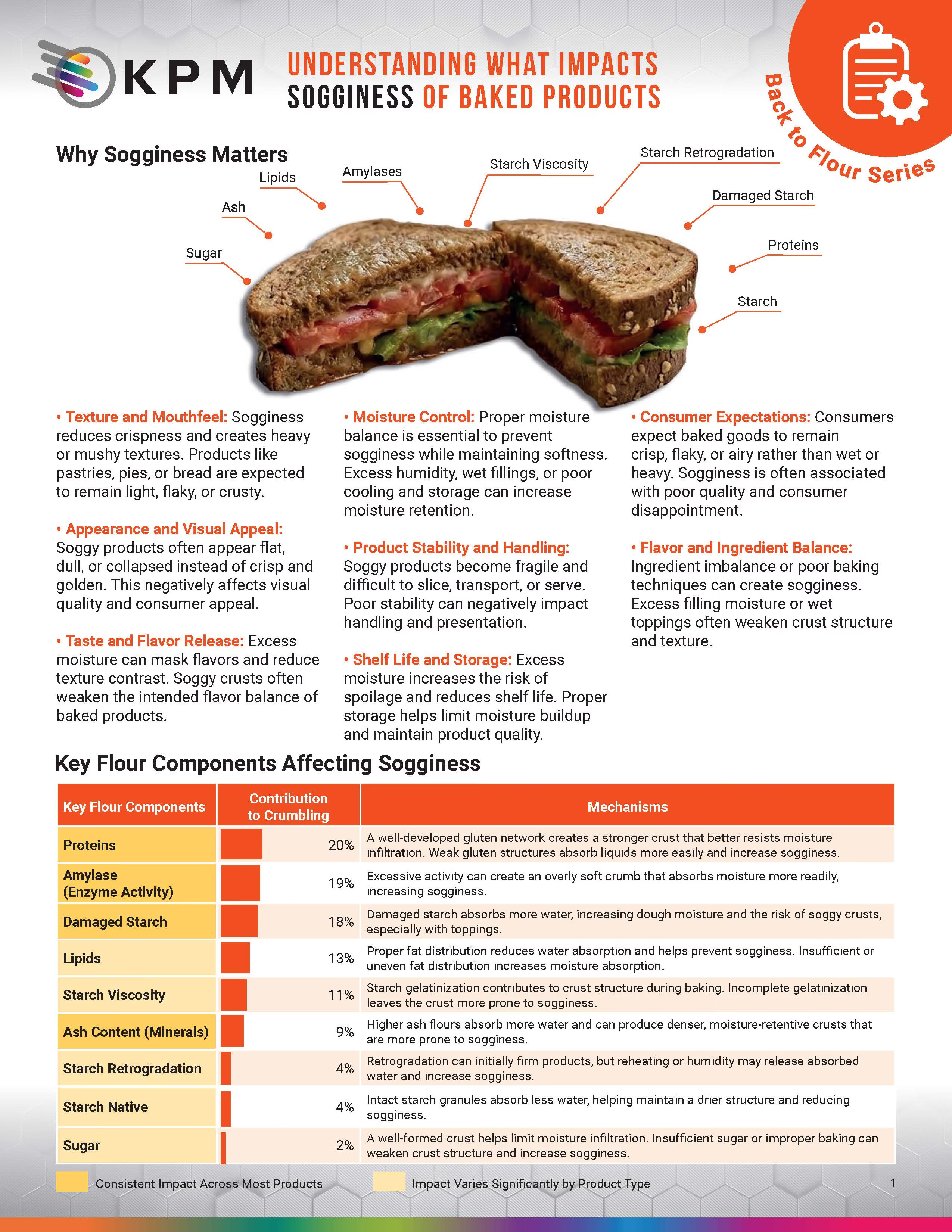
Proteins are hygroscopic by nature. They attract and retain water, which makes them a key factor in sogginess. The stronger the gluten network, the better it resists moisture infiltration. But in dry products, this same affinity for water becomes a vulnerability when the product is exposed to humidity. Damaged starch behaves similarly: it absorbs large amounts of water, increasing moisture uptake and accelerating the loss of crispness.
Lipids play a protective role. Proper fat distribution reduces water absorption and helps maintain a drier structure. Starch gelatinization during baking also contributes to crust formation , incomplete gelatinization leaves the structure more prone to sogginess. Amylase activity adds another dimension: excessive enzymatic activity can create an overly soft crumb that absorbs moisture more readily.
Sogginess is linked to process, packaging, and flour properties together. Proteins, starch, and enzymes all contribute, and all can be measured and controlled.
For a Quick Overview of Sogginess
Alongside the video, we provide a PDF guide summarizing how flour components (proteins, amylase activity, damaged starch, lipids, starch viscosity, ash content, starch retrogradation, native starch, and sugar) influence sogginess across a wide range of products, from crackers and wafers to baguettes, pizza crust, croissants, and sponge cakes.
📄 Download the PDF: Understanding What Impacts Sogginess of Baked Products
What’s Next?
Sogginessconnects directly to other attributes explored in the Back to Flour Series,including moisture retention, crumb structure, and shelf life.
The Back to Flour Series is constantly growing, with videos, technical PDFs, and resources across At the Table, Transformation of Dough, Secrets of Flour, and more technical insights to come.
Explore the categories below and stay tuned as we continue to connect flour functionality with product excellence.