Softness in Baked Products: How Flour Keeps Products Tender Over Time


Why Softness Matters
Softness is one of the most sought-after qualities in baked goods. In pan bread, steamed buns, cakes, or tortillas, a tender, pillowy texture is comforting and enjoyable. It brings out flavors, the richness of a cake, the sweetness of a soft roll, and it signals freshness to the consumer. Softness is also closely associated with moisture: a product that holds water well stays soft longer. For the industry, maintaining softness throughout shelf life is a real challenge, as it requires flour that can absorb and retain large amounts of water while resisting staling over time.
Transformation of Dough - Explore the Keys to Softness
In the Back to Flour Series, Transformation of Dough shows how flour composition controls the tenderness of baked products, and how it can be maintained as long as possible.
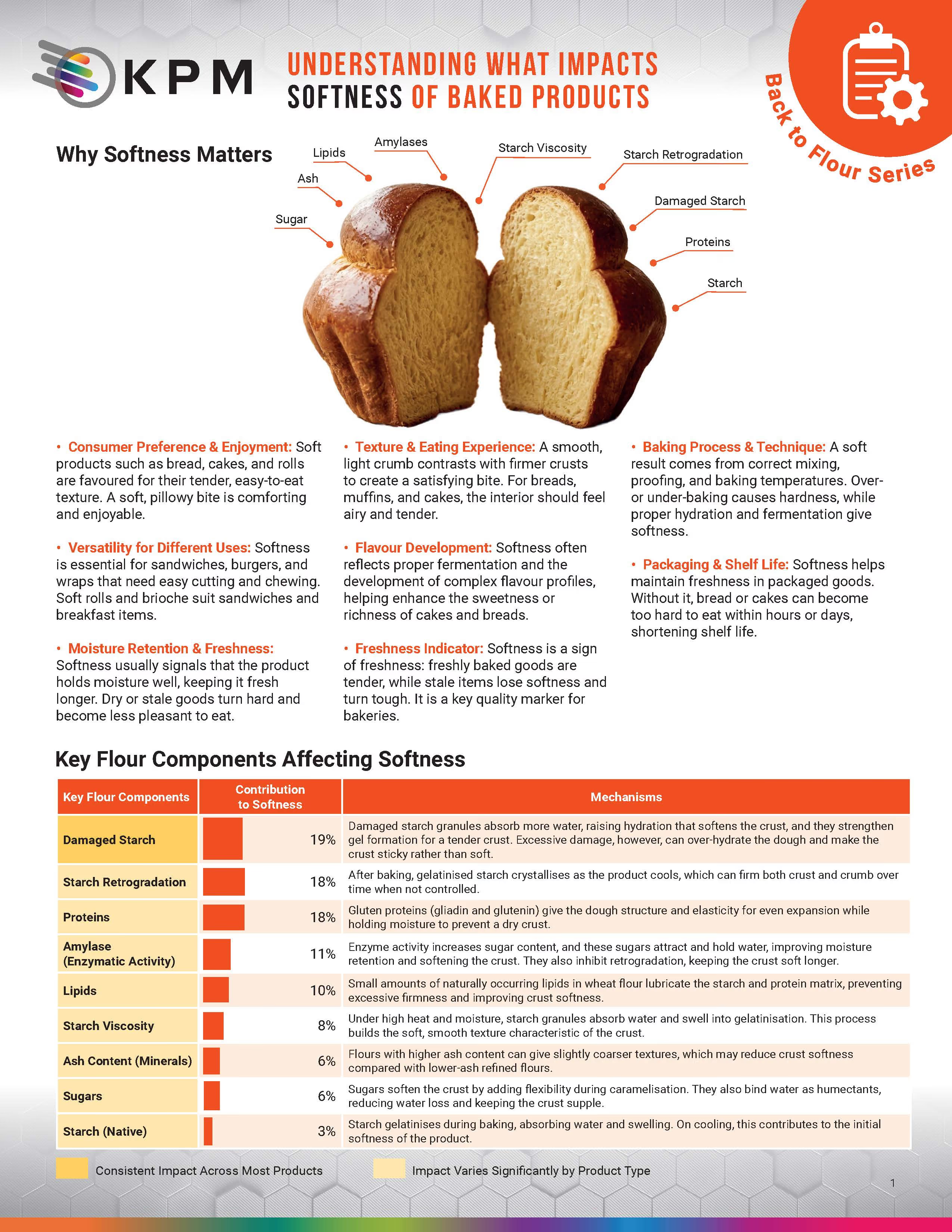
As discussed in the video, three flour components play a central role in water absorption, which is the foundation of softness. Proteins, through their quantity and quality, contribute to dough structure and moisture holding. Damaged starch absorbs significantly more water than native starch, up to ten times more, making it a key driver of hydration and initial softness. Fiber and ash content also absorb water, though their contribution is less relevant in white flours where ash levels remain in a consistently narrow range.
Starch functionality extends the picture beyond hydration. Starch viscosity influences crumb structure during gelatinization: a properly developed crumb creates the airy, tender texture consumers expect. If gelatinization produces an overly dense structure, softness is reduced. More critically, starch retrogradation is the main mechanism driving softness loss over time. As gelatinized starch gradually crystallizes during storage, the crumb firms and the product becomes less tender. Limiting retrogradation is therefore essential to maintaining softness across shelf life.
Amylase activity complements this picture by increasing available sugars, which attract and hold water, improving moisture retention and inhibiting retrogradation. Lipids lubricate the starch and protein matrix, preventing excessive firmness. Sugars contribute flexibility and help bind water, while ash content, at higher levels, can produce slightly coarser textures that reduce softness.
For a Quick Overview of Softness
Alongside the video, we provide a PDF guide summarizing how flour components, damaged starch, starch retrogradation, proteins, amylase activity, lipids, starch viscosity, ash content, sugars, and native starch, influence softness across product types, from pan bread and steamed buns to hamburger buns and wheat tortillas.
📄 Download the PDF: Understanding What Impacts Softness of Baked Products
What’s Next?
Softness connects directly to other attributes explored in the Back to Flour Series, including moisture retention, staling, and crumb structure.
The Back to Flour Series is constantly growing, with videos, technical PDFs, and resources across At the Table, Transformation of Dough, Secrets of Flour, and more technical insights to come. Explore the categories below and stay tuned as we continue to connect flour functionality with product excellence
Explore the categories below and stay tuned as we continue to connect flour functionality with product excellence.