The Flour Balance Behind Stickiness in Baked Products


Why Stickiness Matters
Stickiness is not simply a defect to eliminate. In noodles, the right level of surface stickiness keeps strands chewy, bouncy, and able to hold their shape during cooking. It helps noodles adhere to sauces and ensures even cooking whether boiled, stir-fried, or served in broth. In flatbreads, slight stickiness keeps the product soft, pliable, and easy to fold or wrap after baking. Too much stickiness, however, causes noodles to clump together, disrupts sauce distribution, and makes handling difficult. The challenge is always the same: retaining water inside the product while controlling what reaches the surface.
Transformation of Dough - Explore the Keys to Stickiness
In the Back to Flour Series, Transformation of Dough shows how flour composition determines where water ends up in the final product - and how that directly controls surface stickiness.
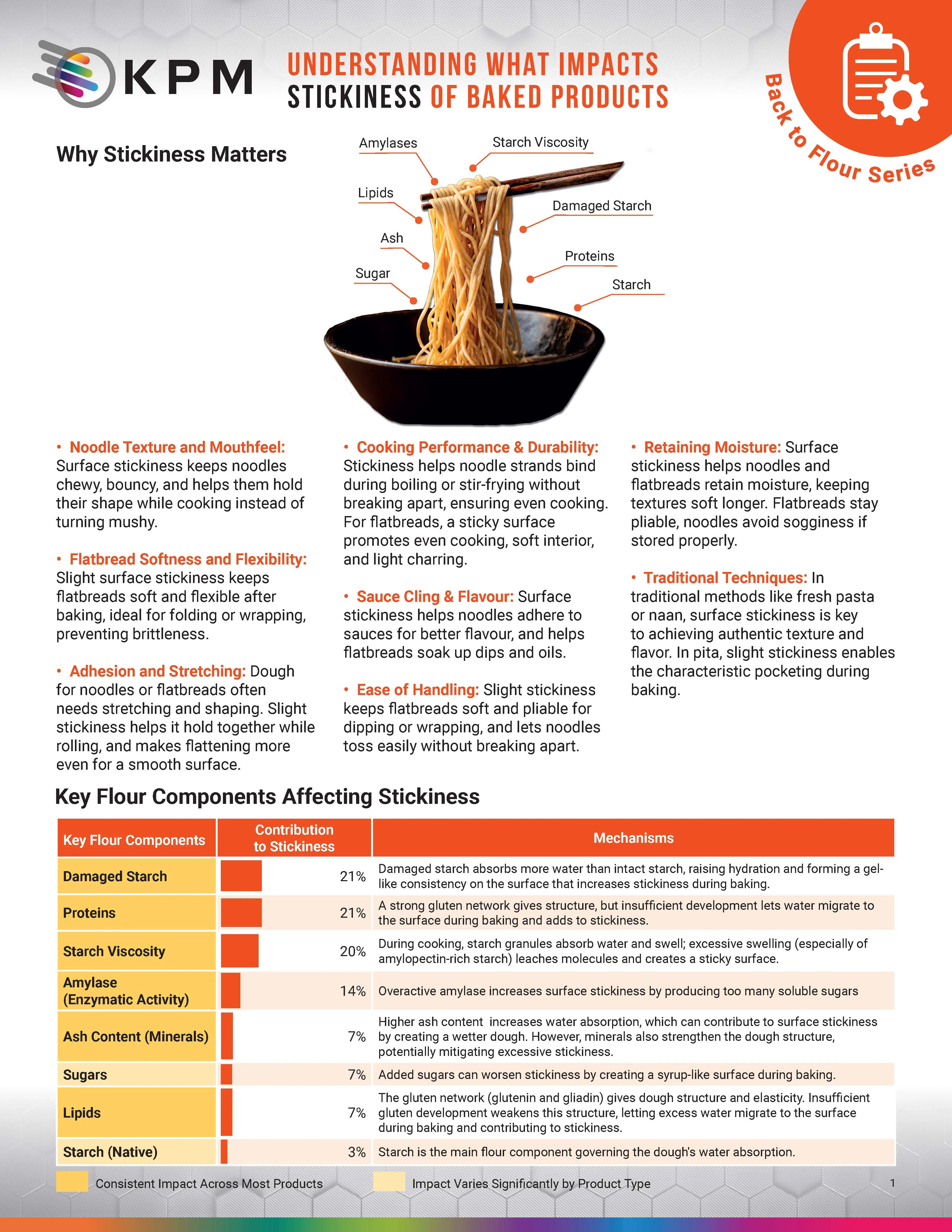
As discussed in the video, stickiness is fundamentally about balance between protein and damaged starch. Damaged starch absorbs significantly more water than intact starch, raising hydration and forming a gel-like consistency at the surface that increases stickiness. Proteins work in the opposite direction: a well-developed gluten network retains water inside the structure and prevents it from migrating to the surface. More damaged starch generally means more stickiness; stronger protein development means less.
Starch functionality adds another layer of complexity. During cooking, starch granules absorb water and swell. Excessive swelling, particularly in amylopectin-rich starch, causes starch molecules to leach out and creates a sticky surface. If the protein network does not retain these molecules effectively, stickiness increases. Enzyme activity compounds this effect: overactive amylase degrades starch, produces soluble sugars, reduces viscosity, and makes starch leaching easier.
Ash content also plays a role, as the video highlights. Fibers associated with higher ash levels interfere with gluten formation by breaking the bonds between gluten proteins, making the dough more sensitive to stickiness. At the same time, minerals in higher-ash flours can also strengthen dough structure and partially mitigate excessive stickiness — making ash a component whose influence requires careful interpretation depending on the product.
For a Quick Overview of Stickiness
Alongside the video, we provide a PDF guide summarizing how flour components (damaged starch, proteins, starch viscosity, amylase activity, ash content, sugars, lipids, and native starch) influence stickiness and how their impact compares across noodles and flat bread.
📄 Download the PDF: Understanding What Impacts Stickiness of Baked Products
What’s Next?
Stickiness connects directly to other attributes explored in the Back to Flour Series, including chewiness, elasticity, moisture retention, and crumb structure.
The Back to Flour Series is constantly growing, with videos, technical PDFs, and resources across At the Table, Transformation of Dough, Secrets of Flour, and more technical insights to come. Explore the categories below and stay tuned as we continue to connect flour functionality with product excellence
Explore the categories below and stay tuned as we continue to connect flour functionality with product excellence.

.avif)