Flakiness in Baked Products: The Layers That Define Quality


Why Softness Matters
Flakiness is one of the most recognizable signs of quality in baked goods. The visible layers of a croissant, the satisfying crunch of a cracker, the delicate break of a biscuit — all of these are expressions of flakiness. It signals craftsmanship, shapes mouthfeel, and contributes to flavor distribution as fat melts between the layers during eating. For consumers, flakiness creates a dynamic eating experience: a crisp exterior giving way to a lighter, tender interior. For producers, achieving and maintaining it consistently depends directly on flour composition and how its components behave during lamination and baking.
Transformation of Dough - Explore the Keys to Softness
In the Back to Flour Series, Transformation of Dough determines whether a product develops the distinct layers that define flakiness, and where the balance can be lost.
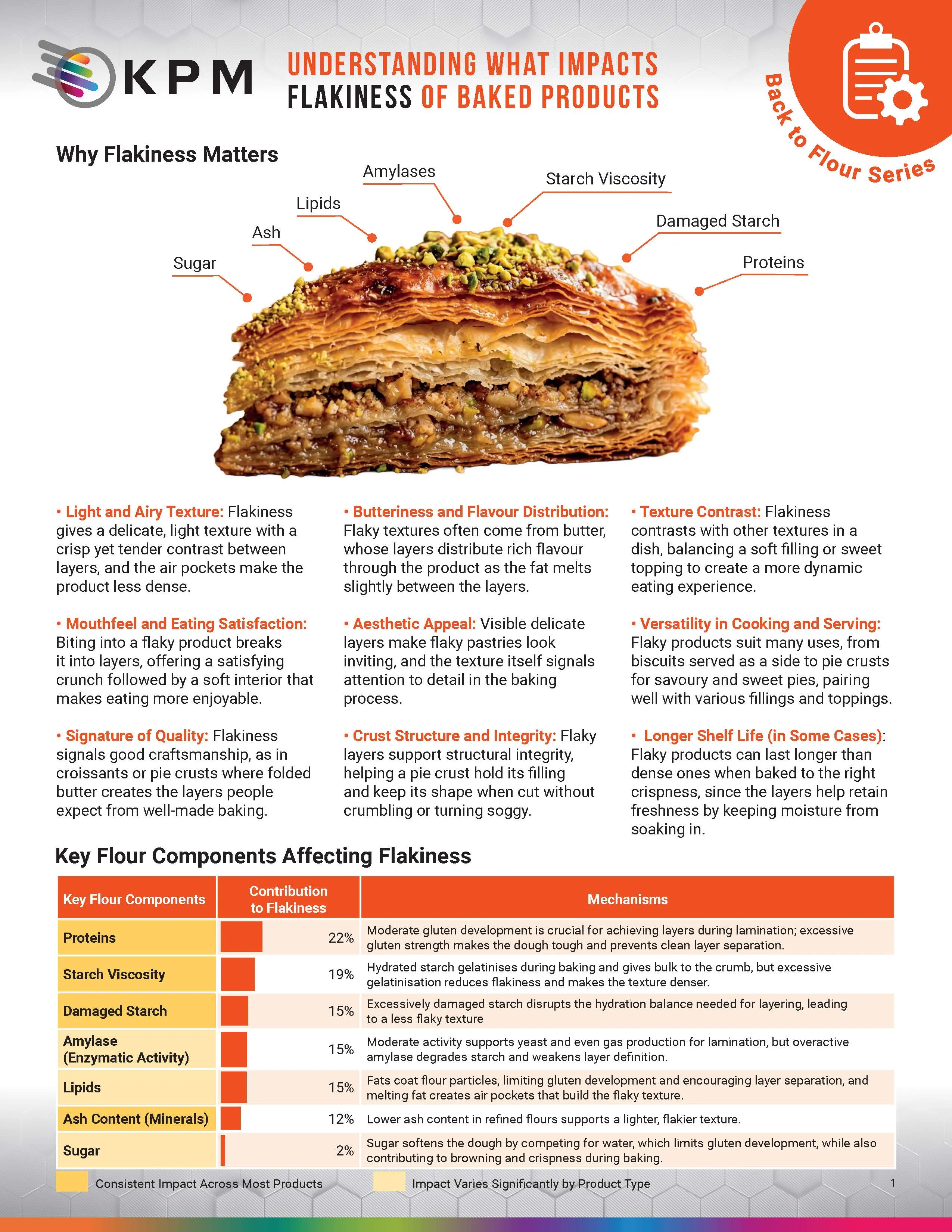
As discussed in the video, fat is central to flakiness. Lipids coat flour particles, limit gluten development, and encourage layer separation. When fat melts during baking, it creates the air pockets that build the characteristic flaky texture. This is true whether fat comes from formulation or from the natural lipids present in flour.
Protein plays a defining role in layer formation. Moderate gluten development is essential: it gives the dough enough structure to hold the layers during lamination without becoming too tight or elastic. Excessive gluten strength makes the dough tough and prevents clean layer separation. As the video makes clear, protein quality is what controls this balance, not just quantity.
Starch functionality and damaged starch both influence the hydration available for layering. Hydrated starch gelatinizes during baking, giving bulk to the crumb, but excessive gelatinization reduces flakiness and produces a denser texture. Excessively damaged starch disrupts the hydration balance needed for layering. Amylase activity must also remain moderate: overactive amylase degrades starch and weakens layer definition. Ash content rounds out the picture, lower ash content in refined flours supports a lighter, flakier result.
Flakiness, as the video illustrates, is always linked to other quality attributes. Touching one parameter inevitably affects others, which is why controlling what is measurable in the flour is the foundation of consistent results.
For a Quick Overview of Flakiness
Alongside the video, we provide a PDF guide summarizing how flour components, proteins, starch viscosity, damaged starch, amylase activity, lipids, ash content, and sugar, influence flakiness and how their impact varies across crackers, biscuits, and croissants.
📄 Download the PDF: Understanding What Impacts Flakiness of Baked Products
What’s Next?
Flakiness connects directly to other texture attributes explored in the Back to Flour Series, including crispness, crumb structure, and moisture control.
The Back to Flour Series is constantly growing, with videos, technical PDFs, and resources across At the Table, Transformation of Dough, Secrets of Flour, and more technical insights to come. Explore the categories below and stay tuned as we continue to connect flour functionality with product excellence
Explore the categories below and stay tuned as we continue to connect flour functionality with product excellence.