Starch Retrogradation: How Cooling Changes Everything in Baked Products


Why Starch Retrogradation Matter
Starch retrogradation is the reverse of gelatinization. When starch has gelatinized during baking, the molecules have expanded and spread. As the product cools and is stored, those same molecules begin to reassociate and crystallize, returning toward a more rigid structure. The product becomes firmer, the crumb loses softness, and shelf life shortens. For soft products like pan bread, tortillas, or steamed buns, this process is the primary driver of staling. For dry products like crackers or biscuits, the dynamic is different: retrogradation can actually contribute to maintaining crispness over time. Understanding and measuring retrogradation is therefore essential for any producer working to control texture and freshness across shelf life.
Secrets of Flour- Explore the Keys to Starch Retrogradation
In the Back to Flour Series, the Secrets of Flour video dedicated to starch retrogradation explains what happens inside the product after baking, and why it matters so differently depending on the product type.
As discussed in the video, retrogradation is the direct continuation of gelatinization. Gelatinized starch, once cooled, does not stay in its expanded state. Both amylose, the linear chains, and amylopectin, the branched chains, begin to realign and tend back toward a crystalline structure. This results in a progressively more rigid, gel-like structure. During storage, this process continues: starch molecules keep bonding, increasing firmness and causing water loss, known as syneresis. In bread, this is experienced as staling. In noodles, it produces a firmer or rubbery texture.
The video is explicit on one important distinction: for dry products that are already hard, retrogradation is less of a concern and can even be desirable to maintain crispness. But for products where softness, foldability, or a fresh texture are expected, controlling the rate of retrogradation is critical.
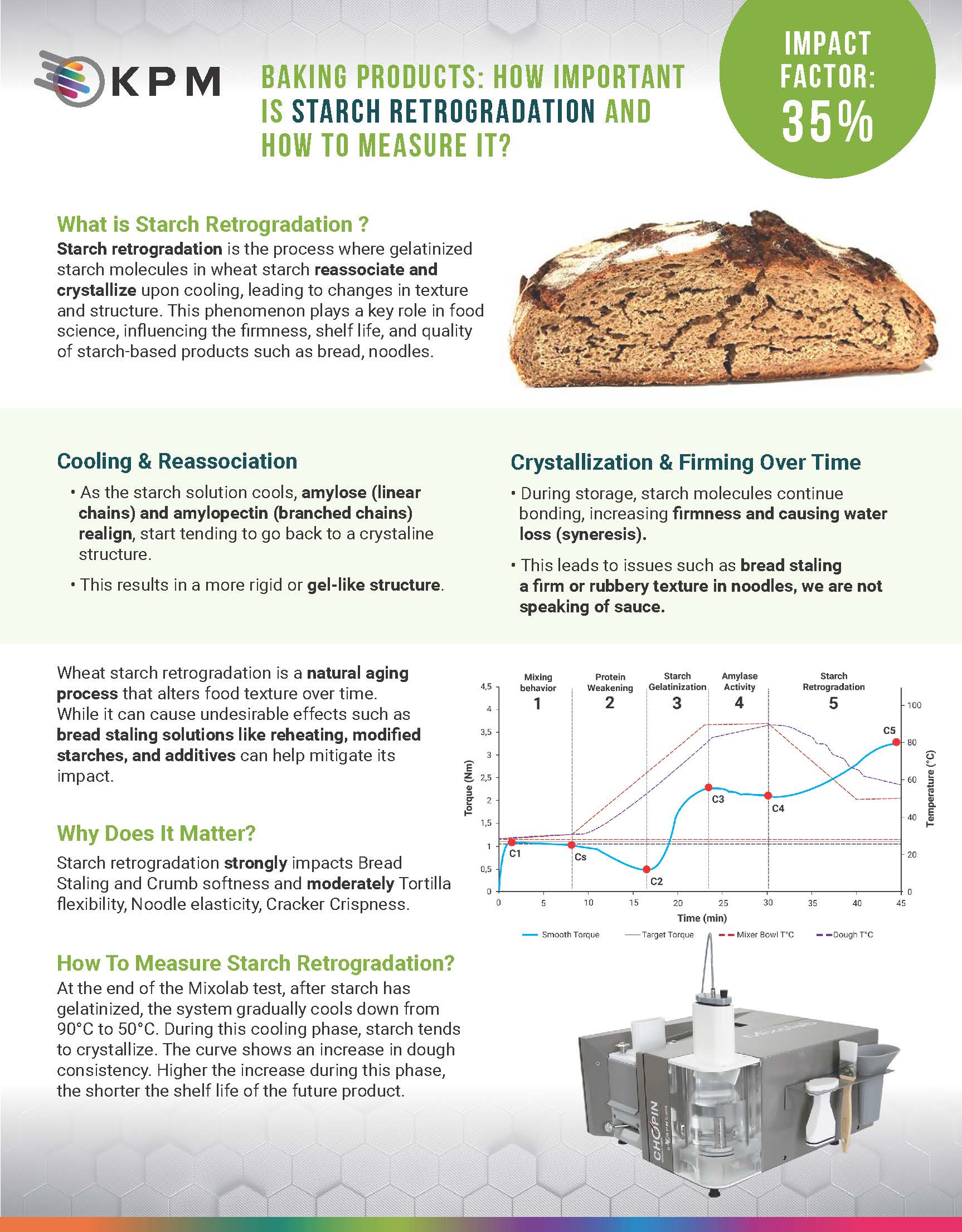
Measuring retrogradation requires heating the dough first. The Mixolab is the instrument best suited for this: it creates a dough, heats it to trigger gelatinization, then cools it from 90°C to 50°C while continuously measuring dough consistency. During this cooling phase, starch crystallizes and the consistency curve rises. The steeper the rise, the faster the retrogradation, and the shorter the expected shelf life of the final product. The Mixolab can also work directly with dough taken from a production line, making it a practical tool for real baking conditions.
For a Quick Overview of Starch Retrogradation
Alongside the video, we provide a PDF guide as part of the Secrets of Flour series. It offers a concise overview of:
- What starch retrogradation is and how it develops after baking
- Why it matters across product types, from bread staling to cracker crispness
- How the Mixolab measures retrogradation rate and predicts shelf life
📄 Download the PDF: How important is Starch Retrogradation in Baked Products
What’s Next?
This exploration of starch retrogradation is part of the Back to Flour Series, which connects flour functionality to the quality of finished bakery products. Understanding how starch behaves after baking gives millers and bakers a direct lever to control texture evolution and extend freshness.
Explore the categories below and stay tuned as we continue to connect flour functionality with product excellence.