How Flour Keeps Flatbreads Pliable and Ready to Fold


Why Flexibility Matters
A tortilla that cracks when folded, a flatbread that tears when wrapped: these are immediate signs that something is wrong with the flour or the process. Flexibility is the capacity of a product to bend, fold, and unfold without breaking, and it is one of the defining quality attributes of wheat tortillas, flatbreads, and similar products. It contributes directly to mouthfeel, texture, and the practical experience of eating: a flexible tortilla holds its filling, wraps cleanly, and stays intact from preparation to the last bite. Flexibility is also a freshness indicator. As products lose moisture during storage, they become stiffer and more prone to cracking. Maintaining flexibility over shelf life is therefore as important as achieving it at the point of production.
Transformation of Dough - Explore the Keys to Flexibility
In the Back to Flour Series, Transformation of Dough illustrates flexibility through a direct comparison of two tortillas with visibly different behavior, showing how flour composition translates into real product performance.
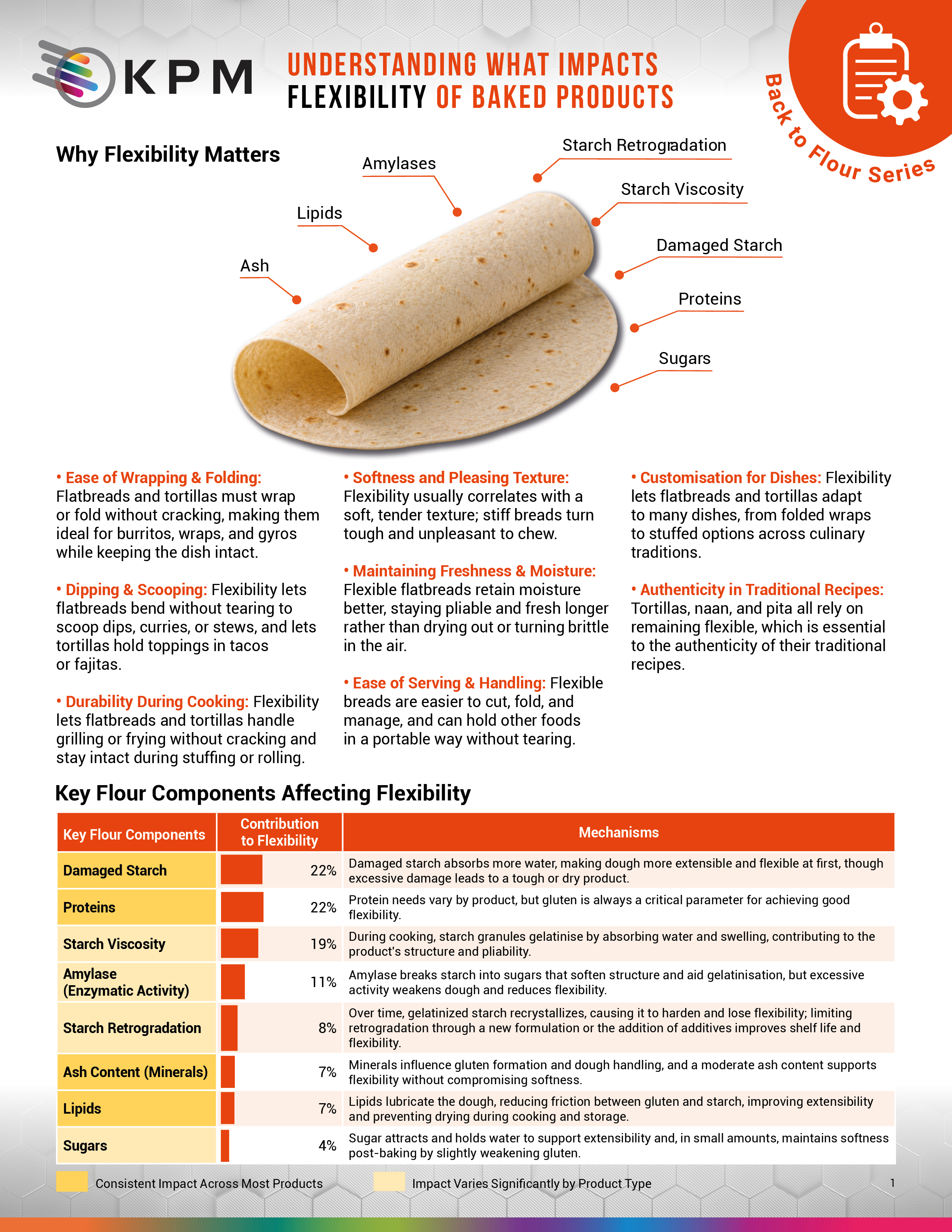
As discussed in the video, protein is the first critical factor. Gluten extensibility and elasticity determine whether the dough can stretch and recover without tearing. Protein quality, not just quantity, governs this: a well-developed gluten network gives the dough the plastic properties needed to fold and unfold cleanly. Damaged starch works alongside protein by absorbing large amounts of water, contributing to dough extensibility and helping maintain the moisture level that keeps the final product pliable.
Starch functionality then shapes what happens during and after baking. During cooking, starch gelatinizes by absorbing water and swelling, contributing to the structure and pliability of the product. Enzymatic activity influences this process directly: amylase breaks starch into sugars that soften the structure and support gelatinization, but excess activity weakens the dough and reduces flexibility.
Starch retrogradation is the enemy of long-term flexibility. As the video makes clear, products stored in retail for several weeks must maintain their ability to fold throughout that period. When retrogradation progresses, gelatinized starch recrystallizes, the product hardens, and cracks appear when folded. Controlling the rate of retrogradation is therefore a direct lever for shelf life and flexibility. Lipids support this by lubricating the dough, reducing friction between gluten and starch, and preventing drying during storage. Ash content and sugars contribute at lower levels, influencing gluten formation, water retention, and softness.
For a Quick Overview of Flexibility
Alongside the video, we provide a PDF guide summarizing how flour components, damaged starch, proteins, starch viscosity, amylase activity, starch retrogradation, ash content, lipids, and sugars, influence flexibility across flat bread and wheat tortilla.
📄 Download the PDF: Understanding What Impacts Flexibility of Baked Products
What’s Next?
Flexibility connects directly to other attributes explored in the Back to Flour Series, including softness, moisture retention, starch retrogradation, and shelf life.
The Back to Flour Series is constantly growing, with videos, technical PDFs, and resources across At the Table, Transformation of Dough, Secrets of Flour, and more technical insights to come. Explore the categories below and stay tuned as we continue to connect flour functionality with product excellence
Explore the categories below and stay tuned as we continue to connect flour functionality with product excellence.
.avif)