Ash Content: The Flour Purity Indicator That Shapes Color, Dough, and Baking Performance


Why Ash Content Matter
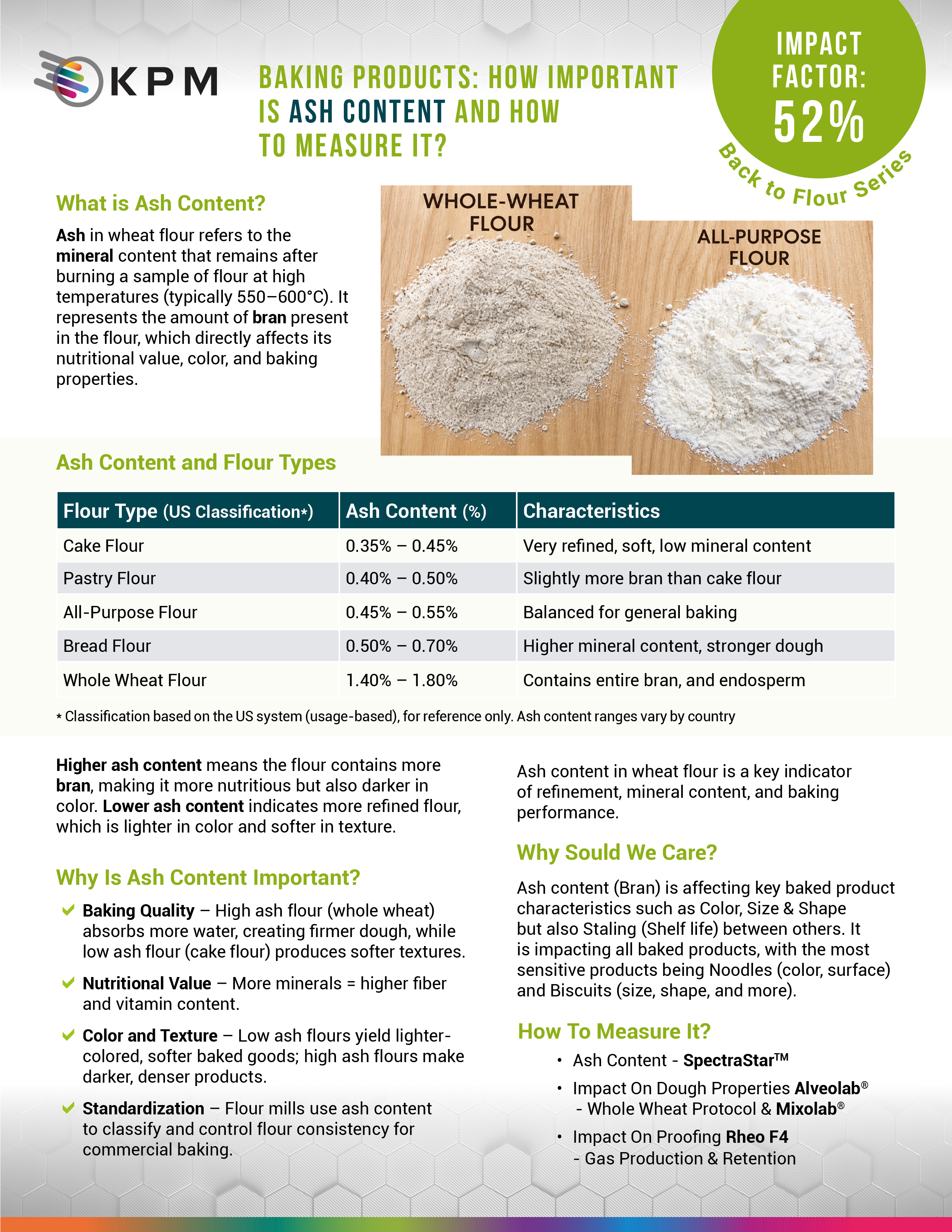
Ash content is the mineral content that remains after burning a flour sample at high temperatures. It represents the amount of bran present in the flour, and it is one of the most widely used indicators of flour refinement. The lower the ash content, the purer and more refined the flour. In many countries, flour types are classified directly by their ash content: in France, for example, T45 and T55 refer to ash levels that consumers can read on the bag. For millers, ash content is a key quality control parameter. For bakers, it is a direct predictor of color, dough behavior, and final product performance.
Secrets of Flour- Explore the Keys to Ash Content
In the Back to Flour Series, the Secrets of Flour video dedicated to ash content explains what ash is, why it matters beyond purity, and how its effects ripple through every stage of production.
As discussed in the video, the most visible impact of ash content is on color. Products like noodles, steamed buns, and wafers require a very white appearance. For these products, keeping flour as refined as possible, with the lowest possible ash content, is essential. Higher ash levels, as seen in whole wheat flour, produce darker, greyer results that are less visually appealing for these applications.
Beyond color, ash content affects dough handling and structure. Higher ash levels introduce more bran, which interferes with gluten formation by preventing the bonds between gluten proteins from developing fully. The result is a gluten network with lower retention capacity and reduced development, which directly impacts texture, volume, and crumb structure. Higher ash flours also absorb more water, producing firmer doughs with different tenacity and extensibility profiles.
These effects are present across all stages of production: from mixing and water absorption to proofing, baking, and shelf life. Ash content affects color, size and shape, crispness, moisture retention, crumbling, and staling across a wide range of baked products. The most sensitive products are noodles, where color and surface are critical, and biscuits, where size, shape, and texture are all affected.
Measuring ash content and its impact requires dedicated instruments. The SpectraStar provides a fast, reliable NIR measurement of ash content in flour. The Alveolab measures the impact of ash on dough properties: tenacity, extensibility, elasticity, and baking strength, with a dedicated whole wheat protocol now available for higher-ash flours. The Mixolab reveals the full picture across mixing, heating, and cooling, capturing ash effects on water absorption, dough stability, gluten resistance, starch viscosity, amylase activity, and shelf life prediction. The Rheo F4 completes the set by measuring the impact of ash on proofing performance: gas production, gas retention, and the resulting effect on product volume.
For a Quick Overview of Ash Content
Alongside the video, we provide a PDF guide as part of the Secrets of Flour series. It offers a concise overview of:
- What ash content is and how it is measured
- Why it matters across color, dough handling, and baking performance
- How the SpectraStar, Alveolab, Mixolab, and Rheo F4 measure ash content and its impact
📄 Download the PDF: HowHow Important Is Ash Content in Baking Products?
What’s Next?
This exploration of ash content is part of the Back to Flour Series, which connects flour functionality to the quality of finished bakery products. Understanding ash content gives millers and bakers a direct lever to control flour purity, dough behavior, and product consistency across applications.
The Back to Flour Series is constantly growing, with videos, technical PDFs, and resources across At the Table, Transformation of Dough, Secrets of Flour, and more technical insights to come.
Explore the categories below and stay tuned as we continue to connect flour functionality with product excellence.