Wheat Tortilla: How Flour Defines Every Fold and Every Bite


Why Wheat Tortilla Quality Matters
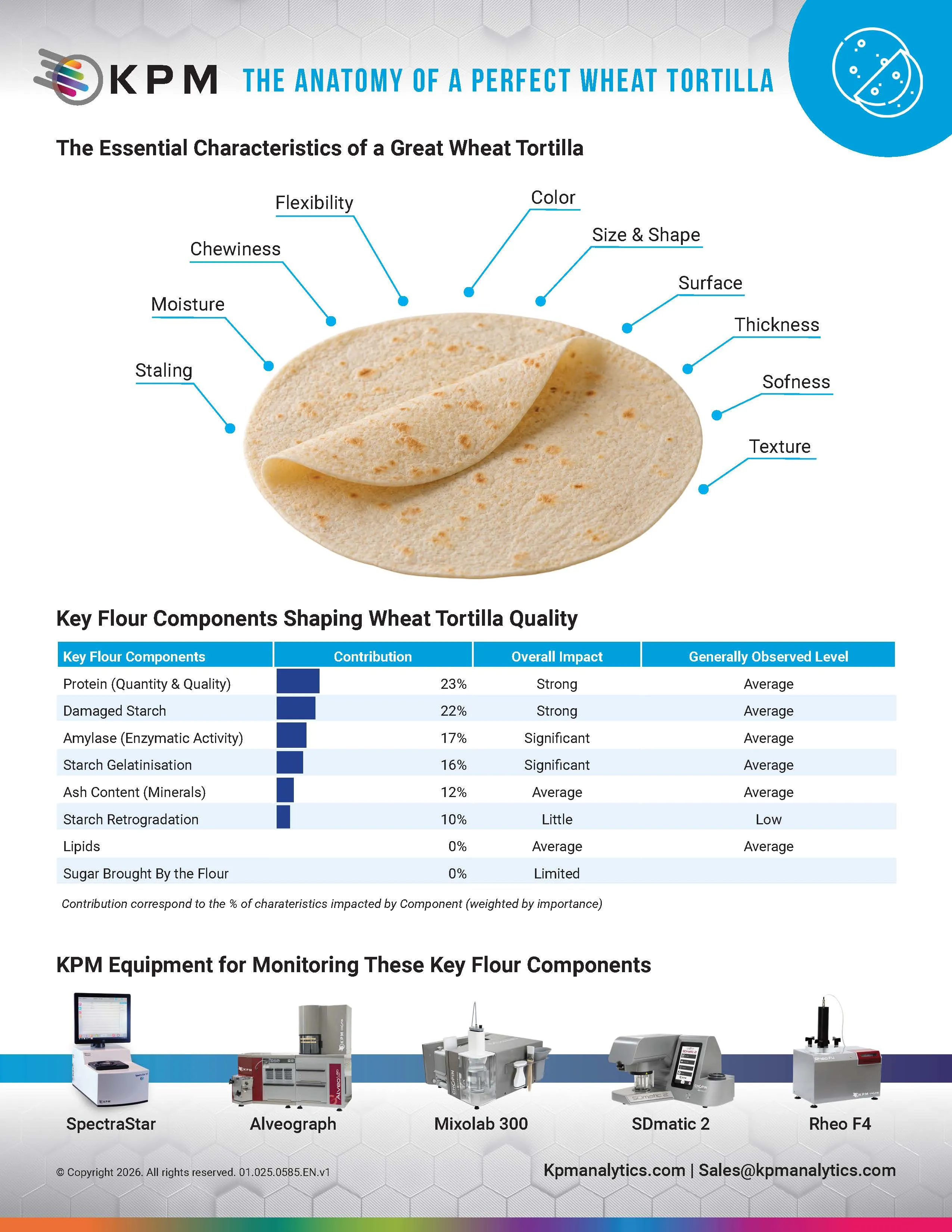
A wheat tortilla looks simple. In reality, it is one of the most demanding products to produce consistently. Color, size and shape, surface, thickness, softness, texture, flexibility, chewiness, moisture, and staling resistance all define whether a tortilla performs well in the hands of the consumer and on the shelf. It must fold without cracking, feel soft and slightly chewy, display an even cream color with the characteristic small dark spots that signal good baking, and maintain all of these qualities for weeks in retail. Achieving this balance starts with flour.
At the Table – Discover the “Wheat Tortillas” Video
In the Back to Flour Series, the At the Table video dedicated to wheat tortilla shows how flour composition shapes every one of these attributes, using a direct comparison between two tortillas with visibly different behavior.
As discussed in the video, color is the first thing consumers notice. Ash content plays a direct role: higher ash flours produce a greyer appearance, while lower ash flours give the cream-white color expected in white wheat tortillas. Amylase activity influences the small dark spots that develop during baking and contribute to the product's visual appeal.
Size, shape, surface, and thickness are closely linked to protein quality and starch functionality. Protein, through gluten development, gives the dough the plastic properties needed to roll out evenly and hold its shape. Starch gelatinization during baking ensures the correct structure forms, allowing the tortilla to behave as expected when folded or torn.
Flexibility and softness are where flour composition becomes most critical. A tortilla that cracks when folded or breaks when rolled has lost its core functionality. Protein quality and damaged starch work together to maintain the moisture level and plastic properties that keep the product pliable. Damaged starch absorbs large amounts of water, contributing directly to moisture retention, flexibility, and shelf life.
Starch retrogradation is the primary driver of quality loss over time. As the video makes clear, when retrogradation progresses during storage, the tortilla hardens and starts cracking when folded. Low retrogradation is essential for maintaining freshness as long as possible. Moisture loss through staling is the other side of the same challenge: a tortilla that becomes too dry loses flexibility, while one that absorbs too much humidity turns soggy.
A Quick Overview of Wheat Tortilla Anatomy
Alongside the video, we provide a PDF guide, part of the At the Table series. It offers a concise snapshot of:
- The essential characteristics of a great wheat tortilla
- The key flour components that help achieve them
📄 Download the PDF: The Anatomy of a perfect wheat tortilla
What’s Next?
Wheat tortilla quality connects directly to topics explored across the Back to Flour Series, including flexibility, starch retrogradation, moisture retention, and staling.
The Back to Flour Series is constantly growing; with videos, technical PDFs, and resources across At the Table, Transformation of Dough, Secrets of Flour, and more technical insights to come.
Explore the categories below and stay tuned as we continue to connect flour functionality with product excellence.
.avif)