Scoring in Baked Products: The Baker's Signature, Shaped by Flour


Why Scoring Matters
Scoring is the cut made on the surface of the dough just before it enters the oven. It is the baker's signature, a gesture that is both functional and aesthetic. On one hand, it creates the visual identity of a baguette, a sourdough, or an artisan loaf, with patterns that signal craftsmanship and distinguish one product from another. On the other hand, it serves a precise technical purpose: allowing the dough to expand in a controlled way during oven spring, preventing irregular cracking, releasing trapped gases, and ensuring even heat distribution through the interior. A well-scored baguette opens cleanly and rises with a defined ear. A poorly scored one stays shut, cracks on the side, or collapses. The difference between the two is not just in the blade. It is in the flour.
Transformation of Dough - Explore the Keys to Scoring
In the Back to Flour Series, Transformation of Dough shows that scoring quality is determined long before the blade touches the dough, and that flour composition is as decisive as the scoring technique itself.
As discussed in the video, scoring happens after proofing, which means the dough entering the oven already carries the gas produced during fermentation. The first challenge is retaining that gas during oven spring while allowing the scored areas to open cleanly. Protein plays a role here: as the temperature rises in the oven, protein degrades progressively, but it must first retain the gas and allow the dough to expand without collapsing. Protein quality is what determines how well this balance holds.
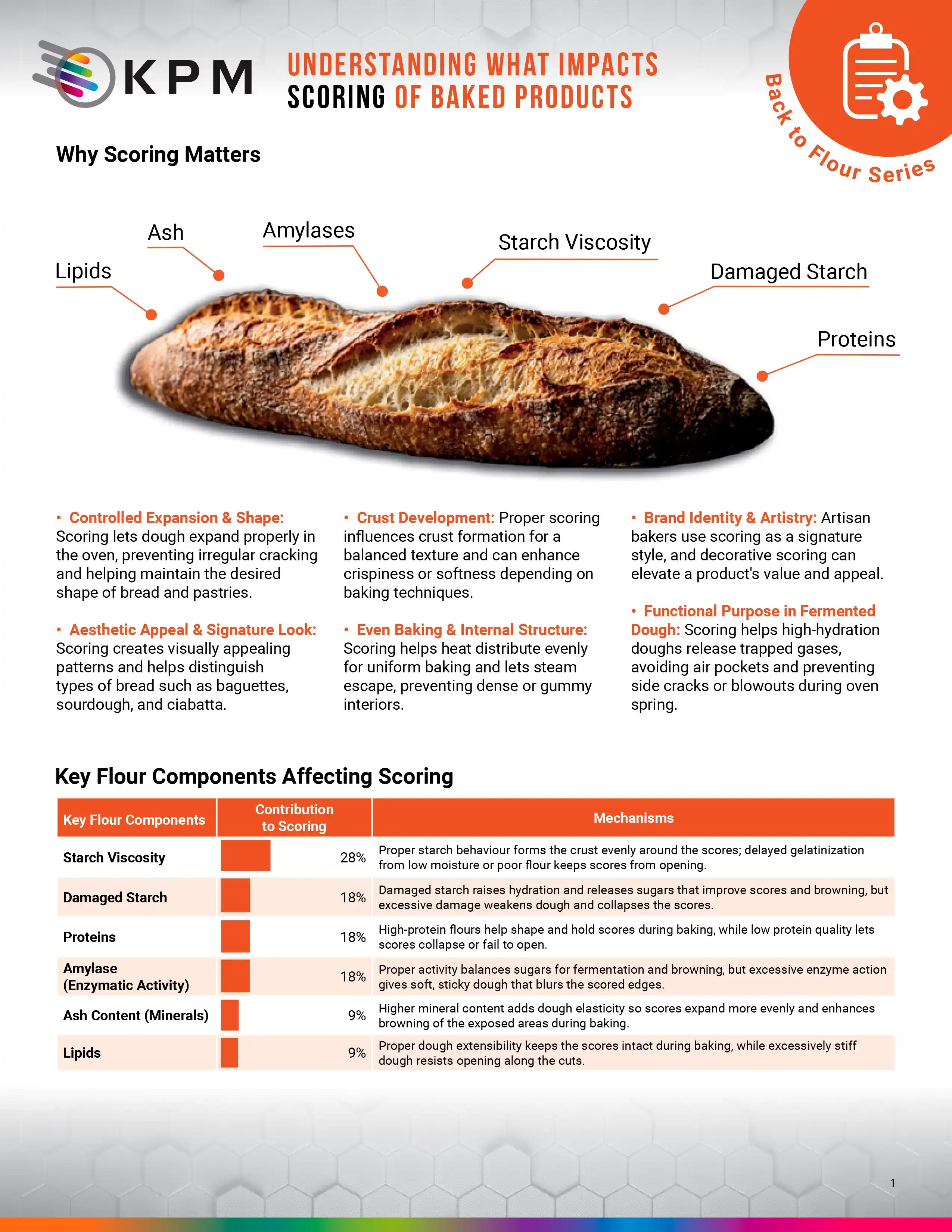
Starch then takes over. As the video makes clear, starch is often underestimated in the industry, where protein receives most of the attention. But when it comes to scoring, starch viscosity is the dominant factor. Proper starch behavior forms the crust evenly around the scores and allows them to open as intended. Delayed or incomplete gelatinization prevents the scores from opening, producing the closed, flat result visible in the video comparison.
Damaged starch contributes through its effect on hydration: more damaged starch produces a softer dough with different development capacity and gas production during proofing, which in turn influences how the scores behave in the oven. Excessive damage, however, weakens the dough structure and causes scores to collapse. Amylase activity must remain balanced: excess activity produces a soft, sticky dough that blurs the scored edges and compromises the final appearance.
Lipids support dough extensibility, keeping scores intact during baking. Ash content adds elasticity to the dough, helping scores expand more evenly and enhancing browning in the exposed areas.
For a Quick Overview of Scoring
Alongside the video, we provide a PDF guide summarizing how flour components, starch viscosity, damaged starch, proteins, amylase activity, ash content, and lipids, influence scoring quality in baguette and similar products.
📄 Download the PDF: Understanding What Impacts Scoring of Baked Products
What’s Next?
Scoring connects directly to other attributes explored in the Back to Flour Series, including starch gelatinization, protein quality, fermentation performance, and crust development.
The Back to Flour Series is constantly growing, with videos, technical PDFs, and resources across At the Table, Transformation of Dough, Secrets of Flour, and more technical insights to come. Explore the categories below and stay tuned as we continue to connect flour functionality with product excellence
Explore the categories below and stay tuned as we continue to connect flour functionality with product excellence.