Cracker: Flour Composition Shapes Every Snap, Layer, and Shelf Life


Why Cracker Quality Matters
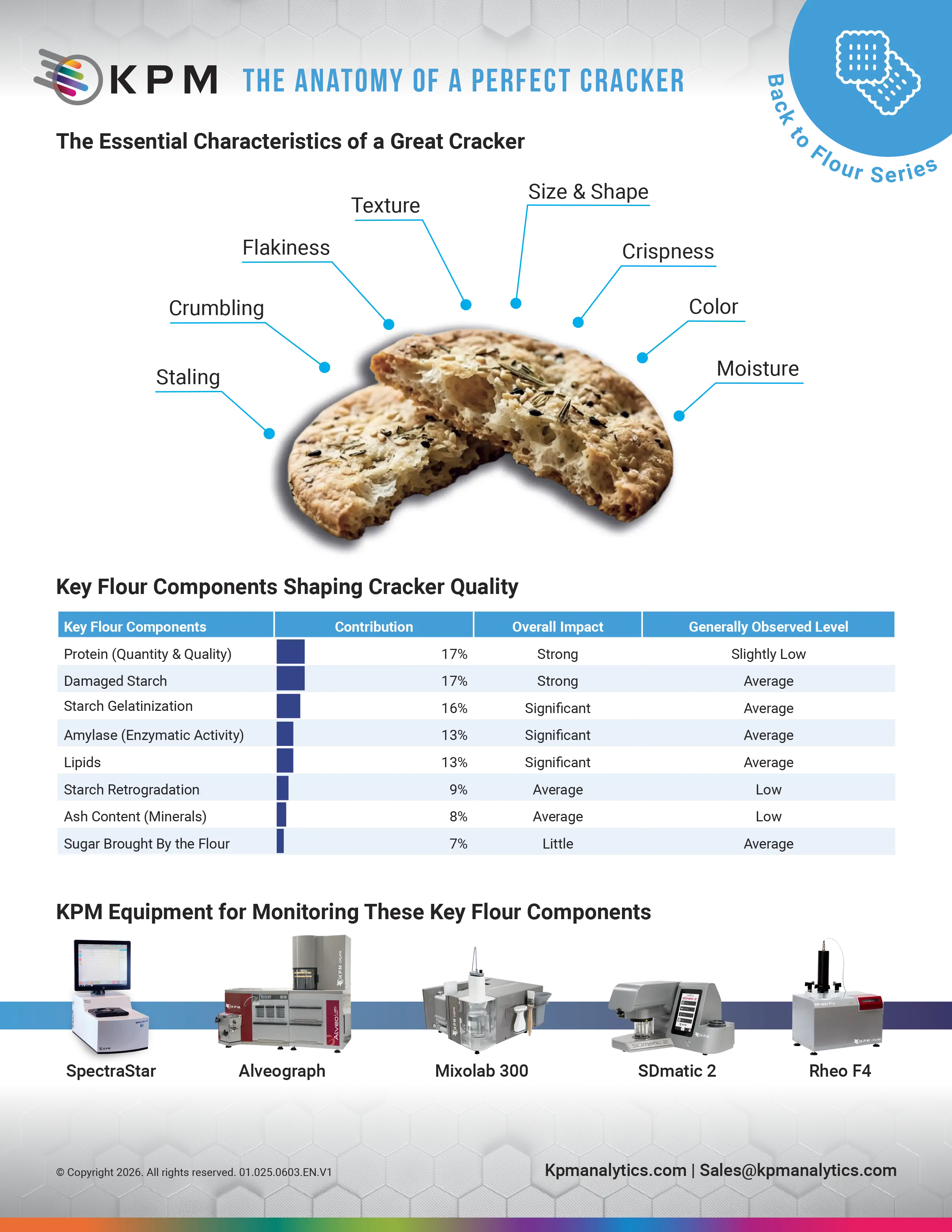
Pick up a cracker and you already know within seconds whether it is good. The snap, the color, the way it breaks: these are immediate signals. Crackers come in many shapes and formats, but they share a common set of demands: consistent color and size for packaging and visual appeal, the right crispness and texture for a satisfying bite, visible layers that signal quality, and a controlled crumbling behavior that keeps the product intact until it is meant to break.
Because crackers are dry by nature, their shelf life challenge runs in the opposite direction from most baked goods: rather than drying out, they absorb moisture from the environment, losing their snap and changing in texture. Lipid oxidation adds another shelf life dimension, with rancidity affecting taste over time. Behind all of these attributes, flour composition is the deciding factor.
At the Table - Discover the Cracker Video
In the Back to Flour Series, the At the Table video dedicated to crackers explores what makes one cracker crisper, flakier, or more evenly colored than another, through a direct comparison of several varieties with visibly different textures, colors, and breaking behaviors.
Damaged starch leads the picture. As discussed in the video, it is the most important flour parameter for crackers, simultaneously influencing color, flakiness, and texture. Its balance with protein is equally important: protein provides structure and cohesion, but the right level relative to damaged starch must be maintained to achieve the desired eating quality without making the product too hard or too fragile.
Starch gelatinization during baking sets the internal structure and directly shapes both texture and flakiness. Lipids rank high among flour components for crackers, and for good reason: they contribute to layer formation and mouthfeel during eating, but they are also the source of rancidity when not well controlled, making them a shelf life factor as much as a texture one.
Amylase activity participates in color development during baking, influencing how evenly the surface browns. Ash content reinforces this picture: for pale or white crackers, low ash content is essential to avoid grey or uneven tones. Sugar, whether from the flour itself or added, affects both color and texture during the baking process.
A Quick Overview of Cracker Anatomy
Alongside the video, we provide a PDF guide, part of the At the Table series. It offers a concise snapshot of:
- The essential characteristics of a great Cracker
- The key flour components that help achieve them
📄 Download the PDF: The Anatomy of a perfect cracker
What’s Next?
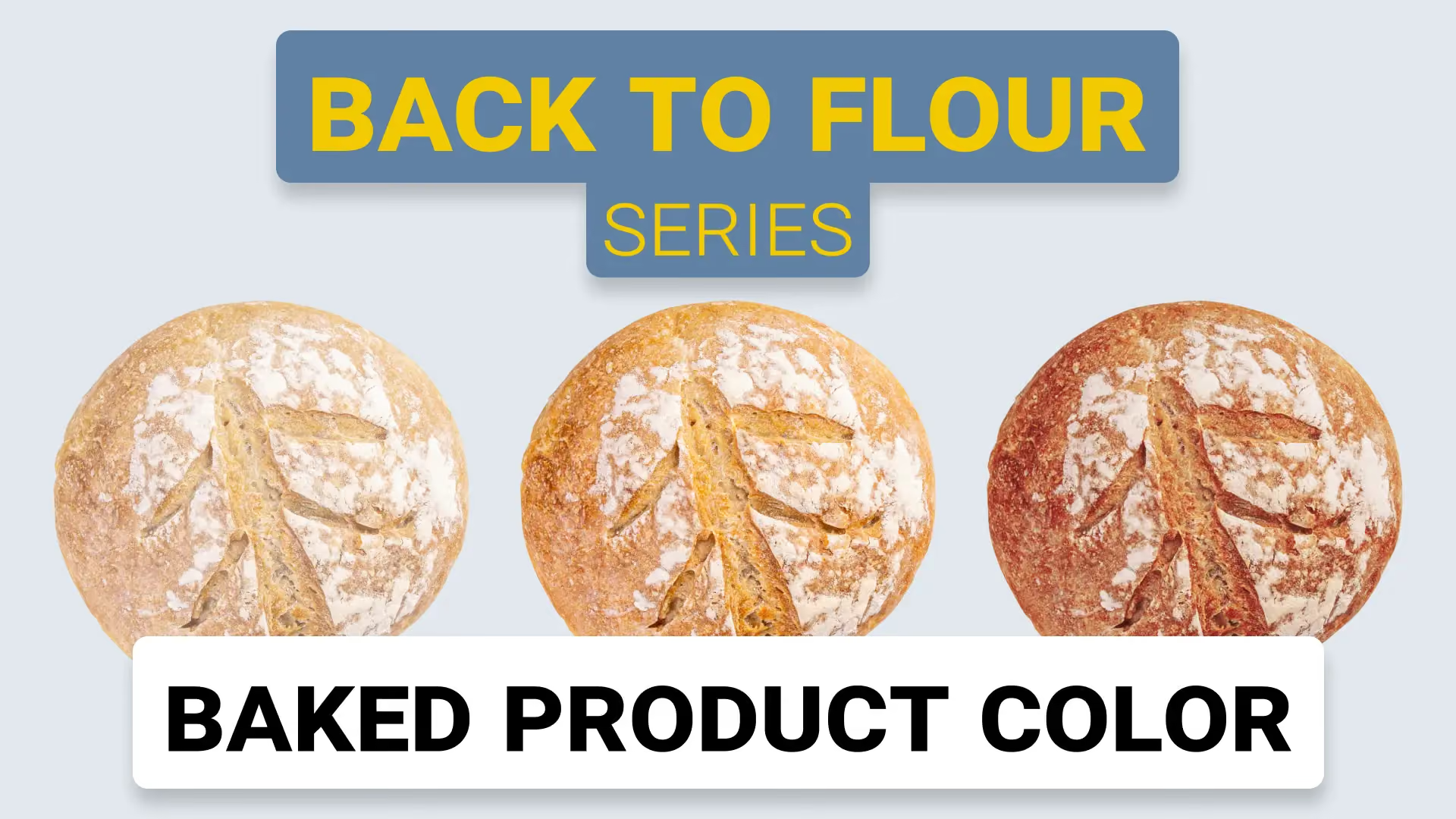
Crackerquality connects directly to topics explored across the Back to Flour Series,including crispness, flakiness, crumbling, moisture retention, and staling.
The Back to Flour Series is constantly growing; with videos, technical PDFs, and resources across At the Table, Transformation of Dough, Secrets of Flour, and more technical insights to come.
Explore the categories below and stay tuned as we continue to connect flour functionality with product excellence.

.avif)