Elasticity in Noodles: How Flour Composition Defines the Perfect Bite


Why Elasticity Matters
Pull a noodle with chopsticks and watch it stretch. That resistance, the way it holds its shape and springs back, is elasticity. It is one of the most regionally specific and culturally significant quality attributes in the world of baked and cooked products. Ramen owes its identity to it. Hand-pulled noodles depend on it. Udon is defined by a softer version of it. Elasticity determines how a noodle behaves during cooking, how it holds up in sauce, how it feels when eaten, and how evenly it cooks across a dish. Too little and the noodle turns mushy, breaks apart, or loses its bite. Too much and it becomes rubbery and difficult to eat. The right level is product-specific, process-specific, and flour-dependent.
Transformation of Dough - Explore the Keys to Elasticity
In the Back to Flour Series, Transformation of Dough shows how flour composition drives noodle elasticity and why getting it right requires looking beyond protein alone.
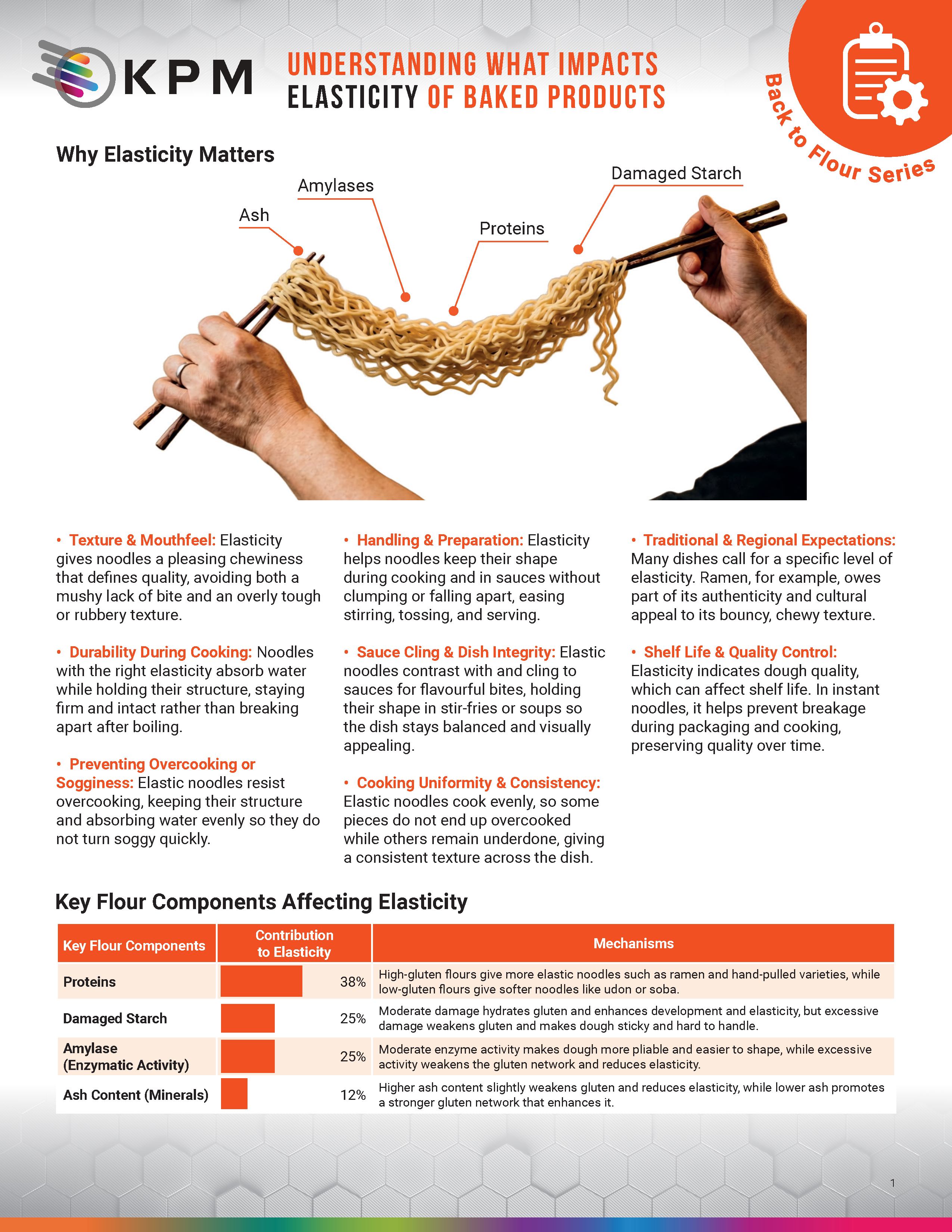
As discussed in the video, protein is the first and dominant factor. Gluten quality is what gives noodles their elastic character: both glutenins and gliadins play a role, and the balance between them shapes how the noodle stretches and recovers. High-gluten flours produce more elastic noodles like ramen or hand-pulled varieties, while lower-gluten flours yield softer products like udon or soba. Protein quantity and quality are both essential.
Damaged starch is the second major lever. By absorbing large amounts of water, it helps create a dough with the right plastic properties to support elasticity. Moderate levels hydrate gluten, enhance its development, and contribute to the consistent bite expected across different cooking methods, whether the noodles are boiled, stir-fried, or served in broth. Excessive damage, however, weakens gluten and makes the dough sticky and hard to handle.
Amylase activity works alongside damaged starch: moderate enzymatic activity makes the dough more pliable and easier to shape, supporting consistent elasticity through the cooking process. Excessive activity weakens the gluten network and reduces elasticity, regardless of protein quality.
Ash content completes the picture. As the video notes, higher ash levels interfere with gluten network formation, reducing elasticity. For noodle applications, lower ash content is preferred not only for color, as discussed in another episode, but for the gluten strength it preserves.
For a Quick Overview of Elasticity
Alongside the video, we provide a PDF guide summarizing how flour components, proteins, damaged starch, amylase activity, and ash content, influence elasticity in noodles.
📄 Download the PDF: Understanding What Impacts Elasticity of Noodles
What’s Next?
Elasticity connects directly to other attributes explored in the Back to Flour Series, including chewiness, stickiness, texture, and moisture retention in noodles and similar products.
The Back to Flour Series is constantly growing, with videos, technical PDFs, and resources across At the Table, Transformation of Dough, Secrets of Flour, and more technical insights to come. Explore the categories below and stay tuned as we continue to connect flour functionality with product excellence
Explore the categories below and stay tuned as we continue to connect flour functionality with product excellence.