Wafer: Crisp by Design, Controlled by Flour


Why Wafer Quality Matters
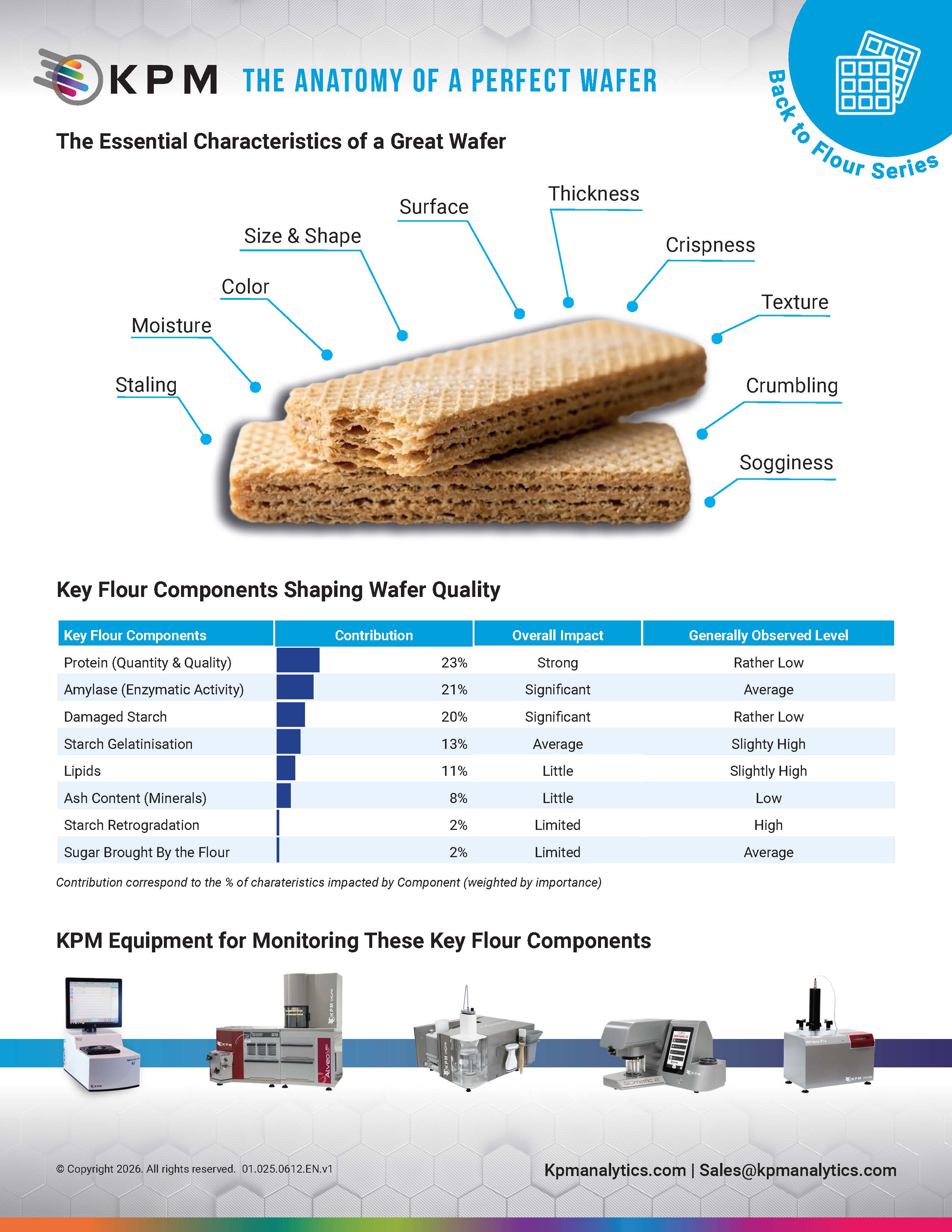
Round or square, plain or filled with chocolate, one layer or two: wafers leave a lot of room for creativity. That freedom comes with constraints. The shape must fit the package, and the layers must separate as intended. The color can range from very white to more brown depending on the product. In the mouth, thickness, crispiness, and texture define the experience, while the surface must stay smooth and hold together. A little crumbling when cutting is acceptable, but the wafer should not fall apart in the hands. Because wafers are very dry products, moisture is the main threat over time. Once moisture comes in, a wafer becomes soggy and loses the crispness that defines it. Behind each of these attributes, flour plays a decisive role.
At the Table - Discover the Wafer Video
In the Back to Flour Series, the At the Table video dedicated to wafers looks at a wide variety of formats and explains which flour components make the difference between a crisp, well-formed wafer and a disappointing one.
Protein comes first, but in the opposite direction from what many expect. Wafers are made from a very liquid batter, so a high protein content is not wanted. The goal is to avoid forming lumps and to avoid developing a full gluten network. Protein also absorbs water, and in a wafer that water must later be removed, so protein properties need to stay controlled.
Damaged starch is the second key parameter. It influences water absorption, which matters directly in a product that must end up very dry. Enzymatic activity comes with it, as both contribute to the color of the wafer.
Starch functionality shapes the texture itself. During baking, starch gelatinizes, and this is what gives the crispiness and determines whether the wafer crumbles or not. As the video points out, starch functionality deserves as much attention as protein, and sometimes even more.
Ash content affects color. Too much ash produces a greyer wafer, and whole wheat can bring dark spots. For a white product, a low ash content is preferred, although some wafers with a slightly darker color can accept more.
Lipids and sugar complete the picture. Wafers contain a lot of lipids, which are useful in the batter but can lead to a rancid taste when the product is kept too long. The large amount of added sugar influences color, staling, and the way the product keeps or absorbs moisture. Starch retrogradation, often central to staling, plays only a very small role here, because the product is so dry that moisture matters far more.
A Quick Overview of Wafer Anatomy
Alongside the video, we provide a PDF guide, part of the At the Table series. It offers a concise snapshot of:
- The essential characteristics of a great Wafer
- The key flour components that help achieve them
📄 Download the PDF: The Anatomy of a perfect wafer
What’s Next?
Wafer quality connects directly to topics explored across the Back to Flour Series, including crispness, crumbling, sogginess, moisture, and staling.
The Back to Flour Series is constantly growing; with videos, technical PDFs, and resources across At the Table, Transformation of Dough, Secrets of Flour, and more technical insights to come.
Explore the categories below and stay tuned as we continue to connect flour functionality with product excellence.